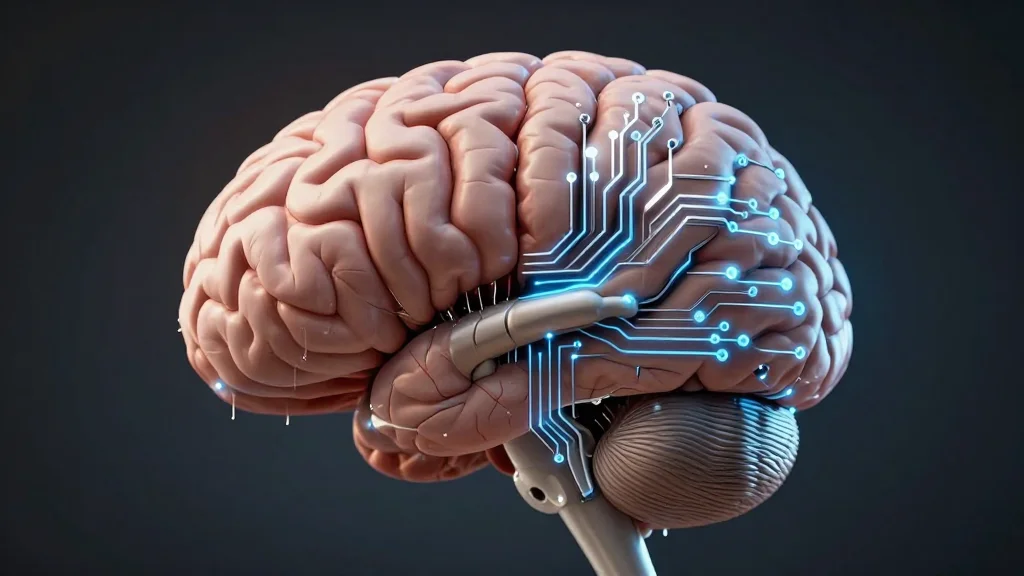
Neuroscientist's AI-Powered Startup Aims To Transform Human Cognition With Perfect, Infinite Memory

Why It Matters
If functional, limitless recall could dramatically boost productivity, decision‑making and learning across industries, creating a new class of cognitive‑enhancement tools. The venture also raises profound ethical and regulatory questions about data privacy and human augmentation.
Key Takeaways
- •Engramme links personal digital life to AI for instant memory recall
- •Founder Kreiman spent 20 years studying brain memory mechanisms
- •Startup seeks $100 million funding to commercialize large memory models
- •Claims to eliminate search friction, reshaping professional workflows
- •Raises ethical concerns over privacy and cognitive augmentation
Pulse Analysis
Engramme emerges from a rare convergence of neuroscience and artificial intelligence, leveraging two decades of brain‑memory research by former Harvard professor Amir Kreiman. By creating a "memorome"—a digital twin of a user's entire digital footprint—the startup claims its large memory models can retrieve any piece of information instantly, bypassing traditional search interfaces. This approach mirrors how the brain encodes and recalls memories, but with the precision and scale of modern AI, promising a seamless blend of biological intuition and computational exactness.
The market potential is vast. Professionals from law to medicine could offload rote recall to the system, freeing mental bandwidth for higher‑order tasks. Engramme’s reported $100 million fundraising round signals investor confidence in a nascent cognitive‑augmentation sector that rivals traditional productivity software. Competitors in the personal knowledge‑management space, such as Notion or Roam Research, focus on organization; Engramme aims to eliminate the friction of retrieval altogether, positioning itself as a disruptive platform that could redefine workflow efficiency and knowledge work economics.
However, the technology raises significant challenges. Continuous aggregation of personal data intensifies privacy risks, and the prospect of augmented memory sparks ethical debates about equity, consent, and the nature of human cognition. Regulatory frameworks are still nascent, and user adoption will hinge on demonstrable reliability and safeguards against misinformation. If Engramme can navigate these hurdles, it may usher in a new era of human‑AI symbiosis, fundamentally altering how we think, learn, and operate in the digital age.
Neuroscientist's AI-Powered Startup Aims To Transform Human Cognition With Perfect, Infinite Memory
Comments
Want to join the conversation?
Loading comments...