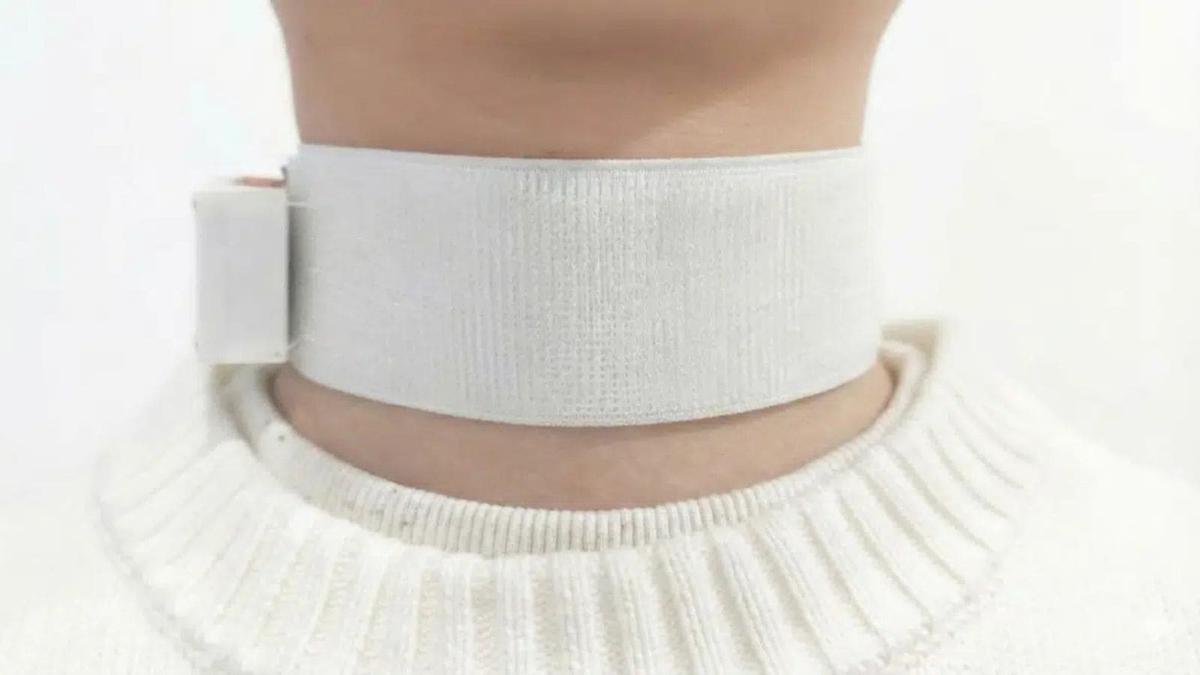
New AI-Powered Wearable Helps Stroke Patients Communicate by Mouthing Words
•January 20, 2026
0
Why It Matters
Revoice provides a non‑invasive communication bridge for stroke patients, potentially reducing rehabilitation costs and improving quality of life. Its success could accelerate adoption of wearable AI for broader neurological disorders.
Key Takeaways
- •Revoice decodes silent mouthing with 95.8% word accuracy.
- •Device captures throat vibrations and pulse for emotion tagging.
- •Continuous 100 ms analysis mimics natural conversation flow.
- •Battery lasts full day; fabric sensors detect 0.1% deformation.
- •Trial involved five patients; larger clinical validation required.
Pulse Analysis
Speech disorders such as dysarthria affect millions of stroke survivors, yet most assistive technologies rely on invasive implants or cumbersome external devices. The emergence of wearable AI platforms like Revoice marks a shift toward discreet, everyday solutions that integrate directly with the body’s natural signals. By embedding ultra‑sensitive fabric sensors in a soft choker, the system captures minute throat movements and arterial pulse, turning silent articulation into intelligible speech without requiring users to pause or alter their speaking style.
At the core of Revoice are two lightweight AI agents: one reconstructs phonetic patterns from the raw vibration data, while the other interprets physiological cues to infer the speaker’s emotional state. This dual‑stream approach not only delivers 95.8% word‑level accuracy but also enriches communication with affective context, making interactions feel more human. The device processes inputs in 100‑millisecond slices, delivering near‑real‑time feedback that closely mirrors natural conversation rhythms. Its battery supports a full day of wear, and the flexible sensors can detect deformations as small as 0.1%, ensuring reliability across varied neck movements.
The broader implications extend beyond stroke rehabilitation. Similar wearable AI could aid patients with Parkinson’s disease, motor neuron disease, or any condition that impairs vocal output. However, the technology remains in early stages; the pilot involved only five participants, and extensive clinical trials are needed to validate scalability, multilingual support, and long‑term safety. If these hurdles are cleared, Revoice could catalyze a new market segment for AI‑enhanced wearables, driving investment in sensor miniaturization, edge‑AI processing, and personalized neuro‑rehabilitation pathways.
New AI-powered wearable helps stroke patients communicate by mouthing words
0
Comments
Want to join the conversation?
Loading comments...