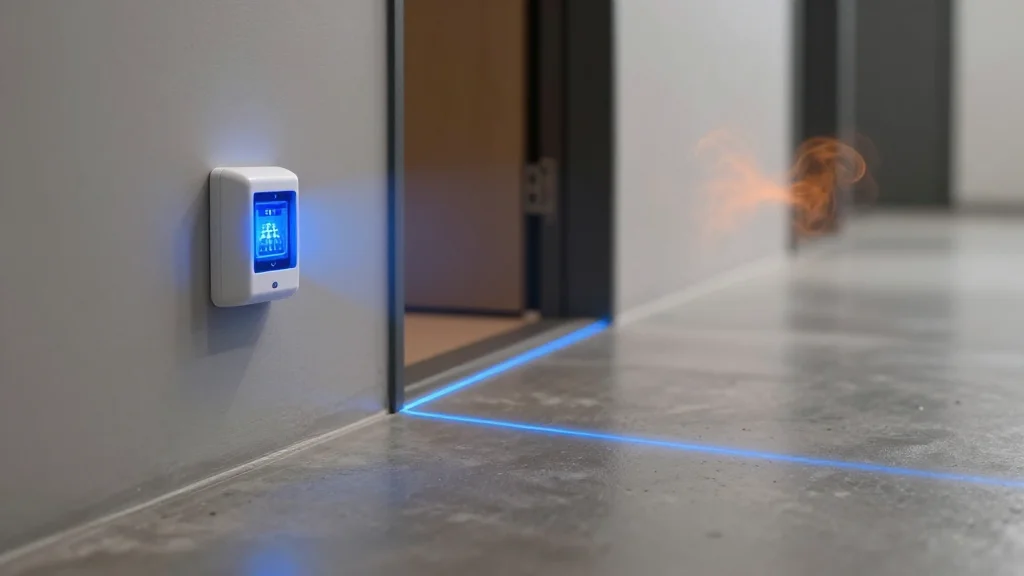
NIST Researchers Develop AI Model to Guide Building Evacuations During Fires
Why It Matters
Dynamic, AI‑guided evacuation can reduce exposure to toxic smoke and improve survival rates, reshaping fire safety standards for smart buildings.
Key Takeaways
- •Safe Step uses reinforcement learning to predict fire spread and guide evacuees
- •Model selects routes with lowest fractional effective dose of toxic gases
- •Tested on single‑story layouts, outperforming traditional shortest‑path algorithms
- •Future work targets multi‑level buildings and multi‑agent crowd dynamics
- •Adoption expected within 5‑10 years pending regulatory approval
Pulse Analysis
Fire safety has traditionally relied on static exit signs and pre‑planned routes that assume conditions remain unchanged after an alarm. In reality, fire and smoke can rapidly alter the safest path, leaving occupants vulnerable to toxic gases or blocked egress. The rise of sensor‑rich “smart” buildings creates an opportunity to replace these static cues with dynamic guidance that reflects real‑time conditions. NIST’s long‑standing expertise in fire research positions it to pioneer AI solutions that bridge this gap between static infrastructure and adaptive emergency response.
Safe Step tackles the problem with reinforcement learning, allowing the algorithm to explore countless evacuation scenarios and learn which routes minimize exposure to hazardous gases. The model quantifies risk using the fractional effective dose (FED), a metric that aggregates toxic inhalation over time, and continuously updates its recommendations as temperature, smoke density, and carbon‑monoxide levels are streamed from building sensors. In controlled simulations of a single‑story floor plan, Safe Step consistently identified lower‑FED pathways than conventional shortest‑path algorithms, demonstrating a measurable reduction in projected occupant dose and potential fatalities.
The commercial rollout of Safe Step will hinge on regulatory endorsement, rigorous reliability testing, and seamless integration with existing fire alarm and building management systems. As smart‑building deployments accelerate, developers and owners are seeking AI‑driven safety features that can differentiate their assets and meet emerging code requirements. A five‑to‑ten‑year horizon for market adoption aligns with the typical lifecycle of fire‑safety standards revisions, suggesting that the technology could become a standard component of next‑generation egress signage. Ultimately, AI‑guided evacuation promises to lower casualty rates and protect property, reshaping the economics of fire risk management.
NIST Researchers Develop AI Model to Guide Building Evacuations During Fires
Comments
Want to join the conversation?
Loading comments...