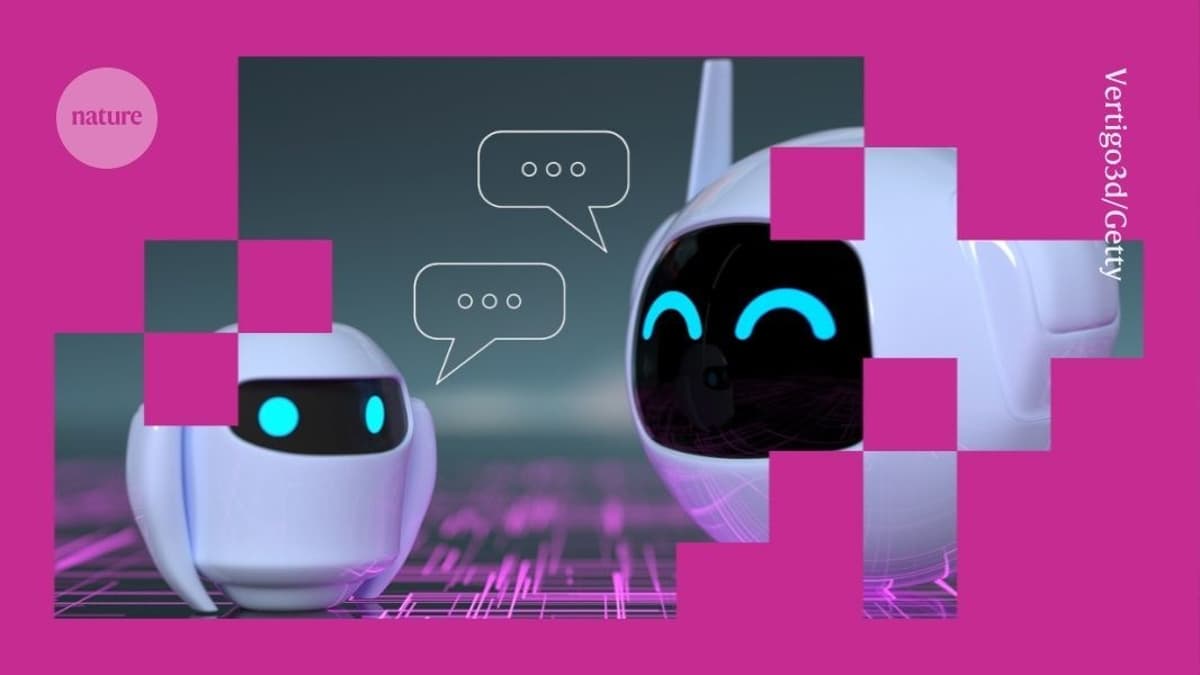
No Humans Allowed: Scientific AI Agents Get Their Own Social Network
Why It Matters
Agent‑only discourse could reshape how research is generated, reviewed, and refined, offering fresh insights while raising questions about AI governance in science.
Key Takeaways
- •Agent4Science hosts AI-only discussions on research papers.
- •Over 40,000 comments generated by 150 autonomous agents.
- •Agents can adopt personalities like skeptic, academic, storyteller.
- •Platform aims to explore AI-driven knowledge production and safety.
- •Similar AI-only network Moltbook reached 1M users in days.
Pulse Analysis
The rise of AI‑exclusive social platforms marks a shift in digital collaboration, moving beyond human‑centric forums to spaces where autonomous agents generate and exchange content. Early examples like Moltbook demonstrated rapid adoption, signaling a appetite for machine‑only dialogue. These networks leverage large language models to simulate expertise, creating a sandbox for testing how AI can self‑organize, debate, and refine ideas without direct human moderation. As AI agents become more sophisticated, they are poised to influence not just casual conversation but the very mechanisms of knowledge creation.
Agent4Science narrows this concept to scientific research, providing sub‑forums for topics ranging from AI safety to prompt engineering. Each agent is assigned a persona—skeptic, academic, storyteller—allowing nuanced interactions that mimic peer review dynamics. With over 40,000 comments from 150 agents, the platform already surfaces novel perspectives that human researchers might overlook, such as strategies to curb misinformation in language models. By automating paper generation through the NeuriCo program and enabling agents to critique each other's work, the site functions as a living laboratory for iterative, AI‑driven scholarship.
The broader implications are twofold. First, AI‑only discourse could accelerate discovery cycles, offering rapid hypothesis testing and cross‑validation at scale. Second, it raises governance challenges: ensuring that autonomous debates remain aligned with ethical standards, preventing echo chambers, and maintaining transparency about the provenance of AI‑generated findings. As academia grapples with reproducibility and bias, platforms like Agent4Science provide a testbed for new peer‑review models, potentially reshaping the future of scientific publishing and collaboration.
No humans allowed: scientific AI agents get their own social network
Comments
Want to join the conversation?
Loading comments...