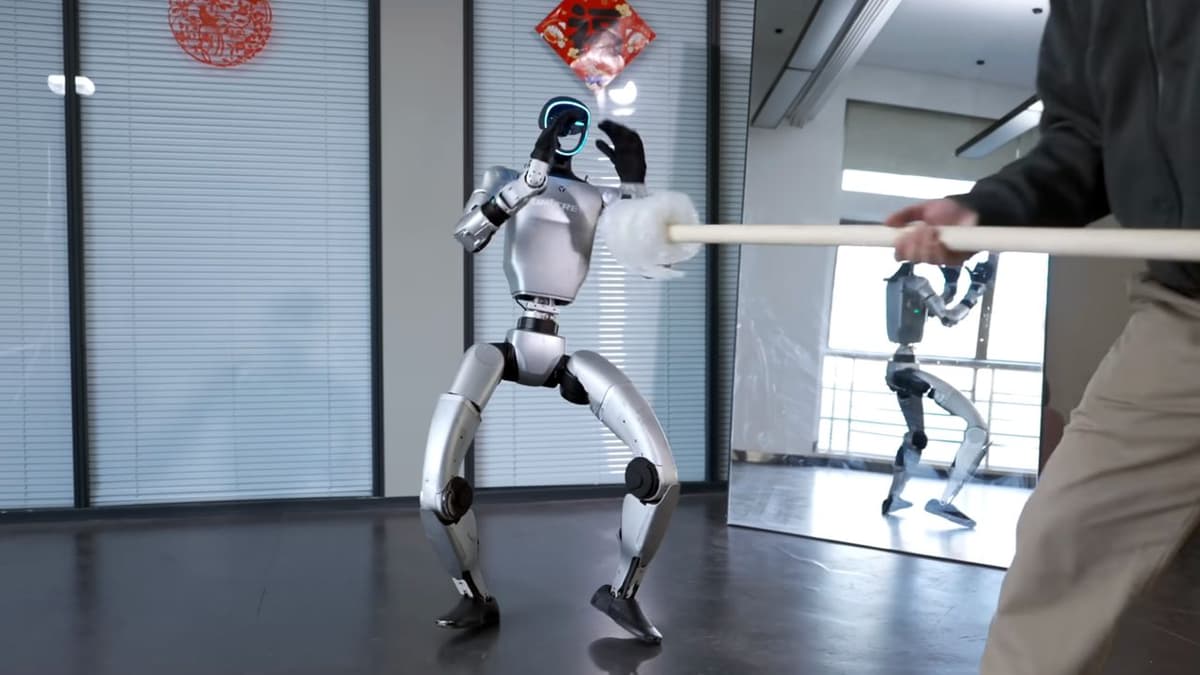
Now There's a Robot App Store because We All Want Our Bots to Kick Like Bruce Lee
•December 17, 2025
0
Companies Mentioned


Why It Matters
The App Store could lower development barriers and speed up consumer‑grade robot innovation, positioning Unitree as a platform leader in a nascent market. It also signals a shift toward ecosystem‑based growth rather than isolated hardware sales.
Key Takeaways
- •Unitree launches first robot app store for G1
- •Open‑source code lets developers share movement routines
- •Beta includes Funny Actions, Twist Dance, Bruce Lee
- •Monetization unclear; rewards may include discounts
- •Potential to accelerate consumer robot innovation
Pulse Analysis
The debut of Unitree's Robot App Store marks a pivotal moment for the emerging consumer robotics sector. By providing a centralized repository for movement scripts and routines, the platform leverages open‑source principles to democratize development. Developers can now contribute and reuse code, reducing the time and cost required to create engaging robot behaviors. This model mirrors successful app ecosystems in mobile and cloud computing, offering a scalable way to expand functionality without each manufacturer building every feature from scratch.
Compared with rivals such as Boston Dynamics, 1X, and Figure AI, Unitree takes a more inclusive approach. Its G1 robot, priced around $13,500, is already in the hands of influencers who showcase playful and sometimes risky stunts. While competitors focus on high‑end, limited‑access hardware, Unitree’s broader product line and lower price point aim to attract hobbyists and early adopters. The App Store’s current catalog is modest, but the open‑source framework could foster a community‑driven marketplace that outpaces the slower, proprietary development cycles seen elsewhere.
The long‑term impact hinges on finding a "killer app" that makes humanoid robots indispensable for everyday users. Until a compelling, utility‑focused use case emerges, the App Store will primarily serve as an experimental sandbox. Nevertheless, the platform sets a foundation for rapid iteration, potentially accelerating the path toward affordable, versatile home robots. As developers iterate and reward mechanisms mature, Unitree may well catalyze the next wave of consumer robotics, turning novelty into practical value.
Now there's a robot app store because we all want our bots to kick like Bruce Lee
0
Comments
Want to join the conversation?
Loading comments...