Nvidia Announces DLSS 4.5 with 6x Frame Generation and Improved Image Quality
Companies Mentioned
Why It Matters
DLSS 4.5 raises the bar for real‑time AI upscaling, giving gamers higher frame rates without sacrificing image quality and strengthening Nvidia’s lead in graphics acceleration.
Key Takeaways
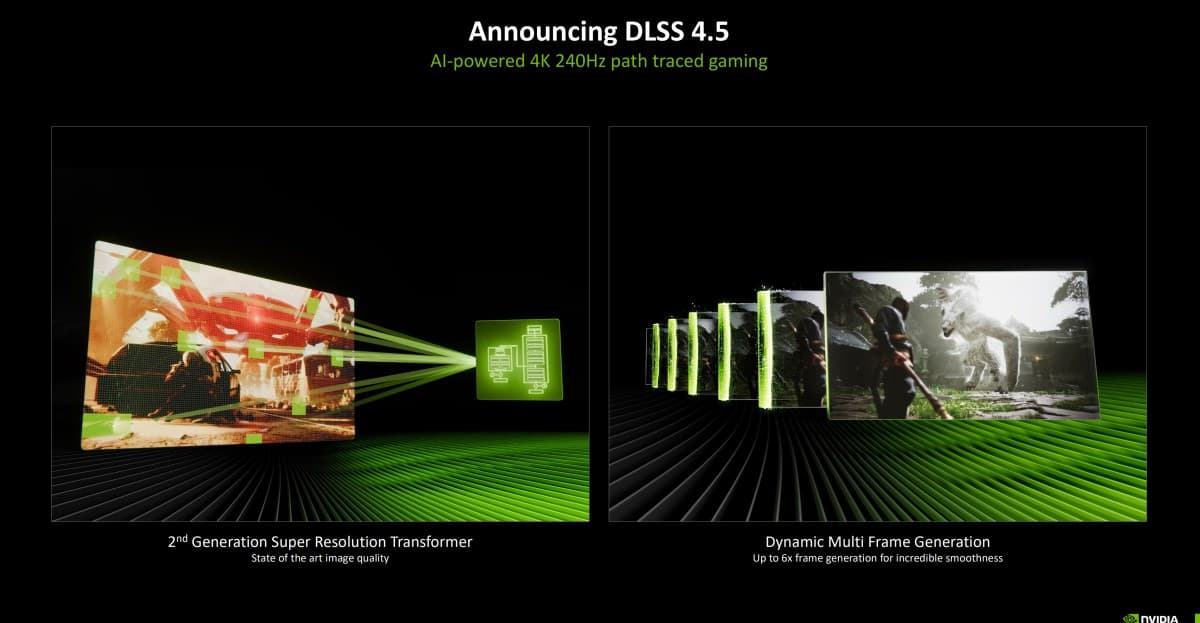
- •DLSS 4.5 adds 6× frame generation for smoother motion
- •New transformer model uses five times more compute power
- •Supports all RTX GPUs; optimal on RTX 40/50 series
- •Reduces ghosting, improves anti-aliasing, less shimmering
- •Targets 240 Hz monitors with higher refresh rates
Pulse Analysis
The launch of DLSS 4.5 marks the latest milestone in Nvidia's AI‑driven rendering roadmap, building on the success of earlier DLSS versions that already reshaped how developers balance performance and fidelity. By leveraging a second‑generation transformer architecture, the system can interpret scene semantics more accurately, enabling finer edge reconstruction and better lighting consistency. This leap in algorithmic sophistication aligns with the broader industry shift toward machine‑learning‑enhanced graphics pipelines, where GPU manufacturers compete to embed deeper AI capabilities directly into silicon.
At the heart of the update lies the 6× Multi‑Frame Generation engine, which creates up to five additional frames for each native render. On RTX 40‑ and 50‑series GPUs, the enhanced Tensor Cores accelerate this process, delivering frame‑rate boosts that make 240 Hz gaming viable without overwhelming power budgets. Early demos show tangible reductions in ghosting and shimmering, while anti‑aliasing gains translate to crisper textures in demanding titles. For gamers, the practical outcome is smoother motion and clearer visuals even on legacy RTX hardware, though the most dramatic uplift is reserved for the newest cards.
From a market perspective, DLSS 4.5 strengthens Nvidia's ecosystem advantage, encouraging developers to adopt the technology as a standard performance tier. As more studios integrate the API, the AI upscaling model becomes a de‑facto baseline for high‑refresh gaming experiences, potentially influencing console design and cloud‑gaming services. Consumers benefit from extended hardware longevity, as older GPUs receive a software‑based performance lift, while the industry watches how rival solutions, such as AMD's FSR and Intel's XeSS, respond to Nvidia's intensified AI focus.
Nvidia announces DLSS 4.5 with 6x Frame Generation and improved image quality
Comments
Want to join the conversation?
Loading comments...