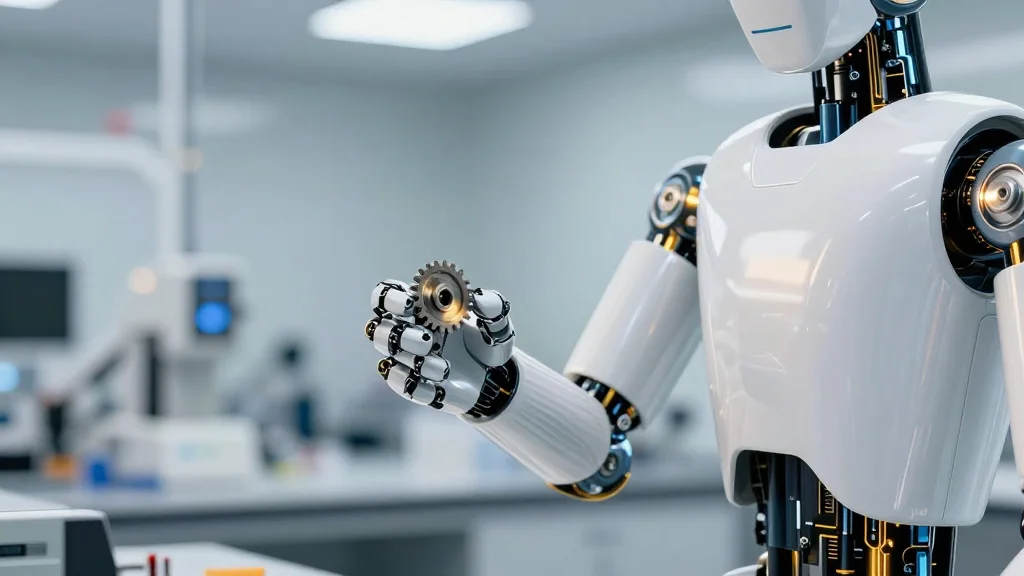
Nvidia Chief Pushes Industrial Humanoid Robot Opportunity
Companies Mentioned
Why It Matters
By providing an off‑the‑shelf research platform, Nvidia accelerates the development pipeline for industrial robotics, potentially unlocking massive economic value as manufacturers adopt physically intelligent machines. The move also strengthens Nvidia’s ecosystem, tying hardware, software, and partner hardware into a single AI‑driven solution.
Key Takeaways
- •Nvidia provides a ready-to-use humanoid robot platform for academia
- •Reference robot integrates Unitree H2 body with Sharpa tactile five‑finger hands
- •Isaac GR00T stack offers unified compute and open‑source software
- •Nvidia projects multitrillion‑dollar market from industrial humanoid adoption
- •Simplifies research costs, accelerating physical AI breakthroughs
Pulse Analysis
Nvidia’s entry into humanoid robotics reflects a broader shift where artificial intelligence is no longer confined to data centers but is moving into the physical world. The company’s Isaac GR00T platform combines high‑performance GPUs, real‑time simulation, and an open software stack, giving developers the tools to train and deploy sophisticated control policies. By bundling this with a ready‑made mechanical chassis, Nvidia removes a major barrier—hardware integration—that has traditionally slowed academic research and prototyping in robotics.
The reference robot, built on Unitree’s H2 body and Sharpa’s five‑finger tactile hands, offers a near‑human scale (almost six feet tall) and fine‑grip capabilities essential for tasks like assembly, inspection, and material handling. For university labs, the turnkey solution translates to lower capital expenditures and faster iteration cycles, enabling students and researchers to focus on algorithmic innovation rather than mechanical design. Partnerships with established robot manufacturers also signal a collaborative ecosystem where Nvidia’s AI expertise complements specialized hardware, fostering a fertile ground for breakthroughs in perception, manipulation, and autonomous decision‑making.
Industry analysts estimate that widespread adoption of physically intelligent robots could generate a multitrillion‑dollar economic impact over the next decade, reshaping sectors from automotive to consumer goods. However, challenges remain, including safety standards, integration with legacy systems, and the need for robust, real‑time AI models that can handle unpredictable environments. Nvidia’s strategy of providing a unified, secure platform aims to mitigate these hurdles, positioning the company as a central hub in the emerging market for industrial humanoids. As research translates into commercial deployments, the reference robot could become the de‑facto benchmark for next‑generation physical AI solutions.
Nvidia chief pushes industrial humanoid robot opportunity
Comments
Want to join the conversation?
Loading comments...