AI News and Headlines
  • All Technology
  • AI
  • Autonomy
  • B2B Growth
  • Big Data
  • BioTech
  • ClimateTech
  • Consumer Tech
  • Crypto
  • Cybersecurity
  • DevOps
  • Digital Marketing
  • Ecommerce
  • EdTech
  • Enterprise
  • FinTech
  • GovTech
  • Hardware
  • HealthTech
  • HRTech
  • LegalTech
  • Nanotech
  • PropTech
  • Quantum
  • Robotics
  • SaaS
  • SpaceTech
AllNewsDealsSocialBlogsVideosPodcastsDigests

AI Pulse

EMAIL DIGESTS

Daily

Every morning

Weekly

Sunday recap

NewsDealsSocialBlogsVideosPodcasts
AINews**NVIDIA Earth-2 Open Models Span the Whole Weather Stack**
**NVIDIA Earth-2 Open Models Span the Whole Weather Stack**

AI

**NVIDIA Earth-2 Open Models Span the Whole Weather Stack**

•January 26, 2026
0
Hugging Face
Hugging Face•Jan 26, 2026

Companies Mentioned

NVIDIA

NVIDIA

NVDA

GitHub

GitHub

YouTube

YouTube

Why It Matters

These open, GPU‑accelerated models lower the cost and time required for high‑resolution weather forecasting, allowing enterprises and researchers to build sovereign, customizable prediction systems without relying on supercomputers.

Key Takeaways

  • •StormScope delivers km‑scale forecasts up to six hours.
  • •Atlas predicts 15‑day global weather across 70+ variables.
  • •HealDA creates initial atmospheric states in seconds on GPUs.
  • •Earth2Studio simplifies deployment of open‑source weather AI models.
  • •Open models enable sovereign, customizable weather prediction pipelines.

Pulse Analysis

The meteorological community has long depended on physics‑driven numerical models that demand massive supercomputing resources and lengthy runtimes. Nvidia’s Earth‑2 initiative disrupts this paradigm by delivering a suite of open‑source, GPU‑native models that democratize access to cutting‑edge forecasting capabilities. By packaging the software stack—Earth2Studio for pipeline orchestration and Physics Nemo for training—Nvidia empowers organizations to run sophisticated weather simulations on commodity hardware. This shift not only reduces capital expenditure but also accelerates research cycles, fostering rapid experimentation in climate analytics and extreme‑event prediction.

At the heart of the release are three architectures. StormScope, the nowcasting engine, ingests geostationary satellite imagery to produce kilometer‑scale precipitation forecasts up to six hours ahead, surpassing conventional radar‑based methods on short‑term accuracy. Atlas extends the horizon, employing a latent diffusion transformer to generate 15‑day forecasts for over seventy atmospheric variables, delivering lower error rates than leading open models such as GenCast. HealDA tackles data assimilation, synthesizing global atmospheric snapshots in seconds on GPUs, a task that traditionally consumes hours on dedicated supercomputers. Together, they form an end‑to‑end AI weather pipeline.

The commercial ramifications are immediate. Energy traders, logistics firms, and disaster‑response agencies can integrate these models into existing decision‑support systems, gaining hyper‑local insights without the latency of legacy workflows. Because the code and checkpoints are openly hosted on Hugging Face, developers retain full control over data provenance and can fine‑tune models to regional climatology, ensuring sovereign forecasting capabilities. As climate risk intensifies, Nvidia’s open Earth‑2 stack positions AI as a scalable, cost‑effective backbone for the next generation of weather‑dependent services.

**NVIDIA Earth-2 Open Models Span the Whole Weather Stack**

Authors: Mike Pritchard, Jaideep Pathak, Jean Kossaifi, Aayush Gupta

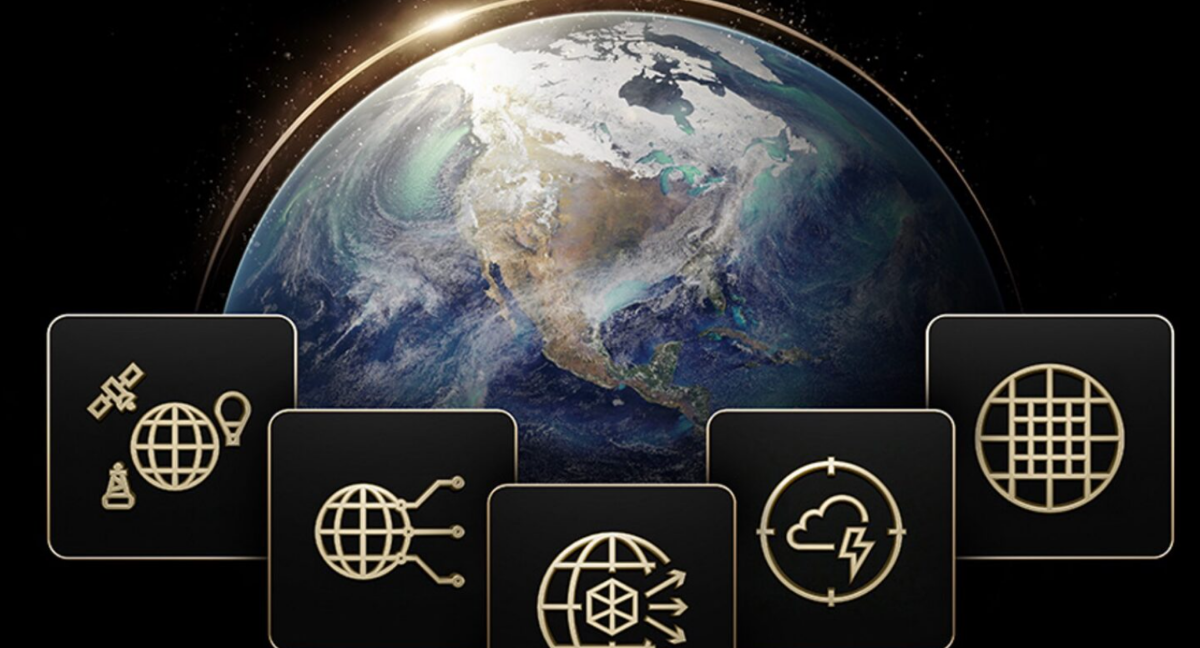
NVIDIA is excited to announce three new open‑source models as part of the NVIDIA Earth‑2 family, making it easier than ever to build weather‑forecasting capabilities across the weather stack, including tasks such as data assimilation, forecasting, nowcasting, downscaling and more. In addition, developers can quickly get started building weather and climate simulations by using NVIDIA open‑source software: Earth2Studio for creating inference pipelines and Physics Nemo for training models.

Earth‑2 comprises a set of accelerated tools and models which enables developers to bring together typically disparate weather and climate AI capabilities. Because Earth‑2 is completely open, developers can customize and fine‑tune their simulations to their specific needs, using their own data and their own infrastructure to build sovereign weather and climate predictions they fully own and control.

Earth‑2:

  • Is a suite of leading open weather and climate models

  • Is easy‑to‑use thanks to an ecosystem of open‑source software

  • Enables you to create your own sovereign capabilities


Earth‑2 Nowcasting: Kilometer‑Scale Severe Weather Prediction

Out now on Hugging Face: Earth‑2 Nowcasting, powered by a new model architecture called StormScope, using generative AI to make country‑scale forecasts into kilometer‑resolution, zero‑to‑six‑hour predictions of local storms and hazardous weather in just minutes. Earth‑2 Nowcasting can generate the first predictions that outperform traditional, physics‑based weather‑prediction models on short‑term precipitation forecasting by simulating storm dynamics directly. It harnesses AI to directly predict satellite and radar data.

  • Trained directly on globally available geostationary satellite observations (GOES) over the contiguous US (CONUS).

  • The method could be applied to other regions with similar satellite coverage.

Research paper: Learning Accurate Storm‑Scale Evolution from Observations – https://research.nvidia.com/publication/2026-01_learning-accurate-storm-scale-evolution-observations


Earth‑2 Medium Range: Highly Accurate 15‑Day Global Forecasts

Out now on Hugging Face: Earth‑2 Medium Range, powered by a new model architecture called Atlas, enabling high‑accuracy weather prediction for medium‑range forecasts — up to 15 days in advance — across 70+ weather variables (temperature, pressure, wind, humidity, etc.). It uses a latent diffusion transformer architecture to predict incremental changes in the atmosphere, preserving critical atmospheric structures and reducing forecasting errors. On standard benchmarks it outperforms leading open models such as GenCast on the most common forecasting variables measured by the industry.

Research paper: Demystifying Data‑Driven Probabilistic Medium‑Range Weather Forecasting – https://research.nvidia.com/publication/2026-01_demystifying-data-driven-probabilistic-medium-range-weather-forecasting


Earth‑2 Global Data Assimilation: An End‑to‑End AI Pipeline

Coming soon to Hugging Face. Earth‑2 Global Data Assimilation is powered by a new model architecture called HealDA, which produces initial conditions for weather prediction—snapshots of the current atmosphere (temperature, wind speed, humidity, air pressure) at thousands of locations worldwide. HealDA can generate these initial conditions in seconds on GPUs instead of hours on supercomputers. When coupled with Earth‑2 Medium Range, this results in the most skillful forecasting predictions produced by an open, entirely AI pipeline.

Research paper: HealDA: Highlighting the Importance of Initial Errors in End‑to‑End AI Weather Forecasts – https://research.nvidia.com/publication/2026-01_healda-highlighting-importance-initial-errors-end-end-ai-weather-forecasts

These models join established open NVIDIA weather and climate models such as FourcastNet3, CorrDiff, cBottle, DLESym, and more.


Getting Started

NVIDIA Earth2Studio (https://github.com/NVIDIA/earth2studio) is an open‑source Python ecosystem for quickly creating powerful AI weather and climate simulations. It provides all the necessary inference tools to get started with the new model checkpoints on Hugging Face. It’s as easy as:

  1. Install Earth2Studio.

  2. Download the desired model checkpoint from Hugging Face.

  3. Run the provided inference scripts or integrate the models into your own pipelines.

Getting Started video: https://www.youtube.com/watch?v=Sog6aCapZeA


Resources

  • Hugging Face package for Earth‑2 Nowcasting – https://huggingface.co/nvidia/stormscope-goes-mrms

  • Research Paper: Learning Accurate Storm‑Scale Evolution from Observations – https://research.nvidia.com/publication/2026-01_learning-accurate-storm-scale-evolution-observations

  • Hugging Face package for Earth‑2 Medium‑Range – https://huggingface.co/nvidia/atlas-era5

  • Research Paper: Demystifying Data‑Driven Probabilistic Medium‑Range Weather Forecasting – https://research.nvidia.com/publication/2026-01_demystifying-data-driven-probabilistic-medium-range-weather-forecasting

  • Research Paper: HealDA: Highlighting the Importance of Initial Errors in End‑to‑End AI Weather Forecasts – https://research.nvidia.com/publication/2026-01_healda-highlighting-importance-initial-errors-end-end-ai-weather-forecasts

Read Original Article
0

Comments

Want to join the conversation?

Loading comments...