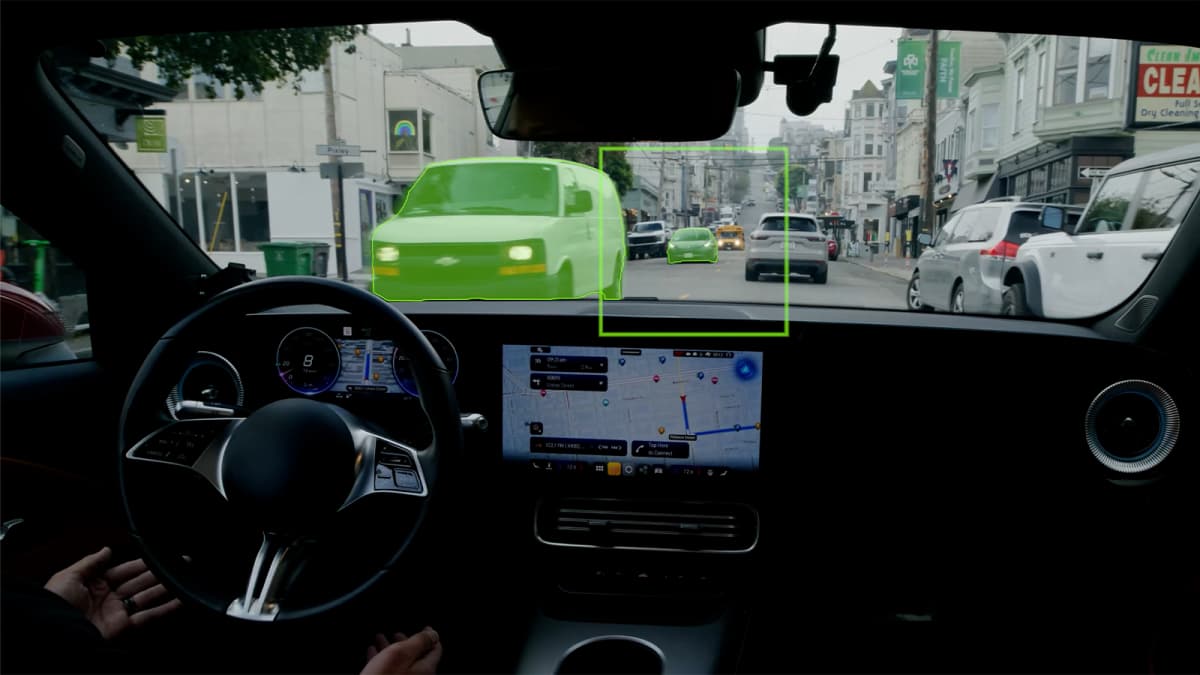
NVIDIA Launches Alpamayo 2 Super Open Reasoning Model for Robotaxis
Companies Mentioned

Why It Matters
Providing an open, high‑capacity reasoning model and a full simulation stack lowers the barrier for automakers to build safe, scalable L4 robotaxis, speeding industry adoption and regulatory confidence.
Key Takeaways
- •Alpamayo 2 Super is a 32‑billion‑parameter VLA model.
- •Model adds full‑surround perception and meta‑action outputs for L4.
- •AlpaGym enables closed‑loop reinforcement learning in simulation.
- •OmniDreams generates photorealistic rare driving scenarios at scale.
- •Open release expected summer 2026 on GitHub and Hugging Face.
Pulse Analysis
The autonomous‑vehicle market has long grappled with the gap between perception‑only models and the nuanced decision‑making required for level‑4 operation. Traditional pipelines rely on massive data annotation efforts and fragmented toolsets, slowing innovation and inflating costs. NVIDIA’s Alpamayo 2 Super addresses this by delivering a 32‑billion‑parameter foundation model that fuses vision, language and action, enabling vehicles to reason about complex traffic situations much like a human driver. This leap in model capacity, combined with built‑in interpretability, gives developers a robust starting point for safety validation and regulatory reporting.
Alpamayo 2 Super’s architecture expands beyond forward‑facing cameras to full‑surround perception, delivering 360‑degree situational awareness essential for lane changes, merges and intersection navigation. The introduction of meta‑actions—high‑level commands such as "yield" or "stop"—allows downstream planners to operate on abstract decisions rather than raw trajectories, improving reaction time and reducing computational load. As a teacher model, Alpamayo 2 Super can be distilled into smaller, vehicle‑ready networks that run on NVIDIA DRIVE Hyperion and AGX Thor hardware, ensuring that the performance gains translate directly to on‑board systems.
Complementing the model, NVIDIA released a suite of open‑source tools that close the training loop. AlpaGym runs continuous decision‑observation cycles in the AlpaSim microservice, exposing compounding errors that static datasets miss. OmniDreams generates photorealistic, long‑tail scenarios at scale, while Omniverse NuRec reconstructs real‑world fleet data into 3D environments for synthetic data creation. Together, these components streamline the path from raw sensor logs to validated, deployable autonomy stacks, positioning NVIDIA as a catalyst for faster, safer robotaxi rollouts across the industry.
NVIDIA Launches Alpamayo 2 Super Open Reasoning Model for Robotaxis
Comments
Want to join the conversation?
Loading comments...