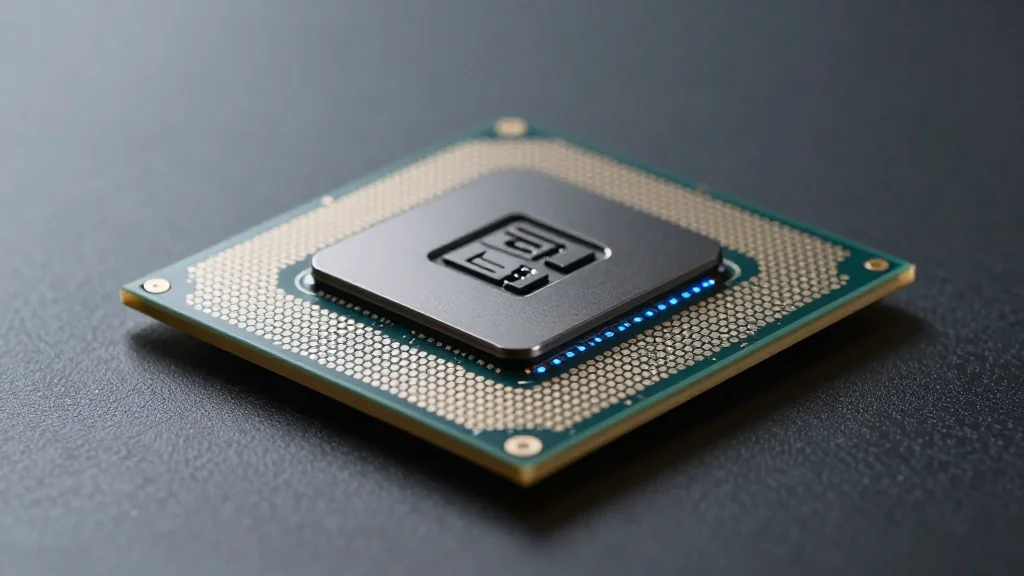
NVIDIA Unveils New ARM-Based AI/Graphics Superchip Coming to Windows PCs and Laptops

Companies Mentioned

Why It Matters
By bringing petaflop‑scale AI performance to mainstream laptops, Nvidia could redefine PC workloads and give the company a foothold in the broader consumer computing market beyond graphics cards.
Key Takeaways
- •RTX Spark combines 6,144 Blackwell RTX cores with 20 ARM cores
- •Offers up to 1 petaflop AI performance in a laptop‑friendly form factor
- •Unified memory ranges from 16 GB to 128 GB, scaling power 5‑80 W
- •Supports Microsoft Copilot+ with a 40 TOPS NPU capability
- •Launch slated for fall across Dell, HP, ASUS, Lenovo, MSI PCs
Pulse Analysis
Nvidia’s entry into the ARM‑CPU space marks a strategic pivot from its traditional GPU‑only focus. The N1X processor, co‑designed with Microsoft, merges high‑throughput graphics cores with a full‑featured ARM architecture, directly competing with AMD’s Ryzen AI Max and Qualcomm’s Snapdragon X2. This convergence reflects a broader industry trend where AI acceleration is becoming as critical as raw graphics performance, prompting chipmakers to embed heterogeneous compute units on a single die.
The RTX Spark’s technical specs underscore its ambition: 6,144 Blackwell RTX cores, 20 Mediatek ARM cores, and a unified memory pool that can stretch from 16 GB to 128 GB. Delivering up to 1 petaflop of AI throughput while operating within a 5‑80 W envelope, the chip promises laptop‑grade power efficiency previously reserved for desktops. Microsoft’s Windows 11 scheduler has been tuned to prioritize the chip’s tensor and NPU workloads, ensuring seamless integration with Copilot+ and other AI‑driven features. This tight hardware‑software coupling could accelerate the adoption of on‑device agents, reducing reliance on cloud inference.
For OEMs, the RTX Spark offers a differentiator in an increasingly saturated notebook market. Dell, HP, ASUS, Lenovo and MSI can now market AI‑centric performance as a core selling point, potentially commanding premium pricing. However, success hinges on software ecosystems catching up—developers must optimize applications for the new architecture, and power‑management tools need to balance performance with battery life. If Nvidia can deliver a compelling developer experience, the superchip could reshape the PC landscape, turning laptops into portable AI workstations and expanding Nvidia’s revenue beyond its traditional graphics stronghold.
NVIDIA Unveils New ARM-Based AI/Graphics Superchip Coming to Windows PCs and Laptops
Comments
Want to join the conversation?
Loading comments...