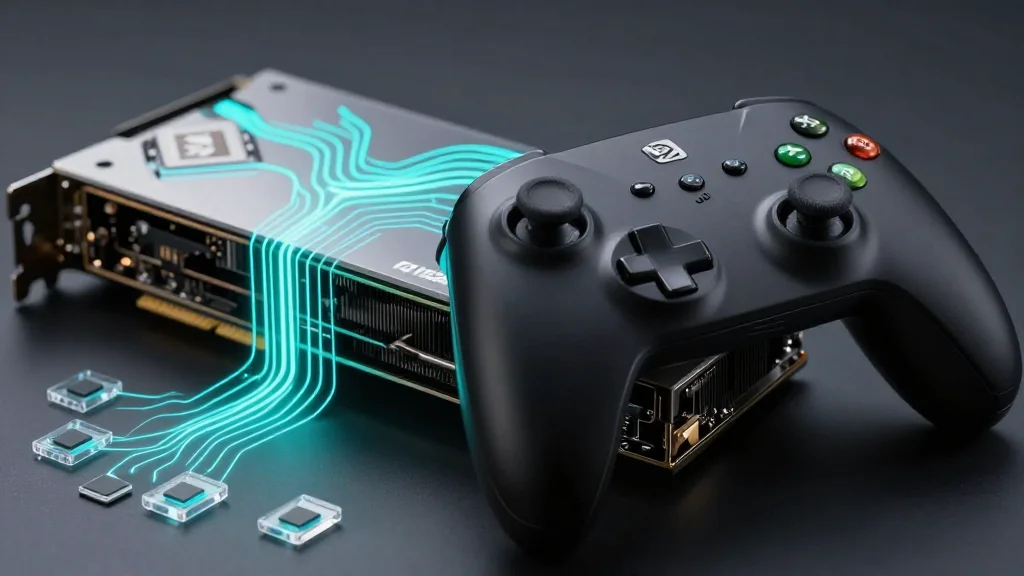
Nvidia's Once-Tight Bond with Gamers Is Cracking over AI, 'and that Breaks My Heart'
Companies Mentioned

Why It Matters
The pivot reshapes Nvidia’s growth engine, boosting shareholder returns while alienating a core community that once powered its rise, potentially altering the competitive landscape of PC gaming and AI hardware markets.
Key Takeaways
- •Nvidia's AI data‑center GPUs yield ~69% margins, gaming ~40%
- •2026 may see no new GeForce generation, first in 30 years
- •Memory shortage forces up to 40% cut in gaming GPU production
- •Blackwell AI GPU up to $40k; Vera Rubin system up to $4M
- •Gamers fear generative AI in DLSS 5 erodes artistic control
Pulse Analysis
Nvidia’s strategic realignment underscores a broader industry trend where AI workloads eclipse traditional graphics demand. By channeling scarce high‑bandwidth memory and manufacturing capacity into data‑center GPUs such as Hopper, Blackwell and the Vera Rubin system, the company capitalizes on margins that regularly exceed two‑thirds of revenue. This shift not only fuels Nvidia’s market‑capitalization surge but also pressures rivals—AMD and Intel—to secure memory supplies and accelerate their own AI‑centric roadmaps, intensifying competition in a fast‑growing segment.
For gamers, the consequences are palpable. A projected 40% reduction in GeForce production, coupled with the possibility of skipping a new GPU generation in 2026, inflates prices and narrows upgrade cycles. While some enthusiasts appreciate a longer refresh interval, many view the trade‑off as a betrayal of the community that built Nvidia’s brand. The controversy around DLSS 5, which leverages generative AI to upscale and alter visual assets, amplifies concerns that creative control may shift from developers to algorithms, potentially reshaping game design philosophies.
Analysts see Nvidia’s gamble as a calculated bet on higher‑margin AI revenue outweighing short‑term consumer goodwill. As AI chip sales climb—Blackwell GPUs fetching up to $40,000 and full Vera Rubin systems approaching $4 million—the company delivers robust earnings that satisfy investors. Yet the long‑term health of the PC gaming ecosystem hinges on Nvidia’s ability to balance AI ambitions with sustained support for gamers, lest it erode a loyal user base that still drives a sizable portion of overall GPU demand.
Nvidia's once-tight bond with gamers is cracking over AI, 'and that breaks my heart'
Comments
Want to join the conversation?
Loading comments...