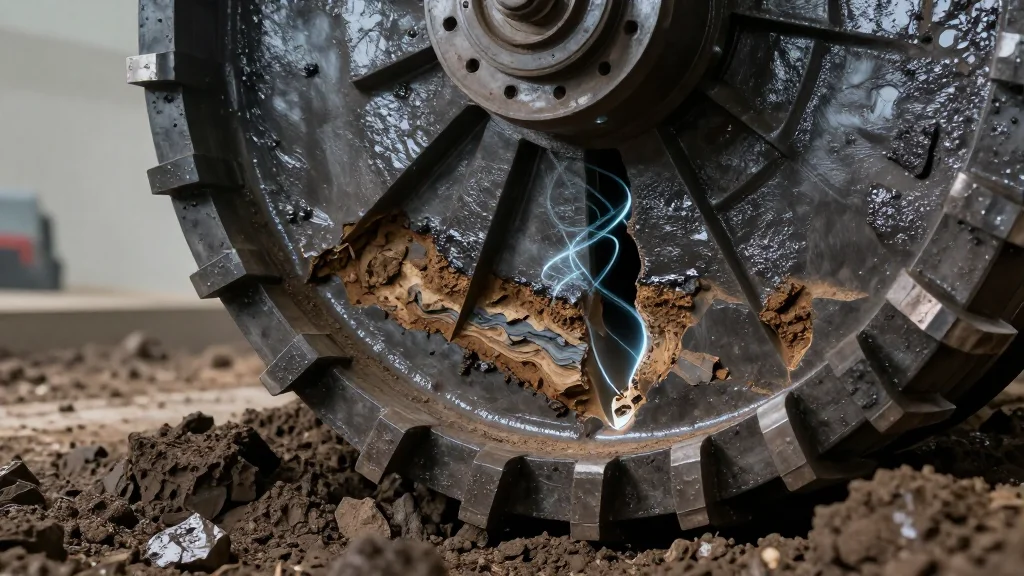
Objective Determination of Over-Excavation Criterion in Earth Pressure Balance Shield Tunnel Boring Machine Operations Using Data-Augmented Machine Learning
Why It Matters
An objective C_OE improves tunnel safety and reduces costly rework, giving operators a reliable metric to manage muck volume and prevent ground failures. This data‑centric insight can streamline project schedules and lower financial risk in underground construction.
Key Takeaways
- •Data‑augmented ML identified optimal over‑excavation criterion of 1.15
- •Model correctly flagged 86.4% of over‑excavation incidents
- •High torque in deep, water‑pressured soils drives excess excavation
- •Objective criterion reduces collapse risk and improves TBM efficiency
Pulse Analysis
Tunnel boring machines (TBMs) have long grappled with the challenge of over‑excavation, where excess muck removal can destabilize the surrounding ground and trigger costly collapses. Historically, engineers relied on experience‑based thresholds for the over‑excavation ratio (OER), leading to inconsistent safety margins across projects. As urban tunneling expands into complex geologies, the need for a reproducible, data‑backed standard has become acute, prompting researchers to explore advanced analytics that can capture the nuanced interplay of soil conditions, machine dynamics, and operational parameters.
The recent study leverages machine‑learning models enhanced through data‑augmentation techniques to classify normal versus over‑excavation scenarios. By training on a rich dataset of torque, pressure, and geological inputs, the algorithm pinpointed an optimal OER criterion (C_OE) of 1.15, delivering an 86.4% true‑positive rate for over‑excavation detection. Crucially, model interpretability revealed that spikes in torque—particularly in deep, weathered strata with elevated water pressure—are strong precursors to excessive excavation. This insight not only validates the chosen threshold but also equips operators with actionable diagnostics to adjust cutterhead settings in real time.
Adopting an objective C_OE can transform TBM project economics and safety. By reducing unexpected ground failures, contractors can avoid schedule delays and the hefty expense of remediation, which often runs into millions of dollars per incident. Moreover, the methodology aligns with the broader digital‑twin movement in civil engineering, where predictive analytics inform proactive decision‑making. As more tunneling firms integrate such machine‑learning tools, the industry can expect standardized best practices, enhanced risk management, and a measurable boost in productivity across complex underground ventures.
Objective determination of over-excavation criterion in earth pressure balance shield tunnel boring machine operations using data-augmented machine learning
Comments
Want to join the conversation?
Loading comments...