OpenAI's Deep Research Now Runs on GPT-5.2 and Lets Users Search Specific Websites
•February 10, 2026
0
Companies Mentioned

Why It Matters
The upgrade dramatically improves the accuracy and utility of AI‑driven research, giving enterprises faster, more reliable data extraction from the web. It also signals OpenAI’s push toward controllable, agent‑based workflows that can reshape knowledge‑work productivity.
Key Takeaways
- •Deep Research upgraded to GPT‑5.2 model.
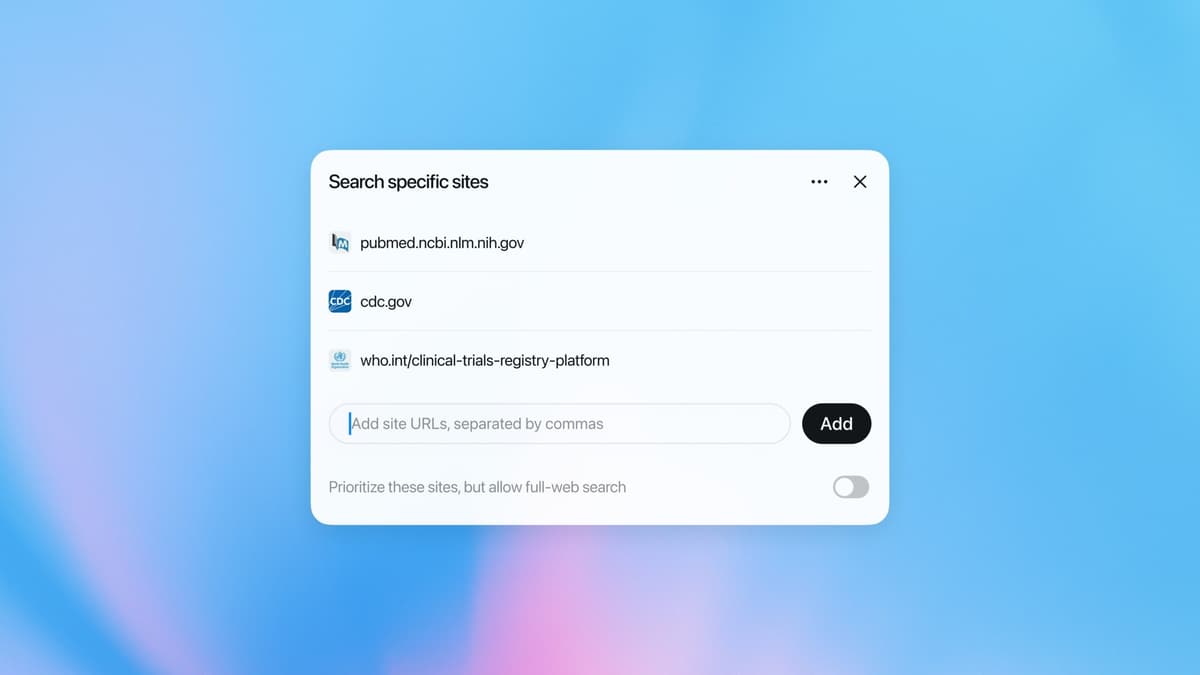
- •Users can search specific websites via ChatGPT.
- •Real‑time search tracking and interruptible queries added.
- •Full‑screen reports replace previous result format.
- •Web search reduces hallucinations but not fully eliminates them.
Pulse Analysis
OpenAI’s migration of Deep Research to the GPT‑5.2 architecture marks a notable leap in large‑language‑model capability. GPT‑5.2 delivers sharper reasoning, larger context windows, and more efficient token processing, allowing the system to orchestrate multi‑stage web queries with less latency. By branding Deep Research as an "AI agent," OpenAI underscores a strategic shift from static chat interactions toward autonomous, task‑oriented workflows that can initiate searches, synthesize data, and generate comprehensive reports without constant user prompting.
The new website‑specific search function expands the practical reach of ChatGPT for business users. Companies can now tether internal or public sites—such as product catalogs, regulatory databases, or market research portals—to the model, pulling precise information on demand. Real‑time tracking visualizes each query step, while the ability to pause, ask follow‑up questions, or inject additional sources gives users granular control over the research process. Full‑screen reporting consolidates findings into a polished format, streamlining decision‑making and reducing the need for manual data compilation.
Despite these advances, OpenAI cautions that web‑search integration does not fully eliminate hallucinations. Longer outputs still carry a higher error probability, and the quality of retrieved content depends on source reliability. Best practices now recommend pairing targeted queries with the GPT‑5.2 model’s reasoning strengths and cross‑checking critical facts. For the broader AI market, this rollout illustrates a maturation point where generative models are increasingly blended with curated search, setting a benchmark for competitors aiming to deliver trustworthy, enterprise‑grade intelligence solutions.
OpenAI's Deep Research now runs on GPT-5.2 and lets users search specific websites
0
Comments
Want to join the conversation?
Loading comments...