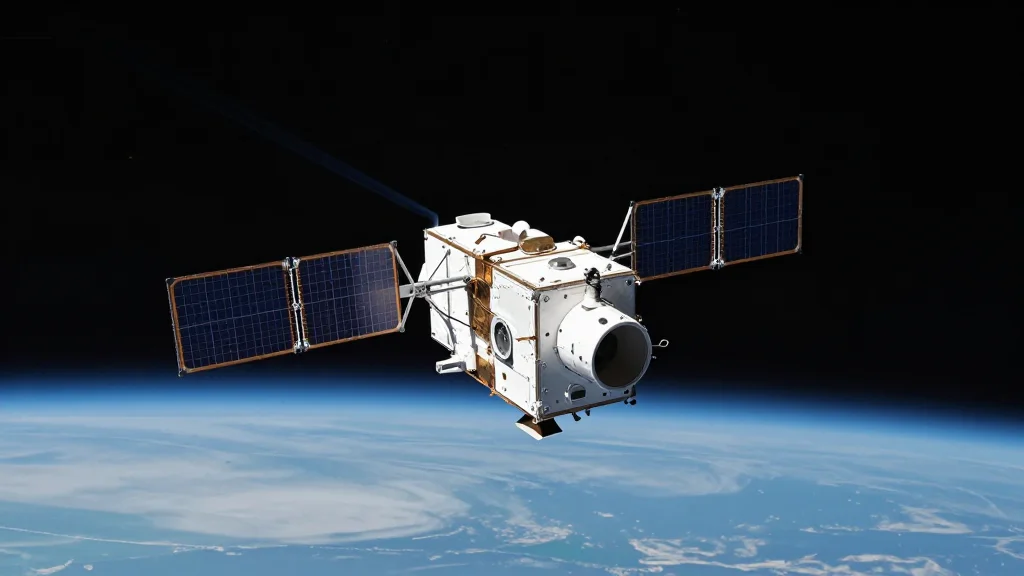
Operational AI Is Hitting the Limits of Earth Observation Data
Why It Matters
Without stable, AI‑ready EO data, operational models degrade, raising costs and slowing adoption across sectors like agriculture, defense, and climate monitoring.
Key Takeaways
- •Operational AI needs stable, calibrated EO data for continuous monitoring
- •Sensor drift and irregular revisit patterns cause data drift at scale
- •Downstream preprocessing creates a “geospatial tax” that hampers scalability
- •Initiatives like FAIR‑EO and CEOS ARD aim to deliver AI‑ready data
- •Pilots succeed, but operational deployments falter without built‑in consistency
Pulse Analysis
The surge of artificial intelligence in Earth Observation is reshaping how governments and enterprises extract value from satellite imagery. Early projects relied on curated, static datasets that could be hand‑tuned for each use case. Today, customers demand models that run continuously—monitoring crops, tracking deforestation, or assessing infrastructure risk in real time. This shift exposes a fundamental mismatch: most EO products were engineered for occasional scientific analysis, not for the relentless, automated pipelines AI requires.
At the heart of the problem are three technical weaknesses. First, sensor calibration drifts as instruments age or new satellites launch, altering the numeric meaning of pixel values. Second, revisit patterns are irregular, creating gaps and seasonal biases that break time‑series continuity. Third, the burden of harmonizing, quality‑controlling, and normalizing data remains with the end‑user, a costly "geospatial tax" that inflates operational expenses. When models encounter these inconsistencies, performance degrades, confidence erodes, and organizations often retreat to short‑term pilots rather than full‑scale deployments.
Industry responses are coalescing around the concept of analysis‑ready data. Programs like FAIR‑EO under Horizon Europe and the CEOS ARD standards embed calibration, consistency, and comparability directly into the data products, reducing the need for downstream fixes. By delivering datasets that behave predictably across time and space, they enable AI models to maintain accuracy without constant human intervention. As these standards mature, the barrier to operational EO‑AI will fall, unlocking new commercial opportunities and accelerating climate‑action initiatives worldwide.
Operational AI is Hitting the Limits of Earth Observation Data
Comments
Want to join the conversation?
Loading comments...