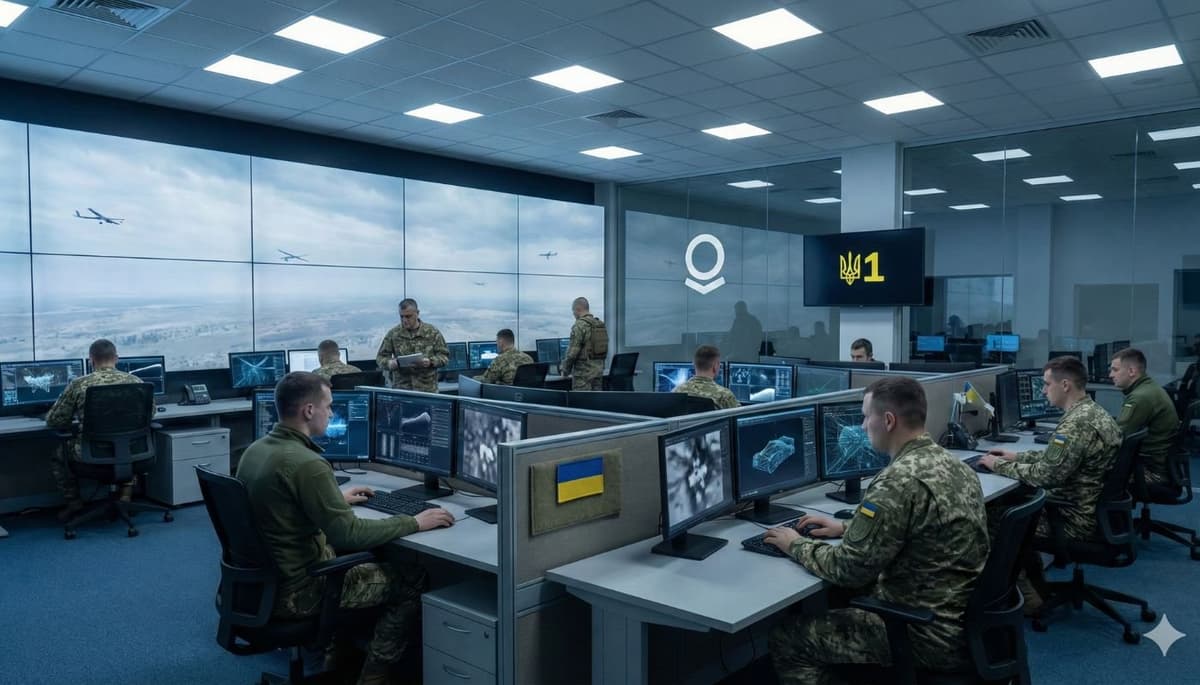
Palantir Helps Ukraine Turn Battlefield Data Into Drone Intercepts
•January 22, 2026
0
Companies Mentioned

Palantir
PLTR

Why It Matters
The platform accelerates autonomous air‑defense, helping Ukraine cope with massive drone volumes while showcasing a scalable, secure AI model for conflict zones worldwide.
Key Takeaways
- •Brave1 Dataroom provides secure AI workspace for Ukrainian developers.
- •Real combat imagery replaces synthetic data for drone‑counter AI training.
- •Russia may launch up to 1,000 Shahed drones daily.
- •Automation needed to handle high‑volume UAV attacks.
- •Platform serves as foundation for broader military AI applications.
Pulse Analysis
The integration of artificial intelligence into battlefield operations is no longer speculative; it is becoming a tactical necessity. Palantir’s Brave1 Dataroom exemplifies this shift by offering a hardened digital enclave where Ukrainian defense firms can ingest raw combat feeds—thermal signatures, radar snapshots, and video streams—directly from the front. Unlike traditional simulation‑heavy approaches, this real‑world data pipeline shortens the feedback loop, enabling AI models to learn the nuanced signatures of Shahed drones and improve detection accuracy in minutes rather than weeks.
From a technical standpoint, the Dataroom’s architecture isolates sensitive datasets while providing scalable compute for intensive model training. Developers can iterate across the full AI lifecycle—data preprocessing, model tuning, validation, and deployment—within a single, compliant environment. This reduces the risk of data leakage and ensures that each AI iteration reflects the latest operational realities, such as evolving drone camouflage or new flight patterns. The result is a more resilient air‑defense stack capable of autonomous target classification, trajectory prediction, and weapon cueing, all while easing the burden on human operators overwhelmed by high‑volume attacks.
Strategically, the initiative signals a broader trend toward data‑centric defense collaborations between governments and private tech firms. By institutionalizing a secure AI workspace, Ukraine not only bolsters its immediate counter‑UAV capabilities but also lays groundwork for future applications—electronic warfare, logistics optimization, and battlefield situational awareness. As other nations observe the efficacy of real‑data AI pipelines, we can expect similar partnerships to emerge, reshaping the global defense landscape toward faster, more autonomous decision‑making cycles.
Palantir Helps Ukraine Turn Battlefield Data Into Drone Intercepts
0
Comments
Want to join the conversation?
Loading comments...