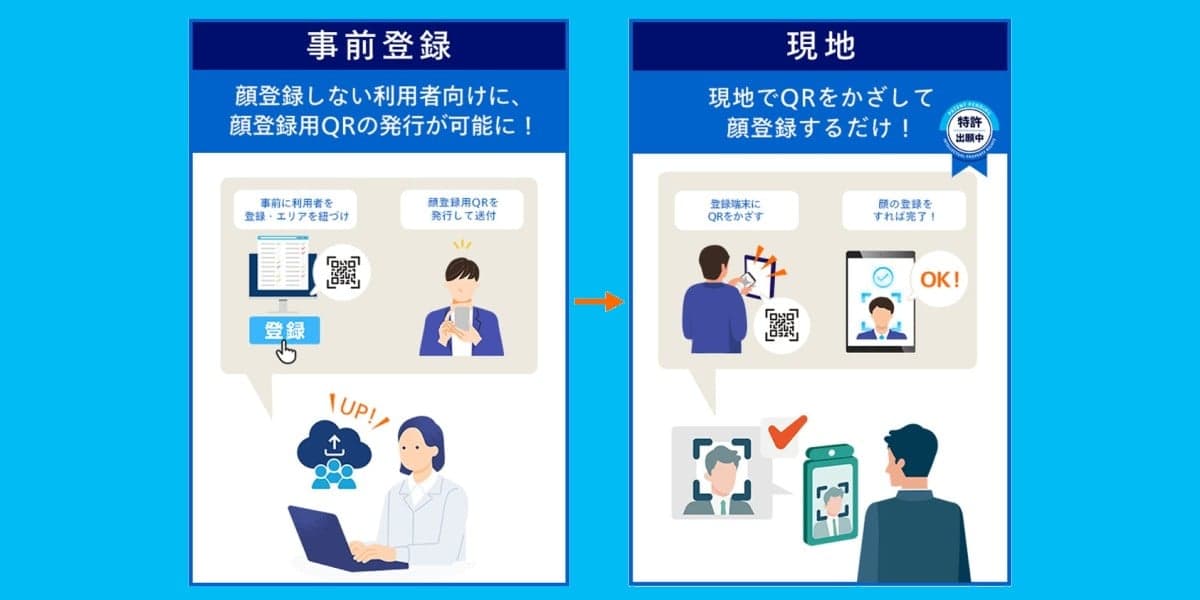
Panasonic Creates Device-Locked QR Codes to Speed Facial Biometric Capture
Companies Mentioned
Why It Matters
The solution cuts enrolment time and reduces security gaps in access‑control sites, giving enterprises a faster, safer way to scale biometric authentication.
Key Takeaways
- •Panasonic's QR codes only decode on authorized devices, preventing misuse.
- •Device-locked codes trigger facial scan, eliminating manual photo queues.
- •System stores biometric data for future verification within Site Management Service.
- •Collaboration with Hitachi aims to build a broader secure digital identity platform.
- •QR codes can hold ~3 KB, enough for facial feature vectors.
Pulse Analysis
Biometric access control has become a cornerstone of modern workplace security, yet many organizations still wrestle with the logistical bottleneck of capturing high‑quality facial images. Traditional enrolment requires staff to stand in line, pose for a camera, and wait for administrators to verify each scan, a process that can delay entry and increase operational costs. Panasonic’s latest iteration of its Site Management Service tackles this friction point by swapping the initial face‑photo step for a QR‑code presentation, leveraging the same camera hardware to read a secure token before launching the biometric capture. This shift not only accelerates throughput but also standardises the data capture workflow, reducing human error and the need for repeat scans.
The technical novelty lies in the QR code’s device‑locking mechanism. While conventional QR codes are universally readable, Panasonic’s version embeds encryption that only renders intelligible data within pre‑approved readers and environments, as outlined in its recent patent filing. The code stores roughly 3 KB of information—sufficient for a compact facial‑feature vector—allowing the system to verify that the presented token matches an authorised enrolment request before activating the camera. This approach mitigates the risk of rogue actors using stolen codes on personal smartphones, preserving the confidentiality of registration details while maintaining the convenience of QR‑based interactions.
Beyond the immediate operational gains, Panasonic’s move signals a broader industry trend toward converging physical‑access technologies with digital‑identity ecosystems. The simultaneous announcement of a partnership with Hitachi to co‑develop a secure digital‑identity platform suggests that the QR‑enabled biometric workflow could become a building block for cross‑domain identity verification, from corporate campuses to smart‑city services. As enterprises seek scalable, privacy‑by‑design solutions, the blend of device‑locked QR codes and facial biometrics positions Panasonic at the forefront of next‑generation access control, potentially reshaping standards for secure, frictionless entry worldwide.
Panasonic creates device-locked QR codes to speed facial biometric capture
Comments
Want to join the conversation?
Loading comments...