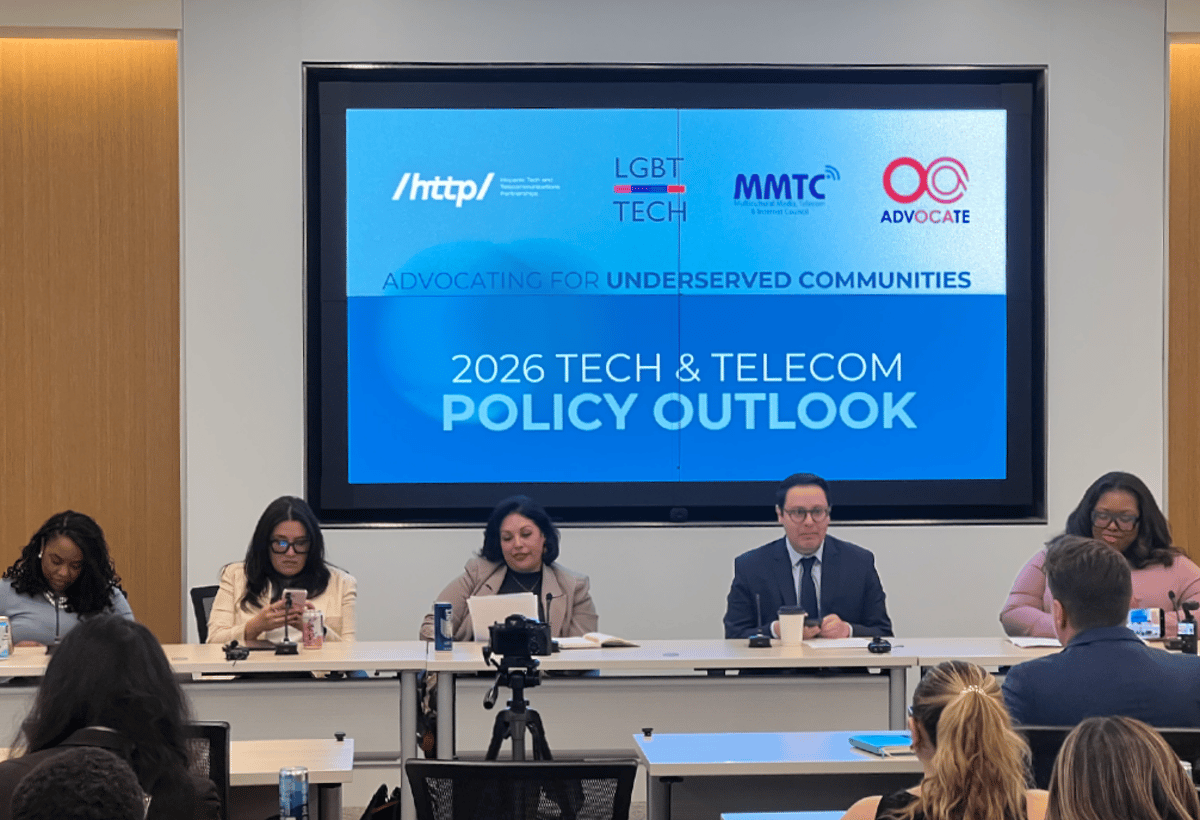
Panel Warns Black and Latino Communities Risk Falling Behind in AI Era
Why It Matters
If broadband inequities aren’t addressed, AI’s economic benefits will widen existing racial wealth gaps, undermining workforce competitiveness and social mobility.
Key Takeaways
- •Broadband gaps hinder AI access for Black, Latino households
- •Affordable internet deemed essential infrastructure for AI economy
- •Spectrum expansion needed to support AI-driven traffic
- •Privacy, trust, and AI cost are top consumer concerns
- •Community input crucial for data center siting and benefits
Pulse Analysis
Artificial intelligence is no longer a futuristic concept; it is reshaping commerce, education, and public services today. Yet the digital divide remains stark, with many Black and Latino households lacking the high‑speed connectivity required to participate fully. Research shows that without affordable broadband, these communities miss out on AI‑enhanced job training, telehealth, and educational tools, reinforcing long‑standing socioeconomic disparities. Policymakers therefore view broadband as a foundational utility, akin to electricity, essential for equitable AI adoption and for closing the opportunity gap.
Regulators are responding by emphasizing spectrum availability and data‑center transparency. The FCC’s recent restoration of auction authority aims to free up additional airwaves, a move championed by industry leaders who argue that AI‑intensive applications demand higher bandwidth and lower latency. Simultaneously, advocacy groups are urging municipalities to negotiate community benefits when new data centers are built, seeking local hiring, environmental safeguards, and infrastructure investments. Meanwhile, concerns over AI‑generated content, privacy, and rising energy costs are prompting calls for a federal privacy framework that protects consumers while fostering innovation.
The stakes extend beyond technology to the broader economy and democratic health. As AI automates routine tasks, workers without digital skills risk displacement, while media consolidation threatens diverse voices in the AI narrative. Ensuring that Black and Latino communities have both the connectivity and the digital literacy to engage with AI will be critical for maintaining a competitive workforce and an inclusive public discourse. Targeted subsidies, community training programs, and transparent data‑center policies can help bridge the gap, turning AI from a source of inequality into a catalyst for shared prosperity.
Panel Warns Black and Latino Communities Risk Falling Behind in AI Era
Comments
Want to join the conversation?
Loading comments...