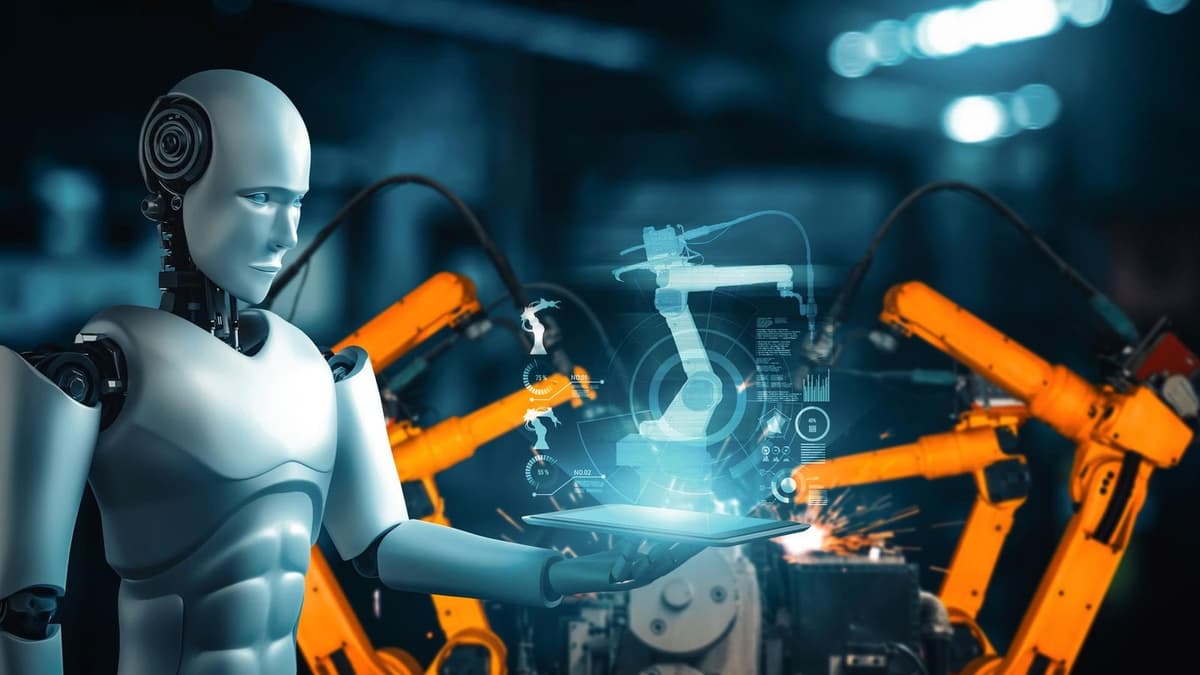
PaXini Unveils the “Tactile Infrastructure” For Embodied AI at CES 2026
•January 8, 2026
0
Why It Matters
By integrating high‑precision tactile feedback with scalable data pipelines, PaXini accelerates the deployment of reliable embodied AI in manufacturing and service sectors, addressing the industry’s data scarcity and control reliability challenges.
Key Takeaways
- •Full-body 6‑axis force/torque sensing ecosystem unveiled
- •PX‑6AX‑GEN3 sensor offers <0.5% FS repeatability
- •DexH13 hand processes 1,140 tactile units simultaneously
- •Omni‑modality data system delivers 200 M entries yearly
- •TORA‑ONE performed autonomous ice‑cream production at CES
Pulse Analysis
The race to embed true touch perception into robots has intensified as manufacturers demand machines that can handle delicate components with human‑like finesse. PaXini’s full‑body 6‑axis force/torque ecosystem, anchored by the PX‑6AX‑GEN3 sensor, delivers sub‑0.5 % repeatability across fifteen sensing dimensions, a benchmark that narrows the gap between vision‑only systems and genuine haptic awareness. By extending precise force feedback to wrists and joints through the PX6D/PXTS Hall‑effect sensors, the company equips humanoid platforms with the stability needed for complex assembly and food‑service tasks.
Equally transformative is PaXini’s omni‑modality embodied AI data acquisition system, which tackles the chronic shortage of high‑quality tactile datasets. Generating roughly 200 million multimodal entries per year, the platform captures synchronized force, texture, and motion signals directly from human operators, then republishes them via a cloud store. This approach not only accelerates model training for tactile perception but also standardizes data formats across the industry, reducing the reliance on costly tele‑operation rigs. The resulting data pipeline promises faster iteration cycles for developers building embodied AI applications.
PaXini’s integrated stack—from sensors and dexterous hands to the TORA‑ONE humanoid—positions it as a one‑stop provider in a fragmented market dominated by niche sensor vendors and separate robot manufacturers. By offering a closed‑loop solution that couples high‑resolution touch feedback with scalable data infrastructure, the firm can capture enterprise contracts in sectors such as pharmaceuticals, electronics, and hospitality. As competitors scramble to add tactile capabilities, PaXini’s early mover advantage in omni‑modality data and cost‑effective force sensors may set a new industry standard for embodied AI deployment.
PaXini Unveils the “Tactile Infrastructure” for Embodied AI at CES 2026
0
Comments
Want to join the conversation?
Loading comments...