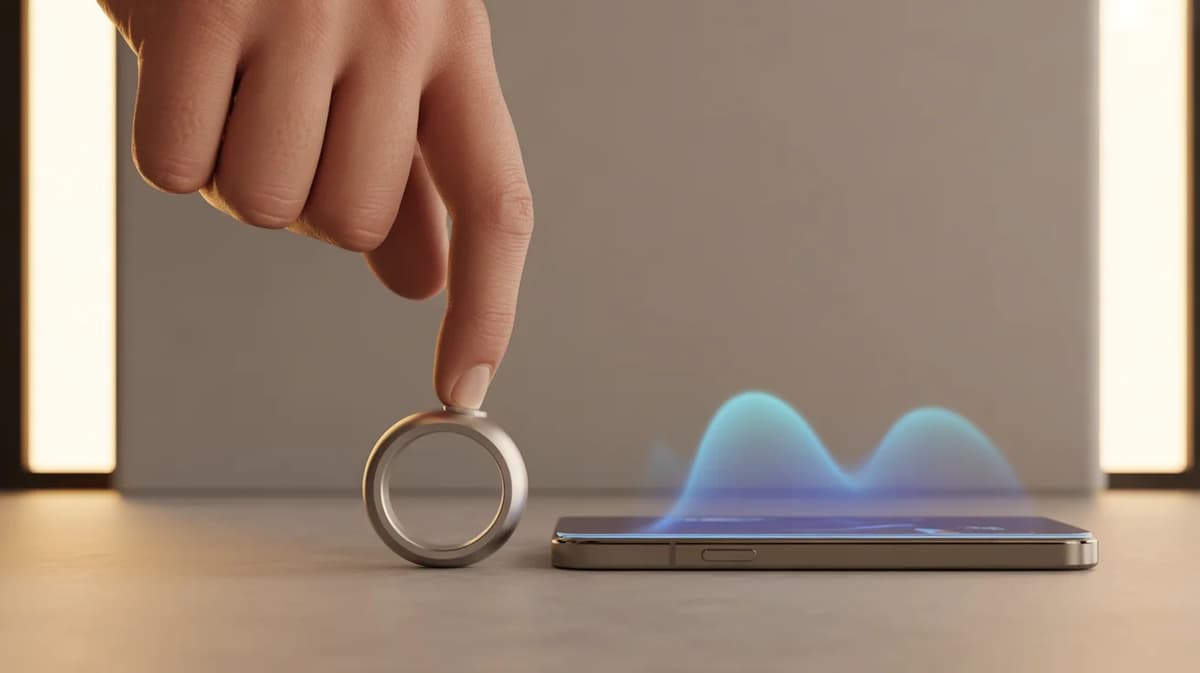
Pebble’s Founder Introduces a $75 AI Smart Ring for Recording Brief Notes with a Press of a Button
•December 9, 2025
0

Companies Mentioned


Why It Matters
The device provides a privacy‑focused, low‑cost alternative to always‑on AI assistants, addressing the growing demand for discreet, on‑the‑go idea capture. Its open‑source, profit‑first model signals a shift toward sustainable hardware entrepreneurship.
Key Takeaways
- •$75 ring records voice notes via press‑and‑hold button.
- •Transcription runs locally on phone; no cloud storage.
- •Battery lasts up to two years with limited daily use.
- •Open‑source app allows custom actions and integration with Notion.
- •Water‑resistant to 1 m, not suitable for swimming.
Pulse Analysis
The Index 01 marks a subtle but notable shift in the wearables market, where manufacturers are moving away from always‑on, cloud‑dependent assistants toward purpose‑built, privacy‑first tools. By limiting recording to a deliberate press‑and‑hold gesture, the ring sidesteps the surveillance anxieties that have plagued smart speakers and AI pendants. At $75, it undercuts premium AI wearables while delivering a focused capability: instant capture of fleeting ideas when a phone is out of reach. This niche positioning appeals to professionals and creators who value discretion as much as convenience.
Technically, the ring relies on the Pebble mobile app to run open‑source speech‑to‑text models on the user’s smartphone, keeping raw audio and transcripts off the cloud. Its stainless‑steel housing is water‑resistant to one metre and houses enough on‑device memory for five‑minute clips, while the battery—rated for 12‑14 hours of active recording—can stretch to two years under typical 10‑20 daily captures. The open‑source firmware also exposes programmable button actions, enabling users to trigger music playback, camera shutters, or custom voice commands, thereby extending the device’s utility beyond note‑taking.
From a business perspective, Core Devices’ decision to self‑fund a five‑person team and launch a profit‑first product contrasts sharply with the venture‑backed scaling model that dominated the smartwatch era. By leveraging the open‑sourced PebbleOS, the company reduces development costs and invites community contributions, potentially accelerating feature rollouts without heavy R&D spend. The modest price point and lack of subscription create a clear value proposition for early adopters, while the upcoming Pebble Time 2 watch and integration with platforms like Notion signal an ecosystem strategy aimed at retaining users within a single, privacy‑centric hardware suite.
Pebble’s founder introduces a $75 AI smart ring for recording brief notes with a press of a button
0
Comments
Want to join the conversation?
Loading comments...