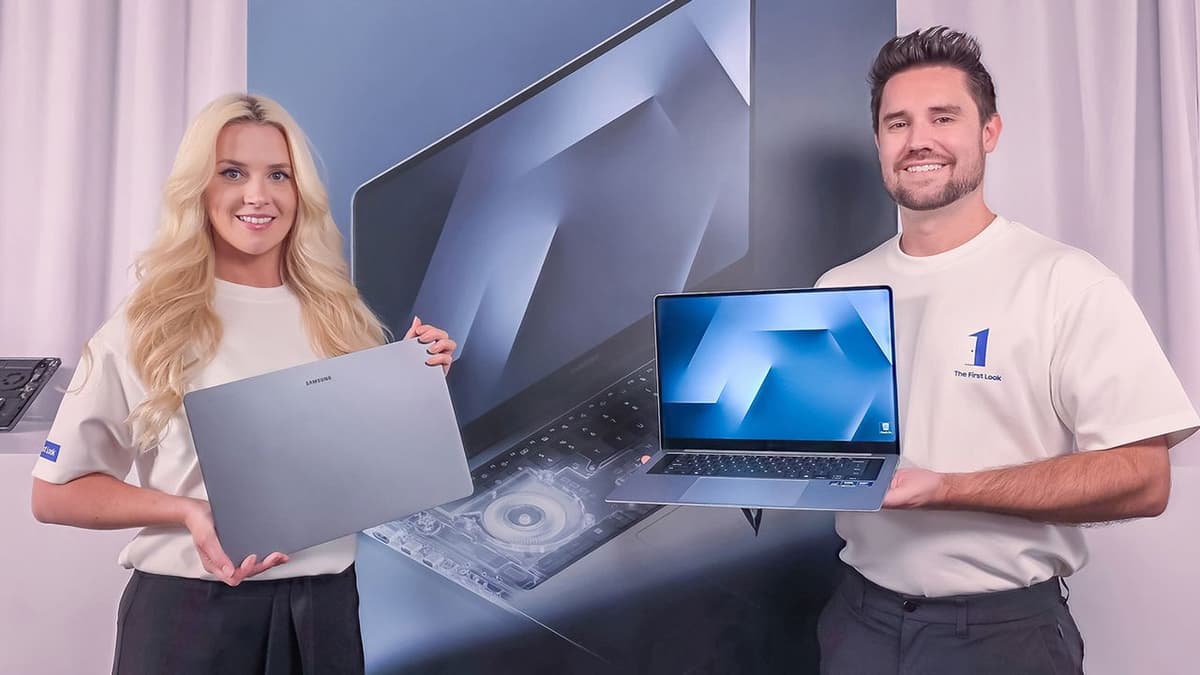
‘Performance Defines the PC Experience’ — Samsung Aims to Take Down Apple with Its New Galaxy Book6 Laptops and Intel’s Latest Tech
•January 6, 2026
0
Companies Mentioned


Why It Matters
The launch signals Samsung’s aggressive push into the high‑end PC market, potentially reshaping competition with Apple and traditional Windows OEMs. Its AI‑focused hardware could set new performance benchmarks for consumer laptops.
Key Takeaways
- •Galaxy Book6 uses Intel Core Ultra 3, up to 64 GB RAM.
- •Integrated NPU delivers 50 TOPS for on‑device AI workloads.
- •16‑inch AMOLED displays offer 1,000 nits brightness, touch option.
- •Wi‑Fi 7, Thunderbolt 4, and optional RTX 5060 GPU available.
- •Samsung targets Apple‑like ecosystem integration across Windows devices.
Pulse Analysis
Samsung’s latest Galaxy Book6 series marks a strategic shift from a peripheral laptop maker to a contender in the premium notebook arena. By pairing Intel’s Core Ultra Series 3 CPUs with a dedicated NPU, Samsung delivers a platform where AI inference—such as real‑time translation, image enhancement, and voice assistants—runs locally without cloud latency. This hardware synergy mirrors trends seen in high‑performance ultrabooks, where on‑device intelligence is becoming a differentiator, especially for enterprise users demanding secure, offline processing.
Beyond AI, the Book6 line emphasizes visual fidelity and connectivity. The 16‑inch AMOLED panels, calibrated to 1,000 nits, cater to creators and professionals who need color‑accurate, bright displays for HDR content. Coupled with optional Nvidia RTX 5060 graphics, the laptops can handle moderate gaming and GPU‑accelerated workloads, while Wi‑Fi 7 and Thunderbolt 4 ensure future‑proof data transfer speeds. Battery capacities ranging from 61 Wh to 80 Wh, paired with Intel’s Evo efficiency standards, promise all‑day usage despite the power‑dense components.
From a market perspective, Samsung is leveraging its broader Galaxy ecosystem—smartphones, tablets, wearables—to create a seamless Windows experience reminiscent of Apple’s continuity features. If pricing aligns with premium expectations, the Book6 could attract users seeking Android integration without abandoning Windows productivity. Analysts will watch adoption rates closely, as success could pressure traditional PC vendors to accelerate AI hardware integration and tighten cross‑device ecosystems.
‘Performance defines the PC experience’ — Samsung aims to take down Apple with its new Galaxy Book6 laptops and Intel’s latest tech
0
Comments
Want to join the conversation?
Loading comments...