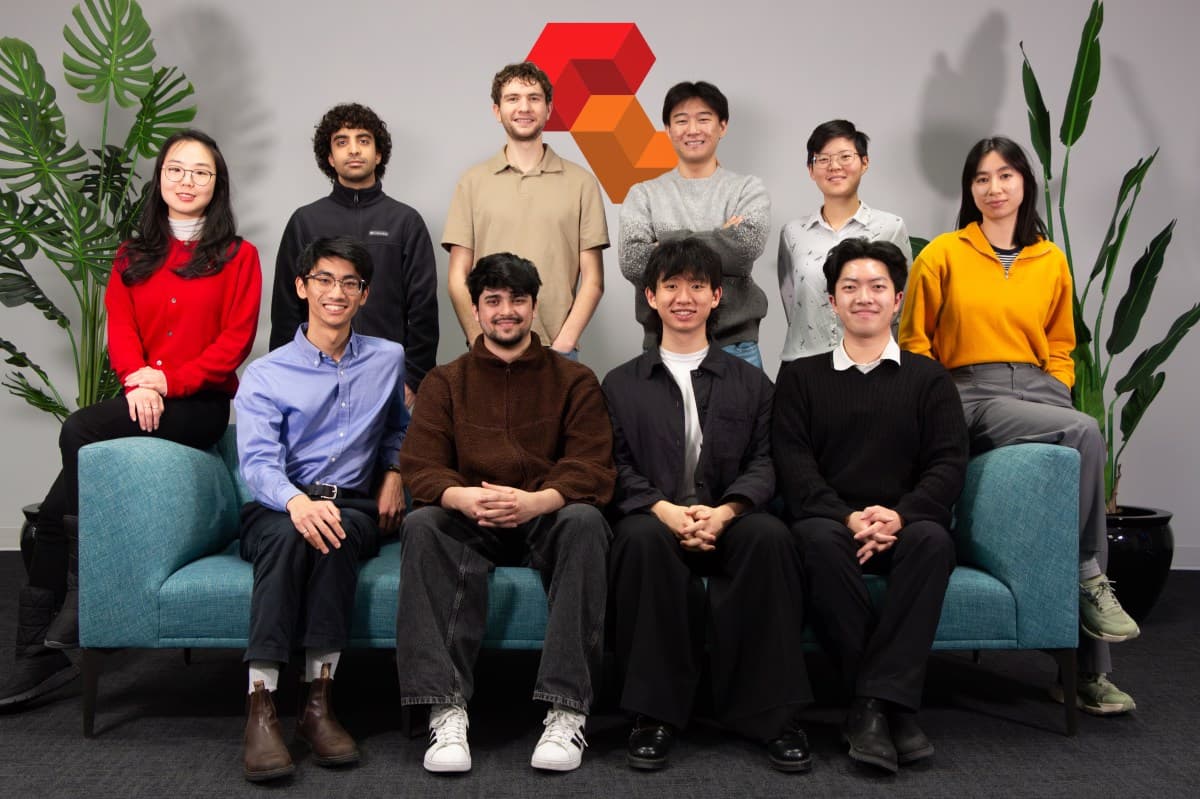
Peripheral Labs Taps Into Self-Driving Car Sensors to Bring Sports Fans Right Into the Game
•December 18, 2025
0

Companies Mentioned


Why It Matters
The technology could revitalize declining sports viewership by delivering immersive, data‑rich experiences, while its cost efficiency makes widescale adoption feasible for broadcasters and teams.
Key Takeaways
- •Uses 32 cameras vs 100+, cutting costs
- •AI-driven 3D reconstruction enables multi-angle viewing
- •Provides biomechanical data for player performance analysis
- •Seed round raised $3.6M led by Khosla Ventures
- •Potential moat as only sports volumetric provider
Pulse Analysis
Live sports consumption is under pressure, especially among Gen Z, prompting leagues to explore immersive formats that go beyond traditional broadcast. Peripheral Labs is repurposing perception stacks from autonomous vehicles—depth sensors, lidar‑like imaging, and real‑time SLAM algorithms—to capture volumetric video at a fraction of the traditional hardware cost. By marrying these robotics‑grade sensors with the latest generative AI models, the startup can reconstruct photorealistic 3D scenes from as few as 32 off‑the‑shelf cameras, delivering fans the ability to orbit around a play, isolate a single athlete, or freeze‑frame actions from any angle.
The technical edge lies in the platform’s dual focus on visual fidelity and biomechanical analytics. Advanced computer‑vision pipelines extract joint positions, finger flexion, and limb dynamics, feeding coaches granular performance data while simultaneously enriching the fan experience with interactive stats overlays. This convergence of immersive viewing and actionable insights creates new revenue streams for broadcasters, who can offer premium, on‑demand 3D replays, and for teams, which gain a data‑driven scouting tool. Moreover, the reduced camera footprint lowers venue installation complexity, making the solution scalable from practice facilities to massive stadiums.
From a market perspective, Peripheral Labs’ $3.6 million seed round—anchored by Khosla Ventures and other tech‑focused investors—signals strong confidence in the commercial viability of sports‑centric volumetric capture. The company’s early mover advantage, rooted in proprietary self‑driving sensor expertise, could form a defensible moat against rivals like Arcturus Studios. As broadcasters chase higher engagement metrics and fans demand richer, interactive content, the startup’s affordable, AI‑enhanced platform positions it to become a cornerstone of the next generation of sports entertainment, potentially reshaping how live events are produced and consumed worldwide.
Peripheral Labs taps into self-driving car sensors to bring sports fans right into the game
0
Comments
Want to join the conversation?
Loading comments...