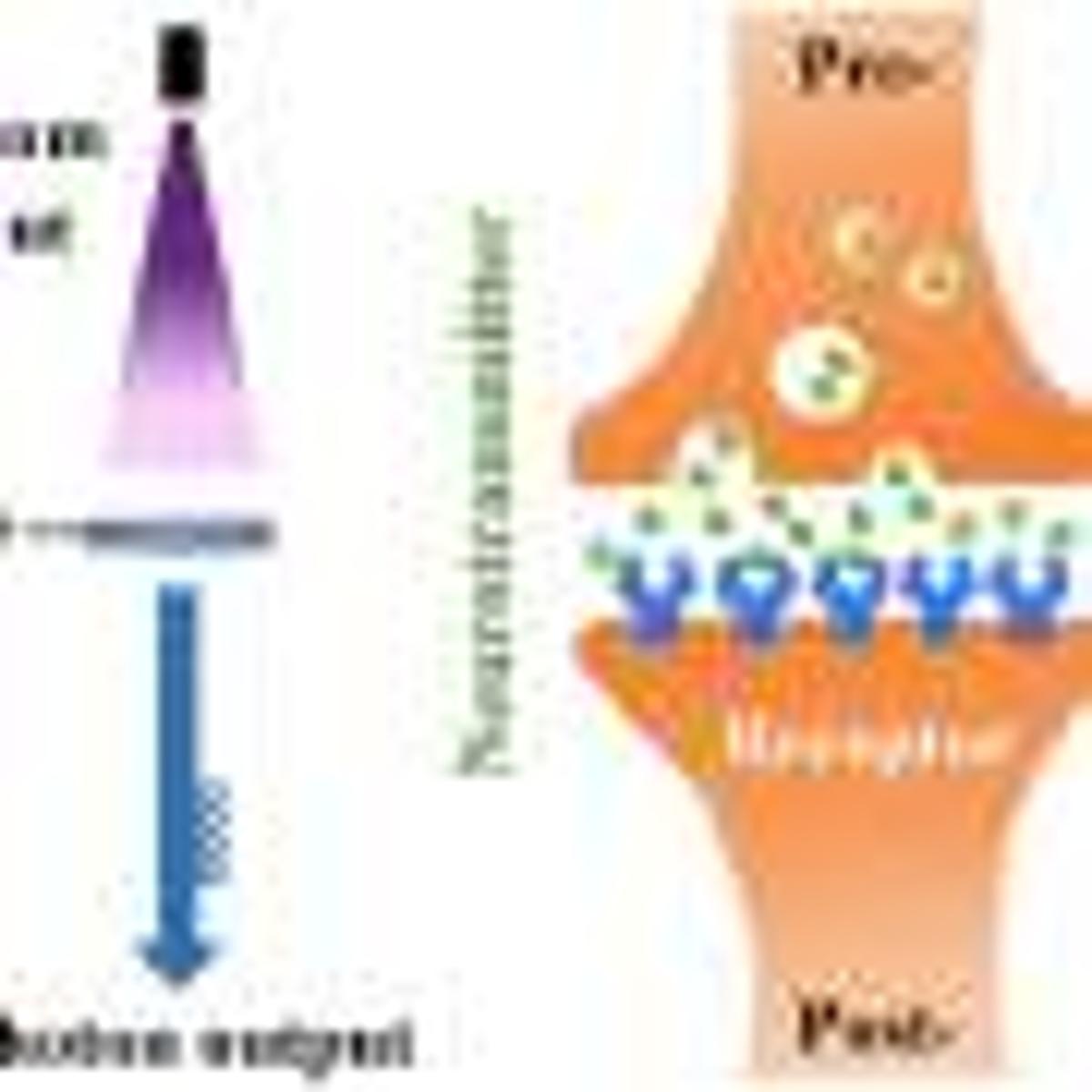
Photon-Driven Synapse Advances Low-Power Neuromorphic Systems
Why It Matters
By merging sensing, memory, and processing in a single photonic element, the technology promises substantial energy savings and faster inference for vision‑heavy AI workloads, a critical advantage for edge devices and robotics.
Key Takeaways
- •Fully optical synapse stores and processes data using rare‑earth crystal
- •Demonstrated paired‑pulse facilitation and depression via UV and NIR light
- •Neuromorphic camera prototype boosts digit‑recognition accuracy to 96%
- •Device operates on millisecond‑second timescales, matching biological vision speed
- •Scaling and material tweaks could cut energy use and increase speed
Pulse Analysis
The relentless growth of AI workloads has exposed the energy and latency limits of the traditional von Neumann architecture, where memory and compute are physically separated. Neuromorphic engineering seeks to emulate the brain’s co‑location of storage and processing, promising orders‑of‑magnitude gains in efficiency. The recent demonstration of a fully photon‑driven artificial synapse marks a decisive step because it eliminates the electrical‑to‑optical conversion that has plagued previous designs. By using a rare‑earth‑doped crystal that directly translates light pulses into persistent, tunable states, the device cuts the energy overhead associated with transducers and opens a pathway to truly optical neural networks.
The crystal’s trapped charge carriers give rise to history‑dependent responses that mirror short‑term synaptic plasticity. Under ultraviolet illumination the device exhibits paired‑pulse facilitation, while near‑infrared excitation produces paired‑pulse depression—both essential for balanced learning rules. A physics‑based model accurately predicts these dynamics, allowing engineers to tailor intensity, pulse width, and timing for desired behavior. Integrated with a conventional silicon sensor, the optical synapse acts as an on‑chip pre‑processor, enhancing contrast and suppressing noise. In a handwritten‑digit benchmark the neuromorphic camera achieved 95.99 % classification accuracy, a 18‑point jump over a baseline pipeline.
Although current operation spans milliseconds to seconds, the authors argue that miniaturization and material engineering could push speeds into the microsecond regime while slashing power consumption. Such advances would be transformative for edge devices—autonomous drones, smart cameras, and wearable robotics—where every milliwatt matters. The convergence of sensing, memory, and computation in a single photonic element also aligns with industry moves toward in‑sensor AI and optical interconnects. Investors and OEMs should watch this space as the technology matures from laboratory prototypes to scalable manufacturing.
Photon-driven synapse advances low-power neuromorphic systems
Comments
Want to join the conversation?
Loading comments...