Plucky Startup Bolt Graphics Still Wants to Use RISC-V to Compete with Nvidia, AMD in AI and Beyond — and Given CUDA's Port on RISC-V, There May Be Something There
•January 12, 2026
0
Companies Mentioned


Why It Matters
If CUDA runs natively on RISC‑V, Bolt’s Zeus could break Nvidia’s software lock‑in and open a new competitive lane for AI and high‑performance graphics workloads. This shift may accelerate adoption of open‑source hardware in data‑center and rendering markets.
Key Takeaways
- •Bolt builds RISC‑V GPU called Zeus.
- •Zeus integrates CPU and GPU on single board.
- •CUDA port to RISC‑V eases software adoption.
- •Supports Vulkan, DirectX12, Unreal, Unity, HPC languages.
- •Up to 2 TB memory, 800 Gbps networking.
Pulse Analysis
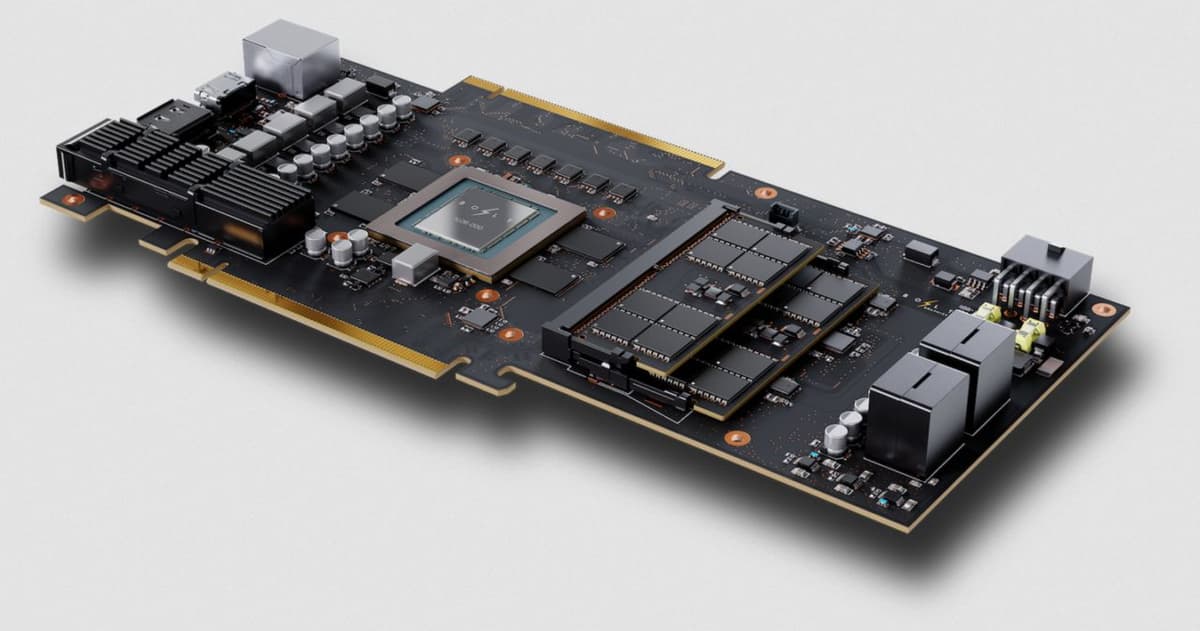
RISC‑V’s rise as an open‑source instruction set is reshaping the hardware landscape, and Bolt Graphics is betting on that momentum with its Zeus accelerator. By embedding a RISC‑V core that runs Linux alongside dedicated rasterization, ray‑tracing and SIMD blocks, Zeus blurs the line between CPU and GPU. The design leverages PCIe 5.0 x16, LPDDR5X, and optional DDR5 SODIMM slots to reach 384 GB per card, while high‑speed 400‑800 Gbps links enable GPU‑to‑GPU clustering without extra NICs. This integration promises lower latency and tighter resource management for render farms and AI clusters.
Software compatibility has long been the Achilles’ heel for alternative GPUs, but Nvidia’s decision to port CUDA to RISC‑V changes the equation. Developers can now target a familiar CUDA stack while running on a non‑x86, non‑Arm platform, reducing the need for costly rewrites. Zeus also supports Vulkan and DirectX 12, plus popular engines like Unreal and Unity, and compiles HPC code written in Python, Fortran or OSL via LLVM. The convergence of industry‑standard APIs with an open‑source ISA could accelerate adoption among studios and research institutions that already rely on Nvidia’s ecosystem.
The market impact hinges on execution risk and real‑world performance validation. If Bolt delivers on its claims of multi‑fold path‑tracing gains and superior FP64 throughput, it could carve out a niche in data‑center graphics, scientific simulation, and AI inference where power efficiency and memory bandwidth matter more than raw rasterization speed. However, competing against Nvidia’s scale and AMD’s entrenched driver stack will require sustained software support and ecosystem growth. Should Bolt succeed, the GPU market may see a shift toward modular, open‑hardware solutions that challenge the current duopoly.
Plucky startup Bolt Graphics still wants to use RISC-V to compete with Nvidia, AMD in AI and beyond — and given CUDA's port on RISC-V, there may be something there
0
Comments
Want to join the conversation?
Loading comments...