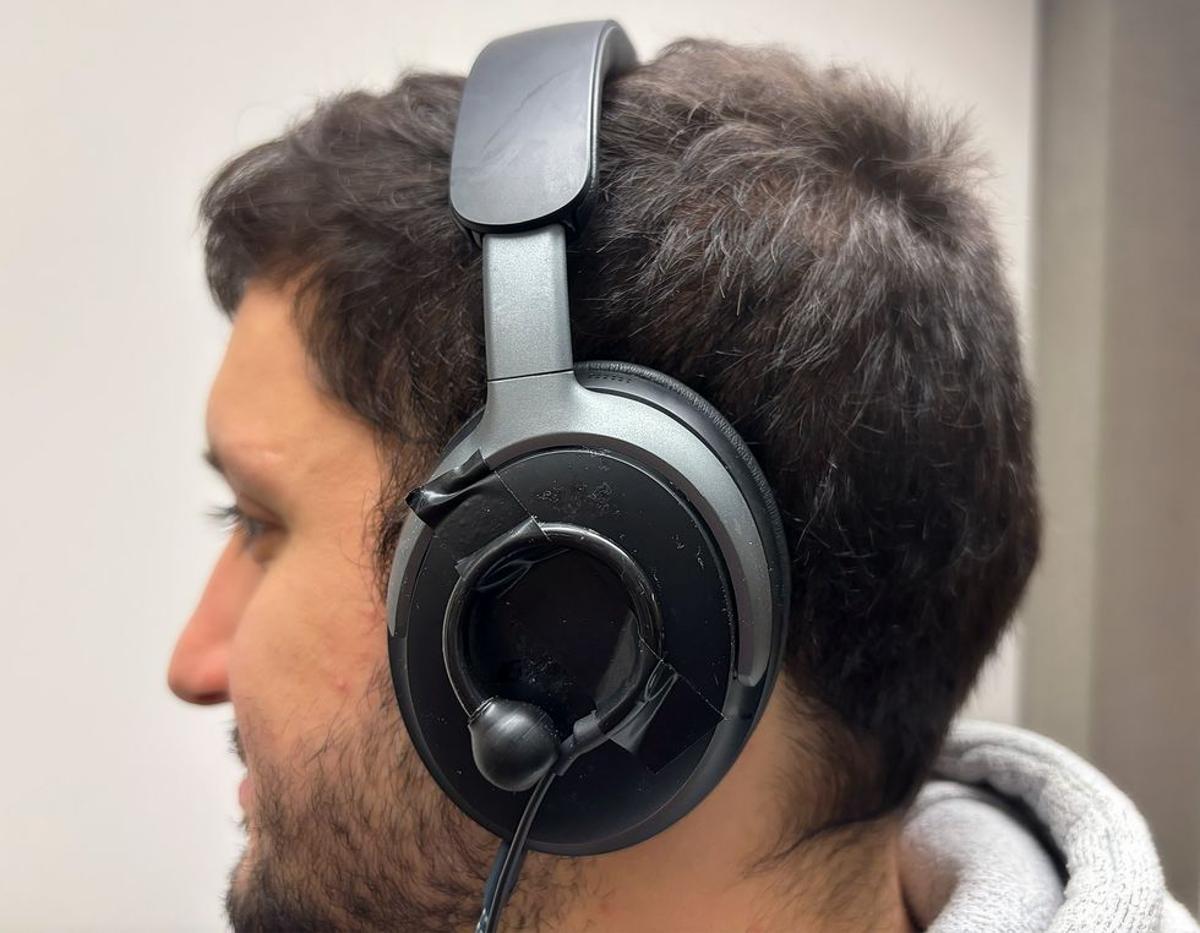
Proactive Hearing Assistant Filters Through Voices in a Crowd
•December 8, 2025
0
Why It Matters
By enhancing target speech in real time, the technology could dramatically improve hearing‑aid performance and enable seamless audio experiences in AR/VR earbuds, opening new market opportunities.
Key Takeaways
- •AI uses turn‑taking cues, not direction or loudness
- •System runs under ten‑millisecond latency
- •Achieves 80‑92% partner detection accuracy
- •Improves speech clarity up to 14.6 dB
- •Works across English, Mandarin, and Japanese
Pulse Analysis
Traditional noise‑cancelling earbuds either mute the entire environment or let every sound through, leaving users in crowded venues struggling to follow a single conversation. The University of Washington’s proactive hearing assistant tackles this gap by teaching machines to listen the way humans do—recognizing the rhythmic back‑and‑forth of dialogue. By anchoring on the wearer’s own speech and detecting natural turn‑taking patterns, the AI can pinpoint who the user is speaking with and amplify only those voices, delivering a clearer, more focused auditory experience without manual controls.
The core of the system is a brain‑inspired dual‑model architecture. A slower network processes one‑second audio windows to infer conversational dynamics and generate a “conversation embedding,” while a fast network runs every 10‑12 ms to apply that embedding and filter audio in real time. This split design reconciles the need for both contextual understanding and ultra‑low latency, achieving sub‑10 ms response times and 80‑92 % speaker‑identification accuracy in controlled tests. Compared with conventional blind source separation, which relies on acoustic cues like direction or volume, the new approach leverages temporal interaction cues, proving effective across English, Mandarin, and even untrained Japanese conversations.
If commercialized, the technology could reshape the hearing‑aid market and the burgeoning AR/VR ear‑wear sector, where users demand instant, selective audio enhancement. However, real‑world environments with overlapping speech, music, or abrupt interruptions remain challenging, and long silences can confuse the model. Future iterations aim to integrate large language models for semantic awareness, allowing devices to discern not just who is speaking but who is contributing meaningfully. Overcoming these hurdles could unlock a new class of intelligent audio accessories that blend seamless usability with the nuanced listening capabilities of the human brain.
Proactive Hearing Assistant Filters Through Voices in a Crowd
0
Comments
Want to join the conversation?
Loading comments...