Production AI Agents: Closing the Gaps Between Idea and Reality by João Freitas
Companies Mentioned
Why It Matters
Enterprises can’t afford AI agents that hallucinate or become attack vectors; the outlined practices turn experimental bots into dependable, revenue‑protecting services.
Key Takeaways
- •Non‑deterministic LLM outputs require temperature control and deterministic wrappers
- •Context fatigue degrades long‑running agents; segment prompts to reset weight
- •Guardrails must block low‑resource‑language prompts to prevent injection
- •Hierarchical supervisor agents simplify testing versus peer‑to‑peer networks
- •Observability traces every tool call, enabling rapid root‑cause analysis
Pulse Analysis
The rush to ship AI‑driven assistants has outpaced the discipline needed for production reliability. While large language models can generate functional code in minutes, their stochastic nature leads to inconsistent outputs, hallucinations, and subtle reasoning errors that compound across multi‑step workflows. Enterprises that embed agents into incident response, ticket routing, or compliance automation must treat these systems like any critical service—enforcing strict temperature settings, deterministic execution paths, and layered verification to achieve the "March of 9s" reliability standard.
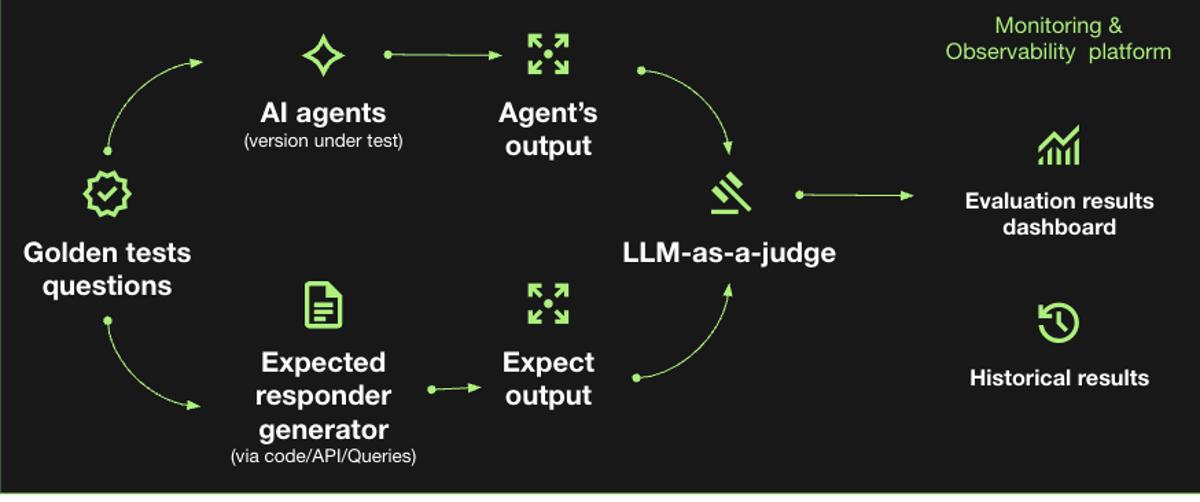
Observability and evaluation emerge as the linchpins of a sustainable agent ecosystem. PagerDuty’s approach—collecting full trace spans, logging model inputs, and employing a golden‑set test harness with an LLM‑as‑judge—provides continuous feedback loops that surface failures before customers do. By automating scenario, adversarial, and latency tests within CI pipelines, teams can quantify success rates, groundedness, tool error rates, and p95 latency, turning opaque model behavior into actionable metrics. This data‑driven posture not only reduces mean‑time‑to‑resolution but also builds the confidence needed for regulated industries where auditability is non‑negotiable.
Looking ahead, the five pillars outlined—Reliability, Control, Visibility, Integration, Economics—serve as a roadmap for scaling agentic platforms. Companies should prioritize guardrails that block prompt injection, enforce role‑based permissions, and limit language exposure, while also optimizing cost by off‑loading deterministic tasks to traditional code. Transparent UX, such as real‑time reasoning displays, enhances user trust and aligns expectations. As the tooling around knowledge graphs and shared memory matures, future agents will coordinate more seamlessly across domains, but the foundational investments in observability, testing, and security will remain the decisive factors separating fleeting demos from enterprise‑grade AI operations.
Production AI Agents: Closing the Gaps Between Idea and Reality by João Freitas
Comments
Want to join the conversation?
Loading comments...