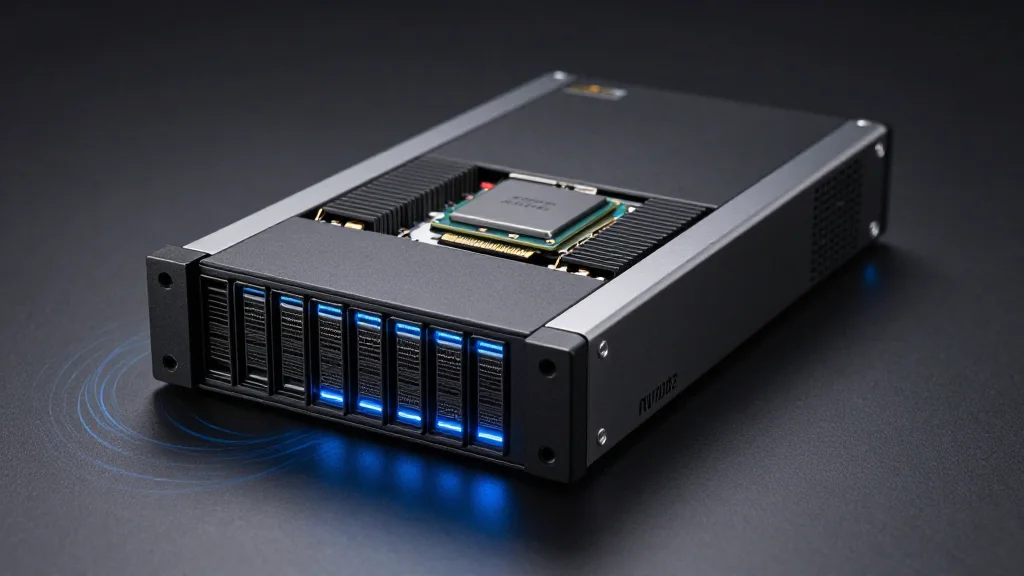
QNAP Unveils QAI‑h1290FX Edge AI Server for Private LLM Deployment

Companies Mentioned
Why It Matters
The QAI‑h1290FX gives enterprises a practical path to deploy LLMs without exposing sensitive data to third‑party cloud providers, addressing both performance and regulatory concerns. By bundling high‑performance compute, dense NVMe storage and enterprise‑grade data protection, QNAP lowers the barrier to entry for private AI, potentially accelerating adoption in regulated industries. If the server gains traction, it could shift purchasing patterns away from pure cloud AI services toward hybrid models, prompting cloud providers to rethink pricing and data‑privacy guarantees. The move also signals that hardware vendors are willing to invest heavily in AI‑optimized infrastructure, a trend that may spur further innovation in edge‑focused AI chips and storage technologies.
Key Takeaways
- •QNAP launched the QAI‑h1290FX edge AI server, targeting on‑prem LLM workloads.
- •The appliance uses a 16‑core AMD EPYC 7302P CPU, optional NVIDIA RTX GPUs, and 12 U.2 NVMe/SATA SSD slots.
- •Dual 25 GbE ports are expandable to 100 GbE for high‑throughput AI data pipelines.
- •Built on ZFS‑based QuTS hero OS, it offers unlimited snapshots, inline deduplication and robust data integrity.
- •General availability expected within the next quarter; pricing not disclosed.
Pulse Analysis
QNAP’s QAI‑h1290FX arrives at a moment when the AI market is fragmenting between cloud‑centric and edge‑centric strategies. Historically, most LLM deployments have leaned on the elasticity of public clouds, but rising operational costs and stricter data‑privacy laws are nudging large enterprises toward on‑prem solutions. QNAP’s storage‑first approach leverages its core competency in NAS and SAN technologies, allowing it to differentiate from pure compute vendors like Nvidia. By integrating GPU acceleration as an optional add‑on rather than a fixed component, the QAI‑h1290FX offers a modular cost structure that can appeal to organizations with varying AI maturity levels.
From a competitive standpoint, the server pits QNAP against established players such as Dell’s PowerEdge AI line and HPE’s Apollo systems. Those rivals typically bundle proprietary management software, whereas QNAP leans on its open‑source ZFS foundation and familiar virtualization tools, potentially lowering the learning curve for IT teams already using QNAP storage solutions. If QNAP can deliver on its promise of sub‑10‑ms inference latency, it could carve out a niche in latency‑sensitive applications like real‑time translation or autonomous‑vehicle edge processing.
Looking ahead, the success of the QAI‑h1290FX will hinge on ecosystem support. Partnerships with AI framework vendors, model‑hosting platforms and system integrators will be essential to translate hardware capability into usable solutions. Moreover, as generative AI models continue to grow in size, the server’s scalability—particularly its ability to expand network bandwidth to 100 GbE—will be a critical factor. Should QNAP secure a foothold in the private‑AI market, it may accelerate a broader industry shift toward hybrid AI architectures, where edge servers handle inference while the cloud remains the training ground.
QNAP Unveils QAI‑h1290FX Edge AI Server for Private LLM Deployment
Comments
Want to join the conversation?
Loading comments...