Razer Joins AI Bandwagon with External AI Accelerator Backed by Iconic AMD Chip Architect
•January 7, 2026
0
Companies Mentioned


Why It Matters
The combined offering gives developers powerful, flexible AI compute at the edge, reducing reliance on costly cloud services and accelerating prototype cycles.
Key Takeaways
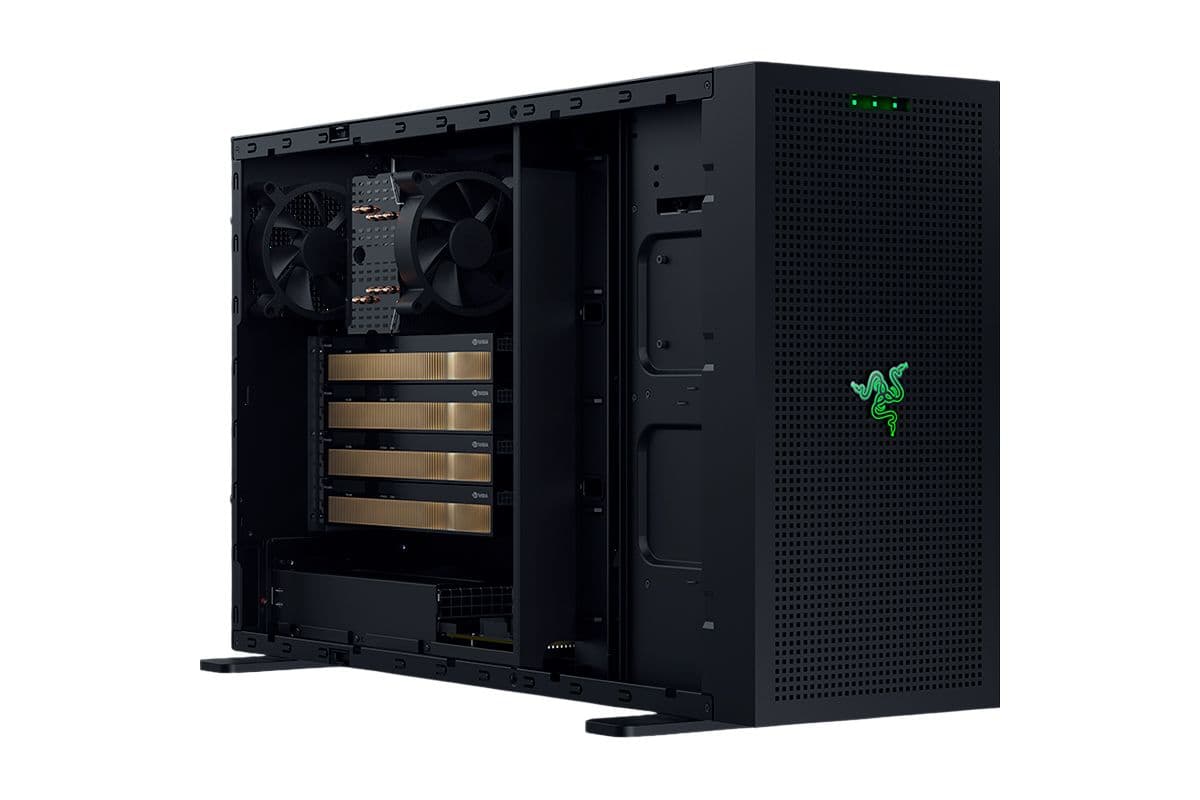
- •Razer's Forge AI workstation targets on‑premise AI development
- •Supports up to four Nvidia or AMD professional GPUs
- •External accelerator uses Tenstorrent Wormhole via Thunderbolt 4/5
- •Jim Keller’s architecture brings AMD‑level performance to edge devices
- •Multiple accelerators can cluster for larger model inference
Pulse Analysis
The AI hardware landscape is rapidly shifting from centralized cloud farms toward distributed, on‑premise solutions that give engineers tighter control over data and latency. Razer’s Forge AI Dev Workstation embodies this trend, offering a modular chassis that can scale from a single‑desk setup to a rack‑mountable cluster. By supporting both AMD and Nvidia professional GPUs alongside Threadripper PRO or Xeon W CPUs, the system caters to a wide range of workloads—from large language model training to real‑time simulation—while avoiding subscription‑based cloud costs.
Razer’s partnership with Tenstorrent adds a portable dimension to this strategy. The external accelerator, built on the Wormhole architecture that Jim Keller helped design for AMD’s Zen CPUs, plugs into any Thunderbolt‑compatible laptop, delivering desktop‑class AI performance in a pocket‑sized form factor. Its open‑source software stack simplifies deployment of LLMs and generative‑image models, and the ability to link up to four units creates a mini‑cluster capable of handling more demanding inference tasks. This approach targets developers who need edge compute for field testing, robotics, or on‑site analytics.
Industry analysts see Razer’s dual‑pronged hardware push as a signal that gaming‑centric brands are eyeing the broader AI developer market. By offering both a powerful stationary workstation and a flexible external accelerator, Razer positions itself against traditional enterprise vendors like NVIDIA DGX and HPE’s AI servers. If pricing proves competitive, the solutions could accelerate adoption of edge AI across startups and midsize firms, reshaping how organizations balance cloud reliance with local compute power.
Razer joins AI bandwagon with external AI accelerator backed by iconic AMD chip architect
0
Comments
Want to join the conversation?
Loading comments...