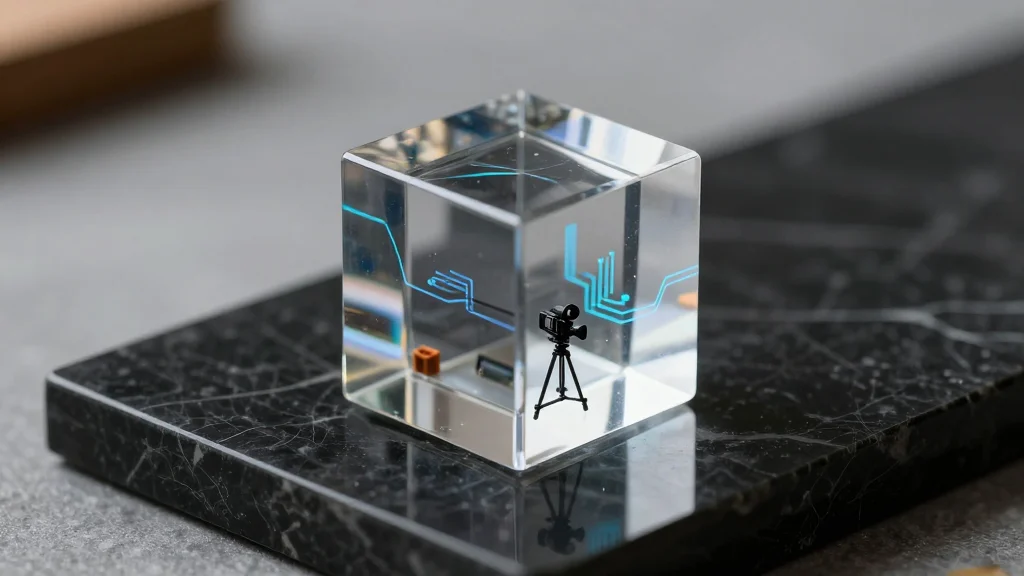
Reallusion Bets that 3D Artists Directing AI Models Will Beat Text Prompts for Professional Filmmaking

Why It Matters
AI Studio offers studios a more reliable, controllable workflow for AI‑generated video, reducing dependence on single‑vendor models and preserving creative assets.
Key Takeaways
- •AI Studio integrates iClone with Seedance 2.0 for precise AI video rendering.
- •Hybrid workflow lets artists control camera paths, motion, and lighting.
- •Multi‑model support enables switching between photorealistic and stylized generators.
- •Local 3D assets protect projects if an AI model is discontinued.
- •Industry trend: AI tools augment, not replace, professional creative pipelines.
Pulse Analysis
The surge of generative video models such as Seedance, Veo 3, and Runway’s Gen‑4 has opened a new frontier for filmmakers, but pure text‑prompt workflows still stumble on spatial fidelity. When a prompt describes a chase scene, the resulting clip often suffers from warped objects, inconsistent camera angles, and erratic character motion. These shortcomings stem from the models’ reliance on language alone, which cannot encode exact 3‑D geometry or choreography. As studios push toward tighter production schedules, the need for a tool that guarantees frame‑level precision has become acute.
Reallusion’s AI Studio answers that gap by marrying iClone’s real‑time 3‑D environment with Seedance 2.0’s rendering engine. Artists construct full scenes—camera rigs, skeletal animation, lighting—within iClone, then export a ‘precision control layer’ that guides the AI model’s visual synthesis. The platform also aggregates a palette of video generators, from Flux’s photorealism to Kling AI’s stylized output, allowing creators to match the best model to each shot without rebuilding assets. Because the underlying 3‑D data remains on the user’s machine, the creative core survives any future model deprecation.
The hybrid model mitigates a risk highlighted by OpenAI’s abrupt Sora shutdown, which stranded projects that depended solely on a single service. By keeping scene data local, AI Studio offers continuity and cost predictability, a compelling proposition for studios wary of volatile AI pricing. Adobe’s recent Firefly Assistant follows a similar integration‑first philosophy, signaling an industry shift toward augmentative AI rather than wholesale replacement. If Reallusion can demonstrate consistent quality and workflow efficiency, the platform could become the de‑facto bridge between traditional VFX pipelines and the next generation of AI‑driven cinema.
Reallusion bets that 3D artists directing AI models will beat text prompts for professional filmmaking
Comments
Want to join the conversation?
Loading comments...