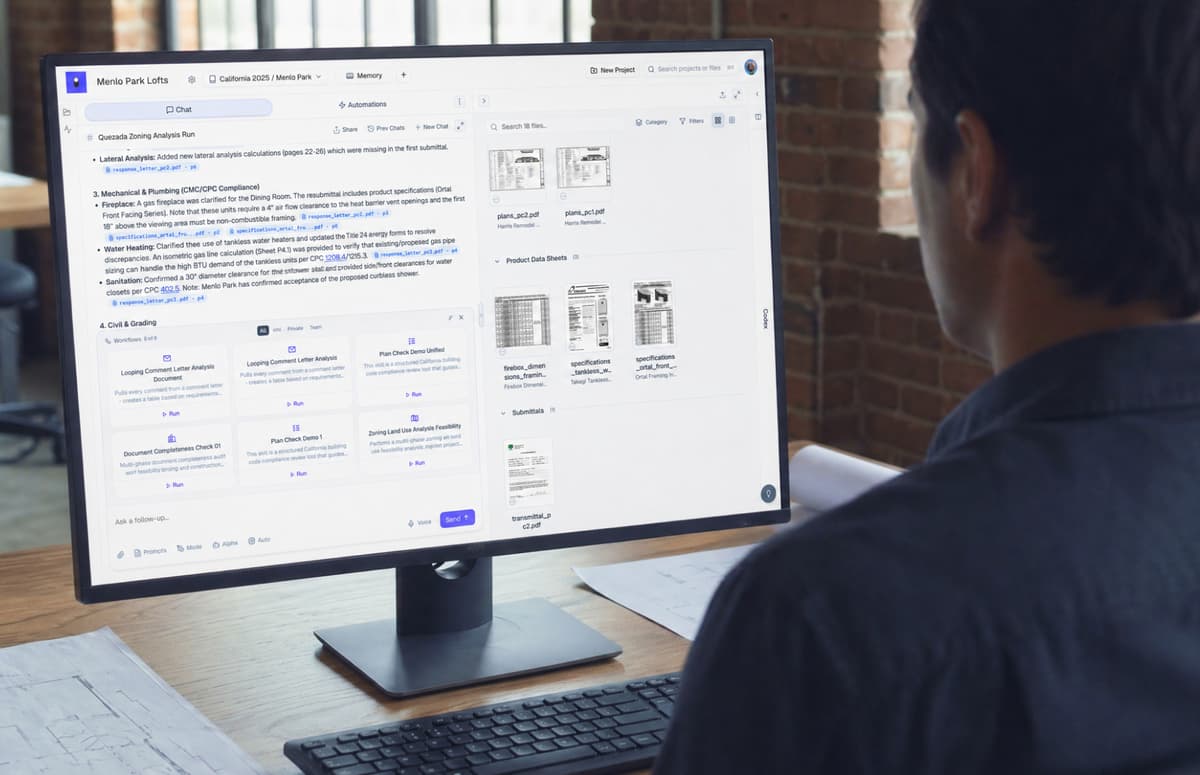
Rethinking the Architecture Firm for the AI Era
Why It Matters
The shift enables firms to cut costly research cycles, improve project timelines, and turn institutional knowledge into a scalable competitive asset, reshaping the economics of architectural practice.
Key Takeaways
- •Ichi Plan cuts code research from hours to minutes
- •AI platform saved $250k on fire‑protection assessment
- •Firms move from labor‑based to knowledge‑leverage operating model
- •Internal code queries replace external consultants, reducing fees
- •AI‑driven knowledge base becomes a strategic business asset
Pulse Analysis
The architectural industry faces unprecedented productivity demands: clients expect faster turnarounds, tighter budgets, and flawless compliance with ever‑changing regulations. Legacy firms, built on siloed expertise and manual oversight, struggle to keep knowledge flowing efficiently, leading to bottlenecks and reliance on a handful of senior staff. This structural mismatch has prompted a wave of AI experimentation, but true transformation requires moving AI from a peripheral tool to the core of the practice’s operating model.
Enter AI platforms like Ichi Plan, which ingest construction documents, cross‑reference jurisdictional codes, and return cited, defensible answers in minutes. A principal on a laboratory project used the system to verify fire‑protection requirements, avoiding unnecessary dampers and saving roughly $250,000. When such rapid, documented insights are applied across dozens of regulatory questions, firms see dramatic reductions in external consulting fees, faster client approvals, and tighter control over project budgets. The technology acts less as a search engine and more as an active team member, surfacing judgment‑ready information that can be shared instantly.
The broader implication is a strategic shift from labor‑centric delivery to knowledge‑leverage. By codifying institutional expertise within a shared AI‑driven repository, firms turn tacit know‑how into a repeatable asset, enabling junior staff to resolve routine queries without senior intervention. This reduces internal meetings, shortens QA cycles, and creates a scalable competitive advantage. Companies that embed AI into the entire project lifecycle—from feasibility studies to construction administration—will define the next decade of architectural practice, positioning themselves as high‑value, insight‑driven partners rather than volume‑based service shops.
Rethinking the Architecture Firm for the AI Era
Comments
Want to join the conversation?
Loading comments...