Why It Matters
Higher rack densities threaten uptime and capital efficiency; adopting rack‑level containment lets operators scale AI compute now while preserving flexibility for future upgrades.
Key Takeaways
- •Rack-level containment cuts deployment time to weeks, not years.
- •Direct liquid cooling alone risks hotspots and maintenance complexity.
- •Retrofitting adds up to 80 kW per rack without new construction.
- •Future‑proof designs enable scaling AI workloads as demand grows.
Pulse Analysis
The surge in generative‑AI models has forced data‑center operators to rethink thermal management. Traditional hot‑aisle/cold‑aisle layouts, designed for 10‑15 kW servers, struggle to dissipate the 60‑80 kW per rack that modern GPU clusters demand. Inefficient cooling not only inflates energy costs but also raises the risk of throttling or hardware failure, eroding the economic case for AI investments. As a result, the industry is gravitating toward solutions that can be deployed quickly within existing footprints.
Among the options, direct liquid‑to‑chip (DLC) cooling promises the highest thermal efficiency, yet it introduces operational complexity, requires specialized maintenance, and can expose the rack to localized failures if coolant delivery is compromised. By contrast, rack‑level containment integrates sealed enclosures, dedicated rear‑door heat exchangers, and modular liquid loops, delivering near‑DLC performance while preserving accessibility and serviceability. This hybrid approach mitigates the hidden limitations of DLC‑only designs—such as uneven temperature distribution and higher upfront engineering effort—making it the most pragmatic choice for operators who cannot afford prolonged downtime.
For enterprises, the financial upside is clear. Retrofitting existing halls with rack‑level containment can unlock up to 80 kW per rack without the capital outlay of a new building, shortening ROI cycles and preserving floor‑space for future expansion. Moreover, the modular nature of these systems supports incremental upgrades, aligning capital expenditures with evolving AI workloads. As AI adoption accelerates, data‑center leaders who prioritize flexible, high‑density cooling will gain a competitive edge, delivering more compute per square foot while maintaining operational resilience.
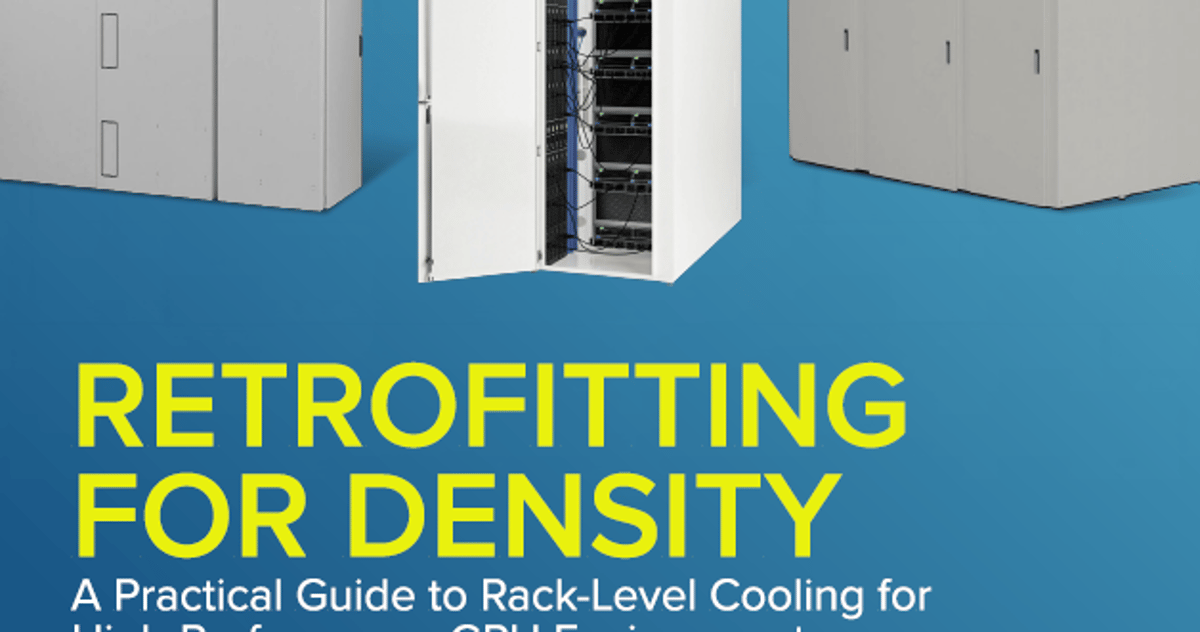
Retrofitting for density
Comments
Want to join the conversation?
Loading comments...