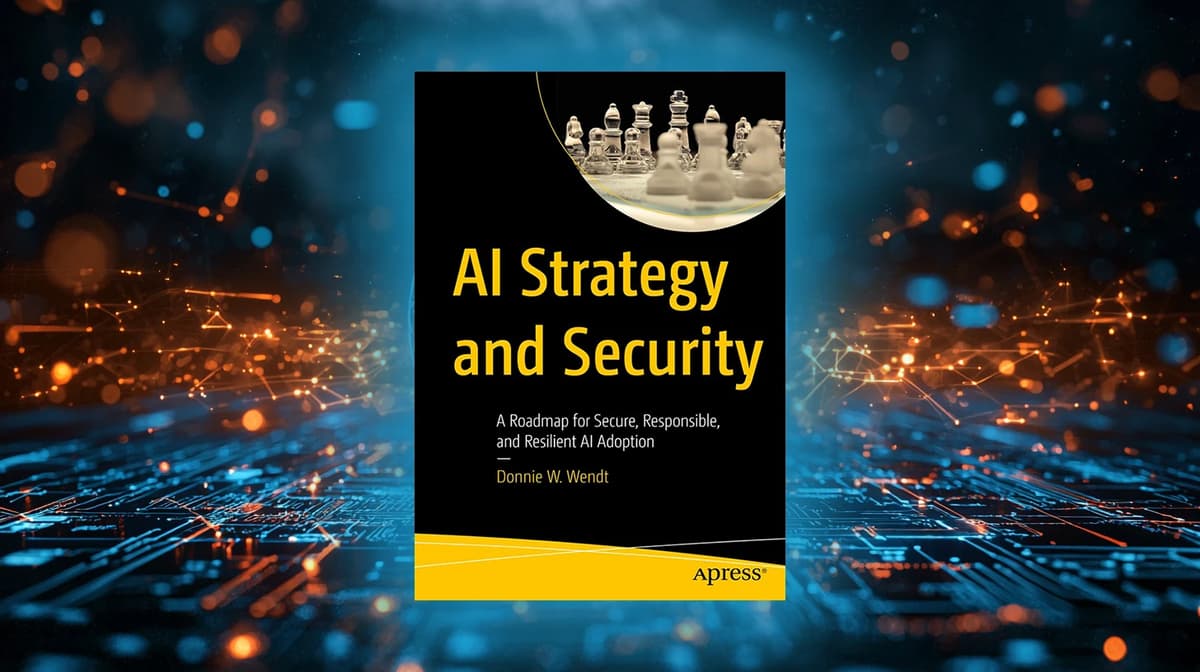
Why It Matters
By linking AI strategy directly to security and governance, the book equips executives to mitigate emerging AI risks while extracting measurable business value, a critical need as AI deployments scale across regulated industries.
Key Takeaways
- •AI adoption requires cross‑functional governance
- •Readiness assessments cover data, talent, culture
- •Defines AI‑specific roles and responsibilities
- •Details defenses against data poisoning and model attacks
- •Integrates responsible AI into operational processes
Pulse Analysis
Enterprises are accelerating AI projects, yet many treat technology adoption as a siloed IT initiative. Wendt’s framework reframes AI as a strategic discipline that must align with core business goals such as market expansion and process optimization. By embedding readiness assessments—evaluating data maturity, infrastructure, and workforce capabilities—organizations can avoid costly re‑engineering later. This holistic view resonates with C‑suite priorities, ensuring AI investments are justified through clear, measurable outcomes rather than speculative hype.
Security considerations sit at the heart of the guide, reflecting the reality that AI models introduce novel attack surfaces. Data poisoning, model backdoors, and supply‑chain vulnerabilities can undermine trust and compliance, especially in regulated sectors like finance and healthcare. Wendt proposes concrete safeguards: strict data‑handling controls, model change‑management pipelines, API hardening, and continuous adversarial testing. These practices not only protect against breaches but also satisfy emerging AI‑specific regulations, positioning firms to meet both domestic and international compliance demands.
Beyond technical controls, the book stresses governance, ethics, and lifecycle management as ongoing responsibilities. Defined roles—from Chief AI Officer to AI ethics officer—create accountability structures that bridge strategy, development, and operations. Continuous monitoring, drift analysis, and periodic decommissioning ensure AI systems remain effective and aligned with evolving business objectives. By fostering a culture of transparency, explainability, and human oversight, organizations can achieve responsible AI deployment that drives sustainable competitive advantage.
Review: AI Strategy and Security
0
Comments
Want to join the conversation?
Loading comments...