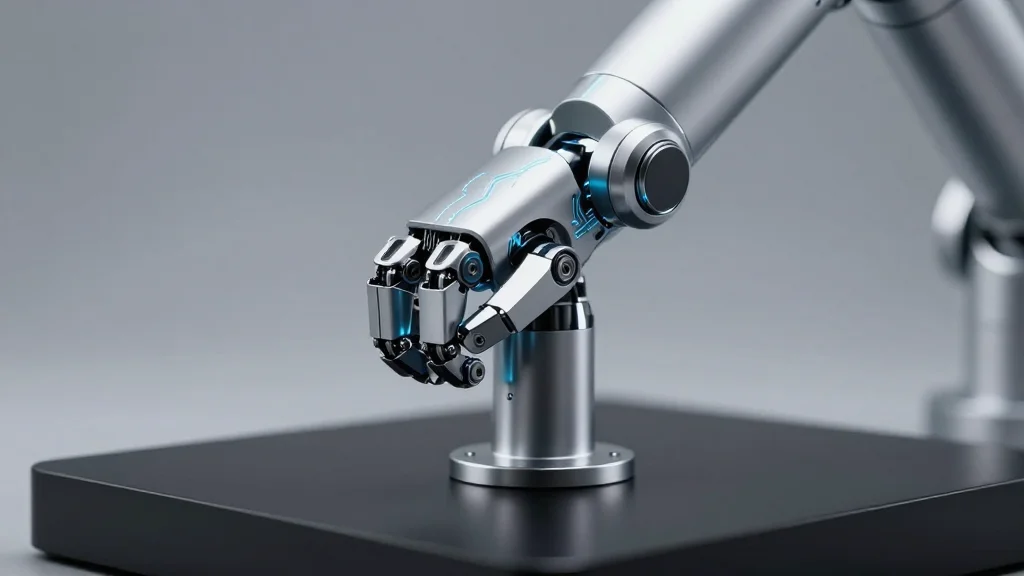
RLWRLD Debuts Robotics Foundation Model ‘RLDX-1’ at NVIDIA GTC Taipei 2026

Companies Mentioned
Why It Matters
The breakthrough shows high‑performance robotic manipulation can be achieved with far lower compute, speeding commercial rollout and cementing RLWRLD’s role in the fast‑growing physical AI ecosystem.
Key Takeaways
- •RLDX-1 scored 70.6 on RoboCasa Kitchen, beating Nvidia GR00T N1.6.
- •Model achieved top results on eight public robotics benchmarks.
- •Training compute was only ~20% of Nvidia’s GR00T N1.5 usage.
- •Runs on edge devices (Jetson AGX Thor, Orin) without retraining.
- •RLWRLD targets a 4D+ World Model for long‑horizon planning.
Pulse Analysis
Foundation models are reshaping robotics by providing a single, large‑scale neural backbone that can be fine‑tuned for diverse tasks. RLWRLD’s RLDX-1 exemplifies this shift, delivering state‑of‑the‑art dexterity on eight public benchmarks while consuming a fraction of the training power traditionally required. Its 70.6 score on the RoboCasa Kitchen suite not only eclipses Nvidia’s own GR00T N1.6 but also signals that algorithmic efficiency can rival raw compute, a critical factor as manufacturers seek cost‑effective AI solutions.
The partnership with Nvidia is central to RLDX-1’s success. By leveraging the full Isaac stack—GR00T, Lab, Sim, and cuRobo—alongside H100, A100, and Jetson edge processors, RLWRLD created a model that transitions seamlessly from cloud training to on‑premise deployment without retraining. This cloud‑to‑edge continuity lowers integration barriers for industrial partners across Taiwan, Korea and Japan, regions that dominate semiconductor and robotics supply chains. As RLWRLD courts hardware manufacturers at GTC Taipei, the ability to run a high‑performance model on Jetson AGX Thor or Orin devices makes the technology immediately actionable in factories and logistics hubs.
Looking ahead, RLWRLD’s vision of a “4D+ World Model” expands beyond hand dexterity to encompass temporal reasoning and language‑conditioned planning. Such a model would enable robots to anticipate future states, coordinate multi‑step actions, and adapt to dynamic environments—capabilities essential for next‑generation automation. If realized, this could accelerate the shift from narrow, task‑specific robots to versatile agents that learn and operate across a spectrum of industrial scenarios, reshaping competitive dynamics and attracting further investment into the physical AI sector.
RLWRLD Debuts Robotics Foundation Model ‘RLDX-1’ at NVIDIA GTC Taipei 2026
Comments
Want to join the conversation?
Loading comments...