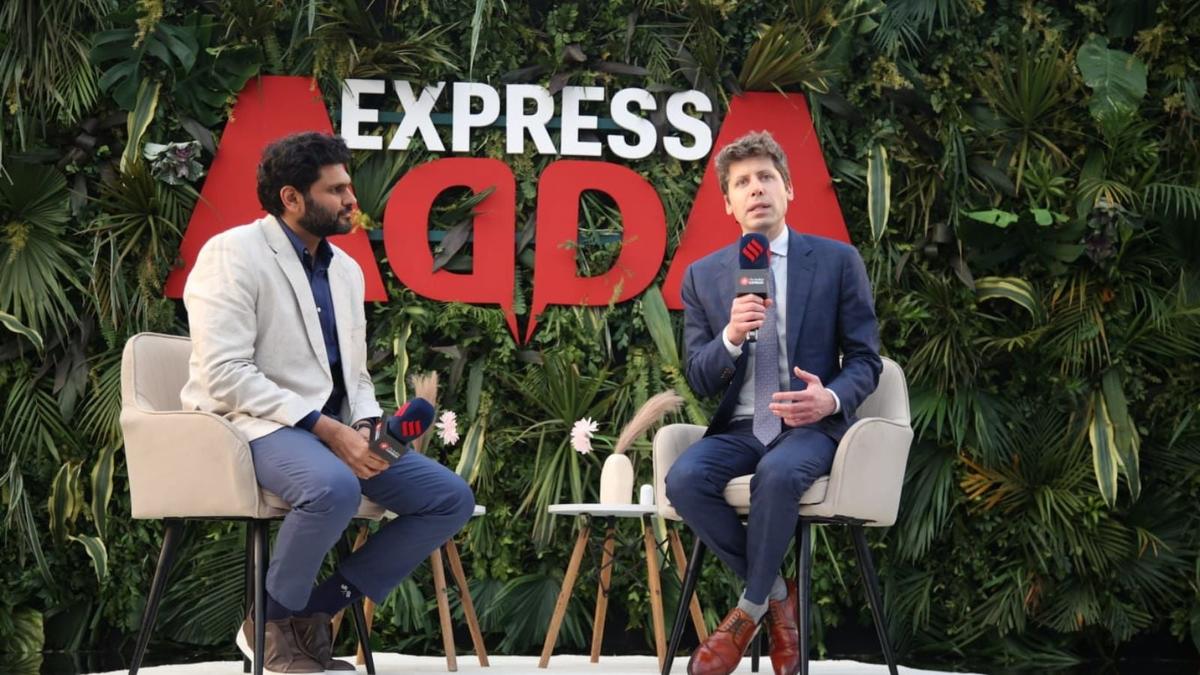
Sam Altman vs Elon Musk: Why OpenAI’s CEO Says Space-Based Data Centres Won’t Matter This Decade
•February 21, 2026
0


Why It Matters
The disagreement underscores how AI’s soaring compute needs could reshape infrastructure investment, influencing both tech strategy and energy policy. If space‑based solutions prove viable, they could alleviate grid pressure and redefine competitive advantage.
Key Takeaways
- •Altman calls orbital data centres “ridiculous” this decade
- •Musk promotes space AI compute to bypass Earth’s power limits
- •AI demand could double data‑centre electricity use by 2026
- •Space‑based servers face high launch costs and maintenance challenges
- •Altman praises Musk’s engineering skill despite personal rivalry
Pulse Analysis
The race to train ever larger models has turned compute into AI’s most critical bottleneck. Global data‑centre electricity consumption, already accounting for roughly 1 % of total power use, is projected by the International Energy Agency to double by 2026 as generative‑AI services scale. Companies scramble for cheap, reliable energy, turning to renewable contracts, on‑site solar farms, and even experimental nuclear micro‑reactors. Yet intermittent supply and lengthy permitting processes leave many firms vulnerable to grid constraints, prompting some visionaries to look beyond Earth for a permanent power source.
Elon Musk’s answer is orbital data centres powered by uninterrupted solar radiation. In theory, a constellation of satellites equipped with high‑density servers could sidestep terrestrial grid limits and operate in a near‑vacuum that improves cooling efficiency. In practice, the economics remain prohibitive: a single launch of a fully‑fledged server rack can cost tens of millions of dollars, and repairing a failed GPU in orbit would require costly robotic missions or on‑site redundancy. Moreover, the regulatory framework for commercial computing assets in space is still nascent, adding legal risk to the technical hurdles.
Sam Altman’s dismissal of the space‑based model reflects a pragmatic focus on scaling Earth‑bound infrastructure while reducing carbon footprints. OpenAI is betting on massive renewable‑energy purchases, strategic partnerships with utilities, and advances in chip efficiency to meet demand this decade. If space solutions become affordable in the 2030s, early adopters could gain a strategic edge, but for now investors and policymakers are more likely to prioritize grid upgrades, energy‑storage innovation, and modular edge data centres. The Altman‑Musk clash therefore serves as a barometer for where capital will flow in the AI infrastructure race.
Sam Altman vs Elon Musk: Why OpenAI’s CEO says space-based data centres won’t matter this decade
0
Comments
Want to join the conversation?
Loading comments...