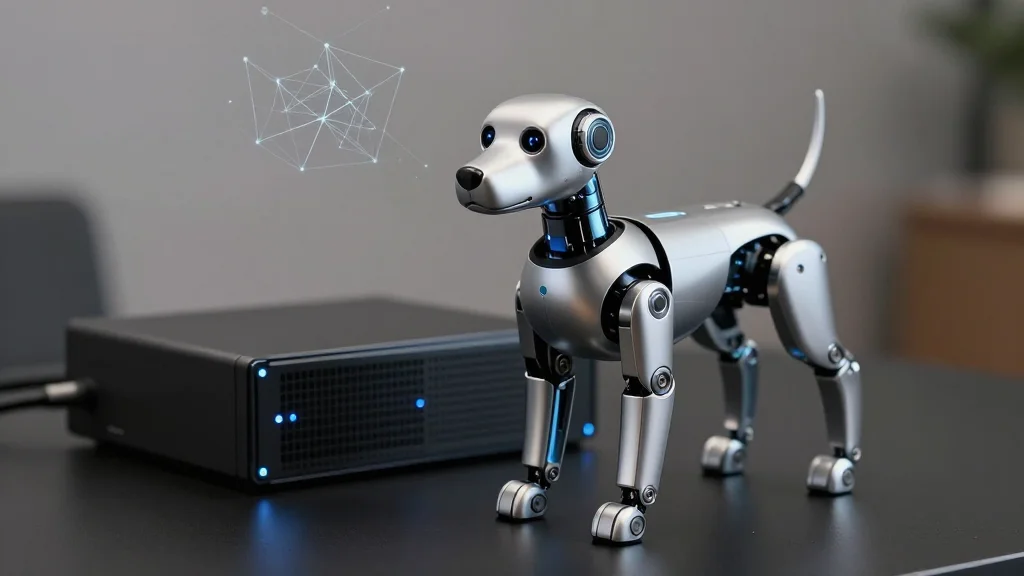
Scaling Physical AI: What a Robotic Guide Dog Teaches Us About Distributed Edge Workloads
Why It Matters
Edge‑centric AI makes robotic guide dogs affordable and scalable, while giving telecoms a new AI‑as‑a‑Service revenue stream.
Key Takeaways
- •Edge‑offloaded AI extends robot battery life, enabling longer trips
- •Reduced on‑device hardware cuts cost, narrowing accessibility gap
- •Multi‑agent orchestration lets robot coordinate services, schedules, and discounts
- •Service providers can monetize AIaaS, B2B2X, and PaaS via ISDE
Pulse Analysis
The shift from on‑device to edge‑based artificial intelligence addresses a long‑standing bottleneck for physical AI. Autonomous robots have traditionally required powerful, power‑hungry processors to handle real‑time perception and large language models, inflating cost and draining batteries. By relocating inference and data aggregation to a distributed edge platform, the robotic guide dog becomes a thin client that conserves energy and can be manufactured with modest hardware, dramatically expanding its reach to visually impaired users who could not afford earlier prototypes.
Beyond energy savings, the edge architecture unlocks a new layer of intelligence through multi‑agent orchestration. The robot can query weather services, calendar apps, and retail APIs in real time, turning a simple navigation request into a personalized assistant that suggests social outings, applies discounts, or pre‑orders groceries. This level of contextual awareness creates a richer user experience and opens a marketplace where hardware makers, LLM providers, and vertical service vendors converge, all mediated by the ISDE. For telecom operators, the model translates into AI‑as‑a‑Service (AIaaS) and platform‑as‑a‑service (PaaS) offerings that generate recurring revenue while differentiating their networks.
Red Hat’s OpenShift AI underpins the entire ecosystem with a cloud‑native, open‑source stack that automates model lifecycle, enforces security, and ensures cost‑effective scaling across core, edge, and public clouds. This foundation not only accelerates deployment of the current robotic dog but also provides a repeatable blueprint for future physical AI assistants in healthcare, logistics, and smart cities. As edge compute becomes ubiquitous, the convergence of affordable hardware and distributed intelligence will reshape how businesses monetize AI and how users interact with autonomous devices.
Scaling physical AI: What a robotic guide dog teaches us about distributed edge workloads
Comments
Want to join the conversation?
Loading comments...