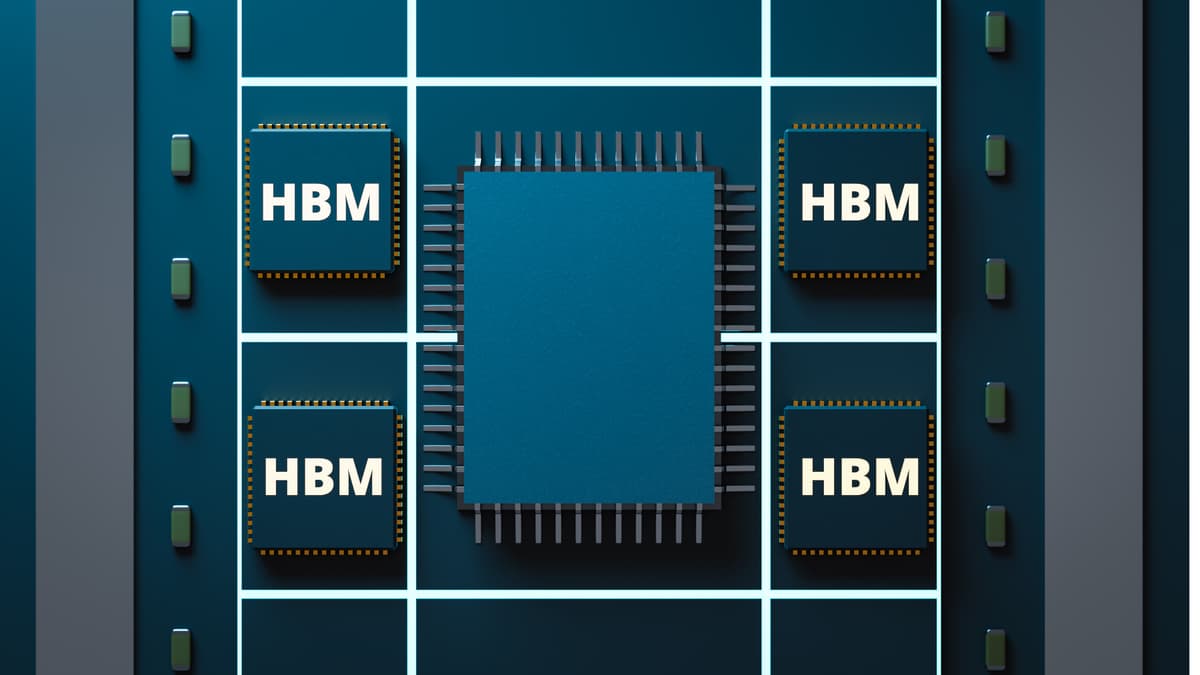
Scaling the Memory Wall: HBM, CXL, and the New GPU Playbook
Why It Matters
Addressing the memory bottleneck is critical to prevent costly GPU idle time and to sustain the rapid expansion of generative‑AI services at the edge. Companies that master advanced memory architectures will capture the bulk of AI‑inference spend and gain a competitive edge in the emerging AI‑infrastructure market.
Key Takeaways
- •HBM market projected $3.9B in 2026, $12.4B by 2031.
- •CXL 3.0 enables rack‑scale memory pooling across multiple GPUs.
- •Inference KV cache bandwidth now outpaces GPU compute, causing idle cycles.
- •Cerebras wafer‑scale engine valued at $95B after debut trading.
Pulse Analysis
Memory bandwidth and capacity have become the decisive constraints on AI inference, reshaping data‑center architecture. While HBM delivers the raw throughput needed to feed GPUs, its limited capacity, high cost, and integration via CoWoS make servicing and scaling challenging. Analysts forecast a multi‑billion‑dollar surge in HBM demand, yet supply lags, prompting operators to seek complementary approaches such as on‑chip SRAM meshes and wafer‑scale engines that blur the line between processor and memory. These innovations reduce data‑movement latency but introduce new thermal and reliability considerations, forcing data‑center teams to rethink cooling, MTBF planning, and field service models.
Enter Compute Express Link, the industry’s answer to memory disaggregation. CXL 3.0’s enhanced coherency and multi‑level switching allow multiple hosts to share pooled memory pools, effectively turning DRAM or HBM resources into a fabric‑wide cache. This capability is especially valuable for inference workloads, where KV‑cache size dictates latency and throughput. By offloading KV storage to CXL‑attached memory servers, GPUs can maintain high utilization without being throttled by local bandwidth limits, and operators gain flexibility to upgrade memory independently of compute nodes.
The strategic implications are clear: vendors that integrate HBM, SRAM‑centric accelerators, and CXL‑based memory pools into turnkey reference designs will dominate the AI‑inference market. Nvidia’s Vera Rubin DSX architecture, AMD’s memory‑centric roadmaps, and Cerebras’ wafer‑scale engine illustrate a shift toward modular, memory‑first platforms. As AI services proliferate from cloud to edge, enterprises will prioritize solutions that mitigate the memory wall, reduce total cost of ownership, and sustain the relentless demand for longer context windows and real‑time responsiveness. Companies that fail to adopt these memory‑centric strategies risk underutilized hardware and lost revenue in a rapidly expanding AI economy.
Scaling the Memory Wall: HBM, CXL, and the New GPU Playbook
Comments
Want to join the conversation?
Loading comments...