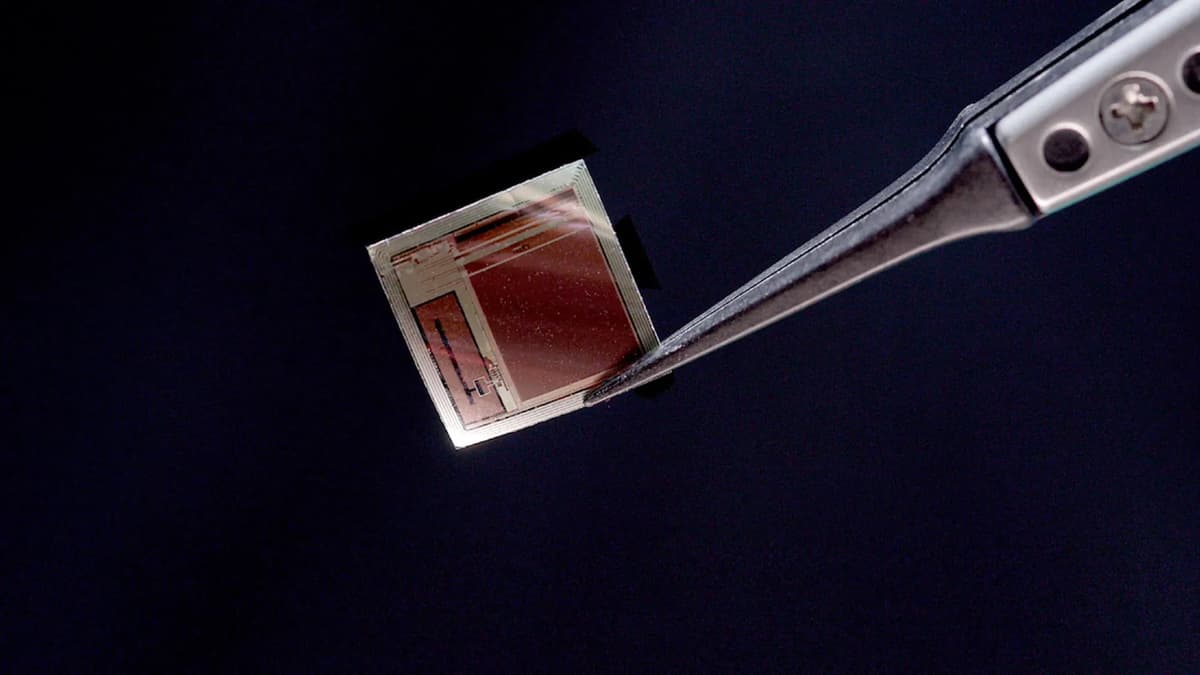
Scientists Reveal a Tiny Brain Chip that Streams Thoughts in Real Time
•December 10, 2025
0
Companies Mentioned

Why It Matters
BISC’s ultra‑miniaturized, high‑bandwidth design could accelerate therapeutic BCIs and reshape human‑computer interaction, making brain‑AI integration clinically viable.
Key Takeaways
- •Chip size 3 mm³, 65,536 electrodes.
- •100 Mbps wireless link, 100× faster than rivals.
- •Fully wireless, minimally invasive subdural placement.
- •Enables real‑time AI decoding of neural intent.
- •Kampto Neurotech pursuing clinical trials for BISC.
Pulse Analysis
The brain‑computer interface market has long been constrained by bulky implants that require invasive surgery and limited data rates. BISC overturns this paradigm by condensing an entire mixed‑signal system onto a 50‑micron‑thin CMOS chip, shrinking the implant volume to less than one‑thousandth of conventional devices. This miniaturization not only reduces surgical risk but also enables the device to conform to the cortical surface, preserving tissue health while delivering unprecedented electrode density.
At the heart of BISC is a custom 0.13‑µm BCD process that merges digital logic, high‑current analog, and power management on a single die. The result is a wireless link capable of 100 Mbps—roughly a hundred times faster than existing wireless BCIs—supporting 1,024 simultaneous recording channels and 16,384 stimulation pathways. Such bandwidth opens the door for deep‑learning models to interpret complex neural patterns in real time, turning raw cortical signals into actionable commands for prosthetic control, speech synthesis, or visual restoration.
Clinically, the technology is moving from proof‑of‑concept to patient trials, with NIH‑funded studies targeting drug‑resistant epilepsy and early feasibility work in motor and visual cortices. The formation of Kampto Neurotech signals a clear path toward commercialization, leveraging semiconductor‑scale manufacturing for cost‑effective production. If successful, BISC could catalyze a new generation of therapeutic and augmentative neurotechnologies, redefining how humans interact with computers and how clinicians treat a spectrum of neurological disorders.
Scientists reveal a tiny brain chip that streams thoughts in real time
0
Comments
Want to join the conversation?
Loading comments...