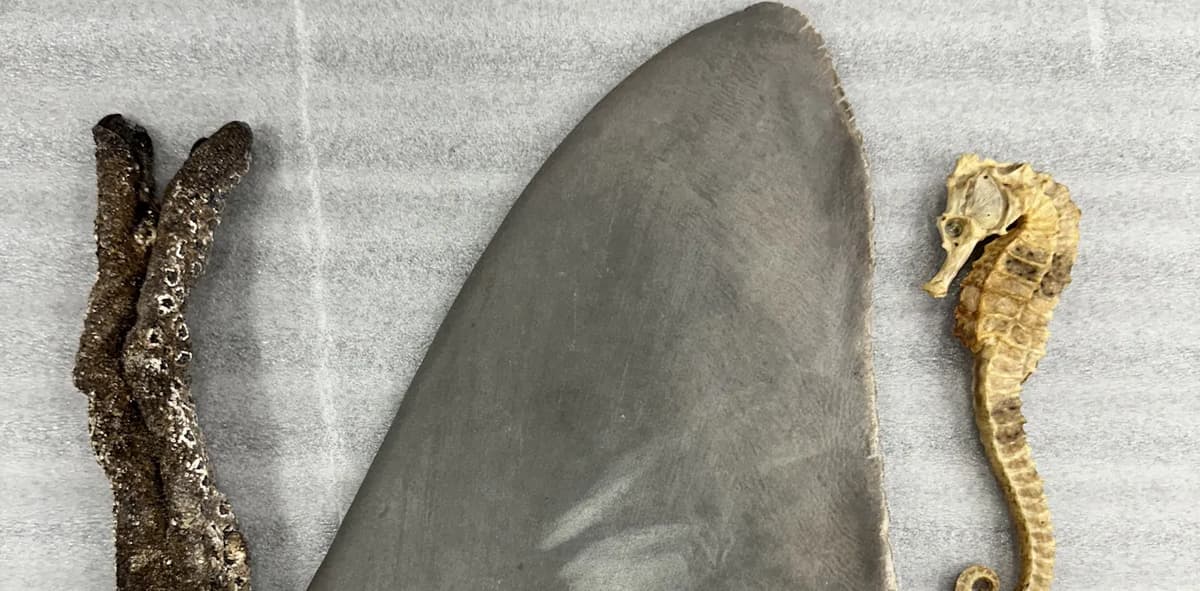
Seahorses and Shark Fins Are Illegally Trafficked. An AI Tool Could Help Stop This Crime
Why It Matters
AI‑assisted detection offers a scalable, high‑accuracy layer of protection against marine wildlife trafficking, a crime that fuels organized crime and threatens biodiversity. By augmenting human inspection, the technology can accelerate interdictions and inform policy on global supply chains.
Key Takeaways
- •AI algorithms detect shark fins with 95% accuracy in X‑ray scans
- •Seahorse detection accuracy also reaches 95%, improving customs inspections
- •Sea cucumber identification lower at 85%, indicating need for refinement
- •Study used 68 marine samples, creating a 3D X‑ray image library
- •Human officers and biosecurity dogs remain essential alongside AI tools
Pulse Analysis
Illegal marine wildlife trade—ranging from shark fins tucked in luggage to seahorses shipped in parcels—feeds a shadow economy worth billions and intertwines with drug, arms and human trafficking networks. While traditional detection relies on human vigilance and biosecurity dogs, the sheer volume of international cargo overwhelms these resources, leaving critical gaps that traffickers exploit. Raising awareness of the marine component of wildlife crime underscores the urgency for innovative, technology‑driven solutions that can keep pace with sophisticated smuggling methods.
The recent Australian‑led research leverages 3D X‑ray imaging combined with machine‑learning algorithms to spot marine species concealed in cargo. By scanning 68 dead specimens and generating a comprehensive image repository, the team trained models that correctly flagged shark fins and seahorses 95% of the time and sea cucumbers 85% of the time across nearly 300 test scans. These performance metrics rival human detection rates and demonstrate that AI can serve as a reliable “second pair of eyes,” especially in complex packaging scenarios where visual cues are obscured.
Integrating AI into frontline biosecurity workflows could transform enforcement at airports and postal hubs. Automated alerts would direct inspectors to high‑risk items, allowing faster, data‑driven decisions while freeing personnel to focus on verification and follow‑up investigations. However, the technology is not a panacea; false negatives and positives necessitate continued human oversight and canine assistance. Scaling this approach globally will require investment in imaging infrastructure, cross‑agency data sharing, and ongoing model refinement to adapt to evolving smuggling tactics, ultimately strengthening the fight against a crime that endangers both ecosystems and public safety.
Seahorses and shark fins are illegally trafficked. An AI tool could help stop this crime
Comments
Want to join the conversation?
Loading comments...