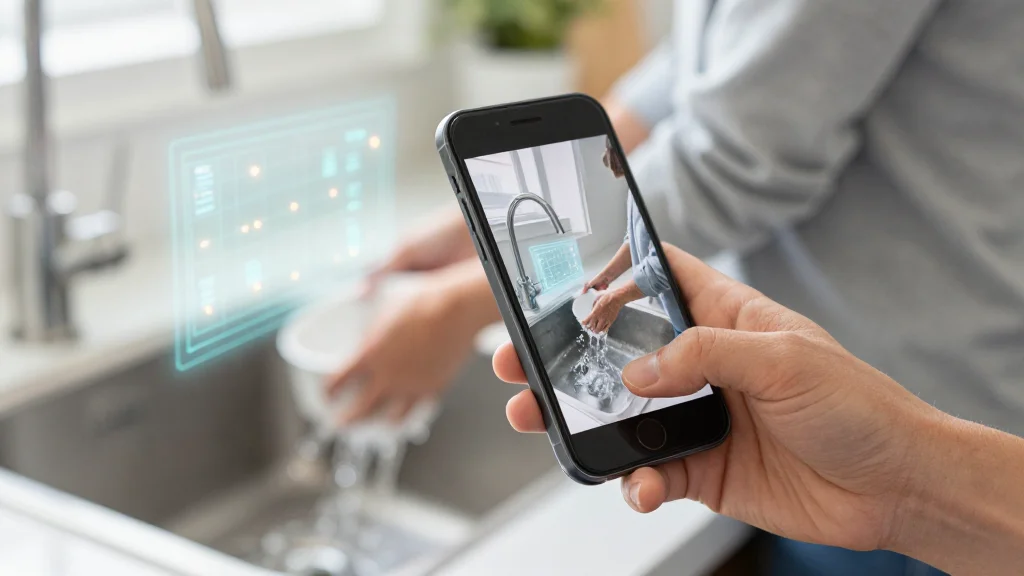
See Why Tech Companies Are Paying People to Do Chores
Companies Mentioned
Why It Matters
Affordable, large‑scale chore video data could accelerate the robot‑assisted home market, reshaping labor and consumer convenience. It also creates a new revenue stream for gig workers while lowering R&D costs for robotics companies.
Key Takeaways
- •DoorDash pays gig workers up to $25/hour for chore videos.
- •Human video data offers cheap baseline for robot learning.
- •Teleoperation data remains highest quality but costly to collect.
- •Researchers use handheld grippers and simulation to cut training costs.
- •Scaling laws predict more data improves robot task performance.
Pulse Analysis
The bottleneck in domestic robotics is not hardware but data. While large language models thrive on billions of text snippets, robot control systems need synchronized visual, tactile and motion information. Researchers cite scaling laws—performance gains that correlate with data volume—to justify massive video collection efforts. By crowdsourcing everyday tasks, companies aim to create a repository that mimics the "internet" for robot learning, allowing algorithms to infer grasp points, folding sequences and force application without expensive teleoperation.
DoorDash's gig‑based model illustrates a pragmatic economic solution. Paying workers $25 per hour for short chore recordings creates a win‑win: participants earn supplemental income, and firms acquire diverse, real‑world examples at a fraction of the cost of operating expensive robot platforms. This approach also democratizes data collection, pulling in varied home environments, lighting conditions and object types, which improves model robustness. Meanwhile, academic labs continue to rely on high‑fidelity teleoperation data, but they now view it as a fine‑tuning layer rather than the sole training source.
Looking ahead, the convergence of cheap video data, handheld demonstration tools and high‑fidelity simulation could compress the timeline for functional home robots. If scaling laws hold, a few hundred million chore clips may enable robots to perform simple tasks reliably within the next five years, opening new markets for appliance manufacturers and service providers. However, true deployment will still hinge on hardware advances, safety certifications, and consumer trust, suggesting a phased rollout where robots first assist rather than replace human effort.
See why tech companies are paying people to do chores
Comments
Want to join the conversation?
Loading comments...