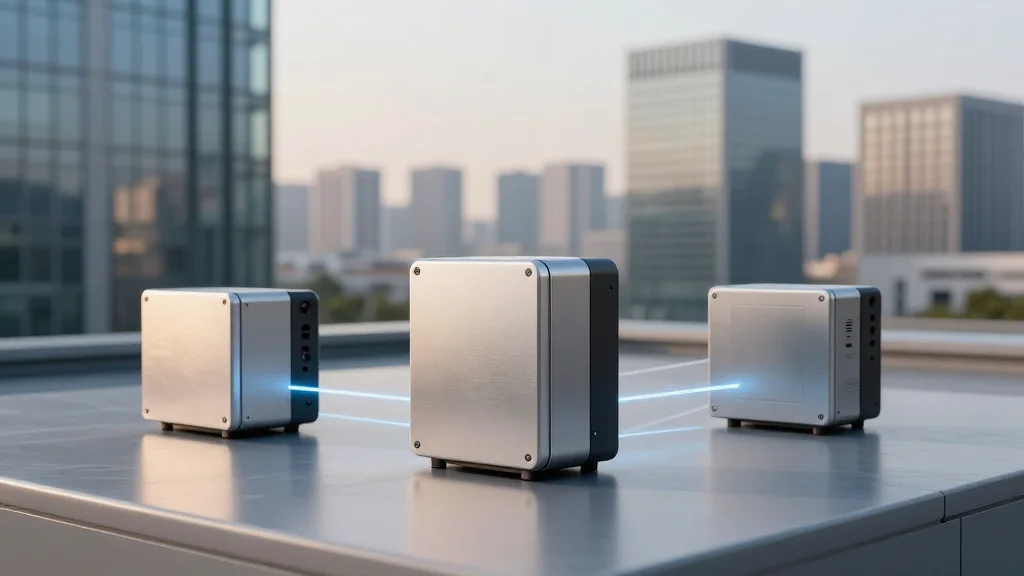
Small, Connected Data Centers Will Power AI, a Builder Says
Companies Mentioned
Why It Matters
The distributed micro‑data‑center model could reshape AI infrastructure by delivering ultra‑low latency services while reducing reliance on centralized utilities, opening new revenue streams for independent operators.
Key Takeaways
- •Small 5‑20 MW data centers enable millisecond‑scale AI inference.
- •Interconnection delays and community pushback are stalling megaprojects.
- •Gray Wolf plans franchised micro‑data centers powered by waste‑to‑energy.
- •Distributed autonomous organization model reduces reliance on centralized utilities.
- •Inference demand expected to exceed 55% of AI compute by 2025.
Pulse Analysis
The AI industry is moving from massive, training‑centric facilities to inference‑focused sites that must sit within a few milliseconds of end‑users. Latency is no longer a secondary concern; it directly impacts user experience and competitive advantage. This shift forces developers to rethink site selection, favoring regional clusters over desert‑based megacenters, and accelerates the adoption of edge‑oriented architectures that can handle real‑time query processing.
Gray Wolf Data Centers proposes a franchise‑style network of 5‑20 MW modules, each operating as an autonomous entity within a distributed autonomous organization. By leveraging microgrids, solar‑plus‑battery storage, and innovative waste‑to‑energy plants that can generate electricity for under 10 cents per kWh, the model promises cost‑effective power in high‑price regions like Connecticut. The franchising approach mirrors the scalability of coffee chains, allowing independent owners to join a unified cloud platform while maintaining local control.
If successful, this model could erode the dominance of traditional utility‑linked hyperscalers, creating a competitive market for power generation and data‑center services. Investors may see opportunities in modular construction, renewable micro‑generation, and the emerging small‑nuclear sector, which Sacco predicts will be commercially viable within eight years. As inference workloads surpass 55 % of AI compute demand, the industry will likely prioritize latency‑optimized, locally powered sites, reshaping capital allocation and regulatory frameworks across the United States.
Small, connected data centers will power AI, a builder says
Comments
Want to join the conversation?
Loading comments...