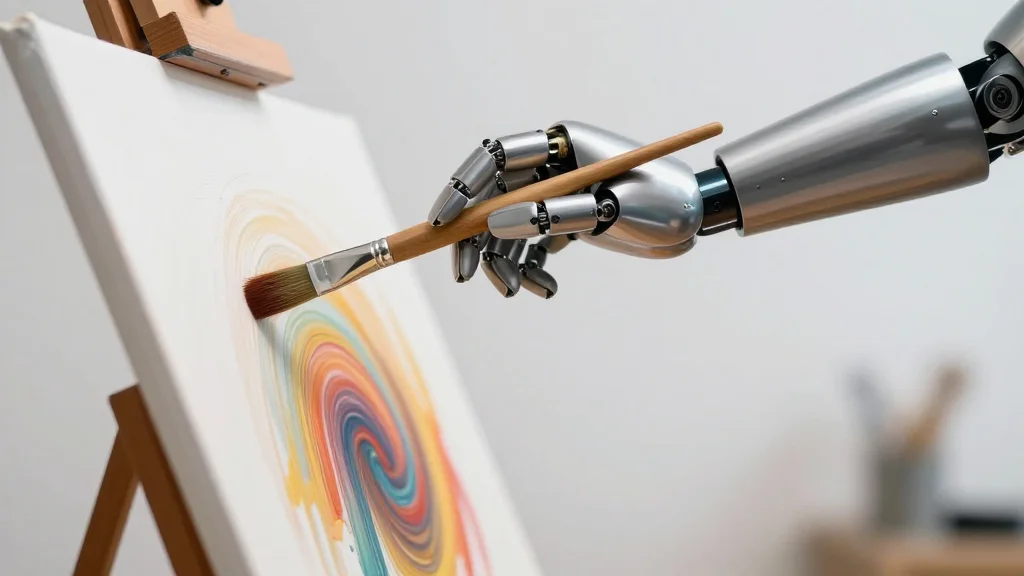
So An AI Has Just Declared A Painting By A Street Artist More Valuable Than A Picasso. Questions Abound
Companies Mentioned

Why It Matters
The findings reveal that AI cannot replace human context in art pricing, but it can expose systemic biases and offer tools to democratize market access for under‑represented artists.
Key Takeaways
- •AI model valued unknown street art higher than Picasso based on visuals
- •Predictions aligned with market only after adding artist name and provenance
- •Training data bias reinforced existing art market hierarchies
- •Visual quality alone cannot reliably predict auction prices
- •AI may democratize discovery by bypassing traditional gatekeepers
Pulse Analysis
The recent experiment by Yale art‑economics professor Magnus Resch showcases the ambition to let artificial intelligence decode the opaque art market. Using a Fine Art Large Vision Model trained on a curated dataset of millions of images—including masterpieces and record‑breaking sales—the system attempted to predict auction outcomes from visual cues alone. While the model achieved modest accuracy in over half of the cases, its most provocative result was a seven‑figure valuation for a New York street‑artist work, contrasted with an under‑$1,000 estimate for a Picasso. This disparity underscored the model’s capacity to assess aesthetic elements but also its inability to capture the social capital that traditionally inflates prices.
The study’s deeper lesson lies in the data itself. When metadata such as artist identity, gallery representation, and provenance were added, the AI’s predictions realigned with market realities, confirming that price signals are heavily tied to reputation and network effects. This reinforces a long‑standing critique: the art market is less a meritocracy of brushstrokes and more a closed ecosystem where a handful of names dominate auction values. Consequently, any AI tool that relies on historical sales data risks perpetuating these inequities, rather than offering an objective barometer of artistic worth.
Nevertheless, the technology holds promise as a democratizing force. By analyzing visual preferences without the filter of elite endorsement, AI can surface emerging talent to collectors who rely on personal taste rather than institutional hype. Recommendation engines, personalized feeds, and price‑transparency apps could empower buyers to discover works that resonate emotionally, bypassing traditional gatekeepers. In this emerging paradigm, AI does not replace human judgment; it augments it, offering a more inclusive pathway for artists to reach appreciative audiences and for collectors to make informed, passion‑driven purchases.
So An AI Has Just Declared A Painting By A Street Artist More Valuable Than A Picasso. Questions Abound
Comments
Want to join the conversation?
Loading comments...