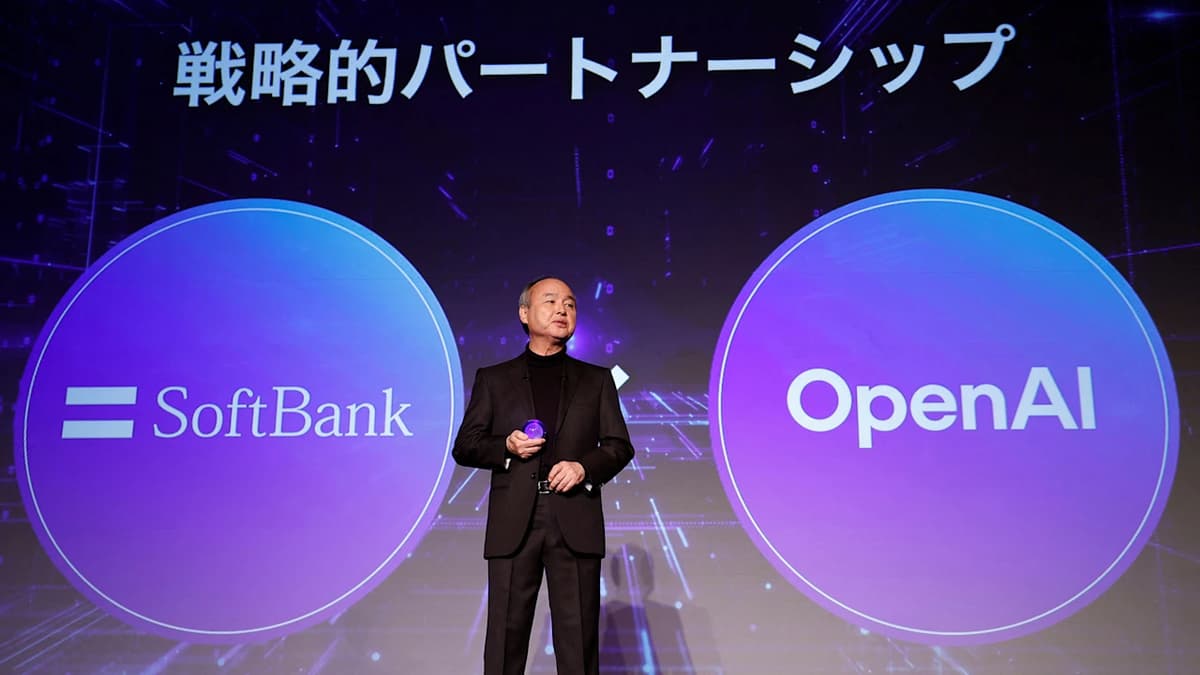
SoftBank Is Racing to Close a $22.5 Billion OpenAI Funding Gap Before 2026
•December 22, 2025
0
Companies Mentioned


Why It Matters
Securing the OpenAI capital lock positions SoftBank at the forefront of the AI infrastructure race, while reshaping its balance sheet and influencing global AI investment dynamics.
Key Takeaways
- •SoftBank needs $22.5B for OpenAI by 2026.
- •Sold Nvidia stake for $5.8B, T‑Mobile stake $4.8B.
- •Plans margin loans against Arm holdings.
- •Vision Fund deals now need Son's approval.
- •PayPay IPO delayed, targeting Q1 2026.
Pulse Analysis
SoftBank’s latest maneuver reflects a broader shift among legacy conglomerates toward deep‑pocket AI financing. By converting high‑value equity positions—most notably a $5.8 billion Nvidia stake and a $4.8 billion T‑Mobile US holding—into liquid capital, the group is creating a dedicated war chest for OpenAI. The use of undrawn margin loans secured by its Arm Holdings shares adds a layer of leverage that signals confidence in both the AI partner’s growth trajectory and SoftBank’s own asset base. This multi‑pronged approach illustrates how capital‑intensive AI projects are reshaping corporate finance strategies worldwide.
The funding drive also reverberates through SoftBank’s Vision Fund, where deal flow has been throttled and any transaction above $50 million now requires Masayoshi Son’s personal sign‑off. This tighter governance aims to prioritize OpenAI commitments over other speculative bets, potentially curbing the fund’s diversification but sharpening its focus on high‑impact AI infrastructure. Market observers see the move as a litmus test for the valuation premium that AI‑centric startups can command when backed by a heavyweight investor willing to marshal billions on their behalf.
Looking ahead, SoftBank’s ability to close the funding gap will hinge on the success of ancillary liquidity events. The PayPay IPO, postponed to the first quarter of 2026, is expected to raise more than $20 billion, providing a substantial cash infusion. Simultaneously, a potential sale of its Didi Global stake could unlock additional resources. Together, these actions not only aim to meet the OpenAI commitment but also signal SoftBank’s broader strategy: leveraging its portfolio to stay competitive in the fast‑evolving AI ecosystem while managing the financial strain that such large‑scale bets entail.
SoftBank is racing to close a $22.5 billion OpenAI funding gap before 2026
0
Comments
Want to join the conversation?
Loading comments...