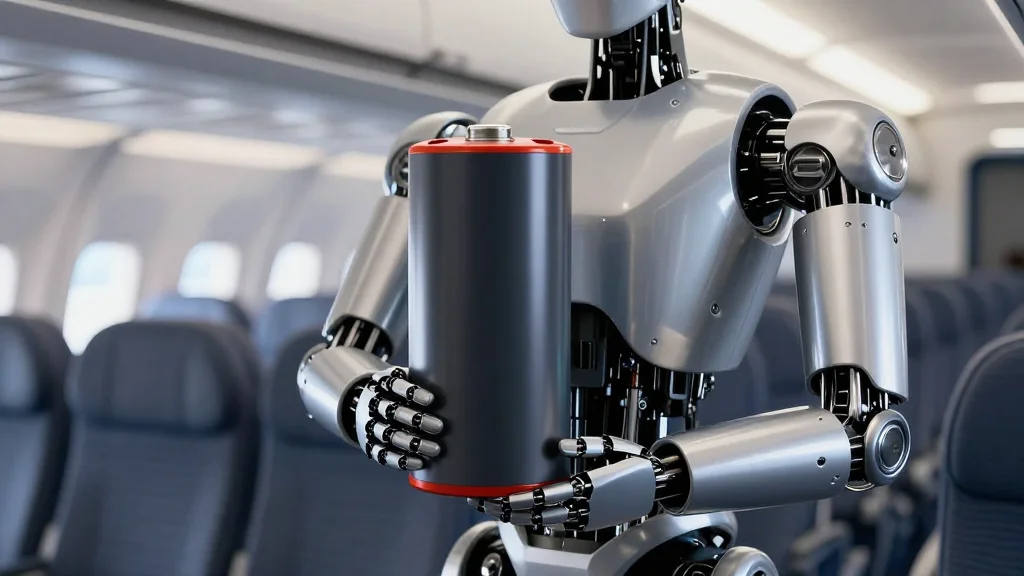
Southwest Flight Delayed Over an Hour as Humanoid Robot Bebop Triggers Safety Checks

Companies Mentioned
Why It Matters
The Southwest delay illustrates the friction point where cutting‑edge AI hardware meets traditional transportation safety standards. As humanoid robots and other AI‑enabled devices become more visible in public venues, airlines will be forced to refine their policies on battery sizes, weight limits, and on‑board inspections. This could spur regulatory bodies to issue clearer guidance, influencing how AI companies design hardware for travel. Beyond aviation, the incident signals a broader market challenge: integrating advanced AI systems into existing infrastructure without disrupting service. Companies that can anticipate and comply with safety regulations will gain a competitive edge, while those that overlook such constraints risk operational setbacks and negative publicity.
Key Takeaways
- •Southwest flight from Oakland to San Diego delayed >1 hour due to robot Bebop.
- •Bebop weighs 70 pounds; its lithium battery exceeded airline limits.
- •Elite Event Robotics is swapping the battery and plans to fly Bebop again on Sunday.
- •Southwest confiscated the oversized battery, citing safety policy.
- •Incident highlights need for updated airline regulations on AI‑driven hardware.
Pulse Analysis
The Bebop incident is a microcosm of a larger trend: AI hardware is moving out of labs and onto public transportation, forcing legacy industries to confront new safety and liability questions. Historically, airlines have dealt with unusual cargo—such as live animals or hazardous materials—but the rise of autonomous, battery‑powered robots introduces a different risk profile. Lithium‑ion batteries, while ubiquitous, pose fire hazards that are already tightly regulated; a robot that pushes the size envelope tests the limits of those rules.
From a market perspective, the episode could accelerate the development of standardized certification processes for AI devices traveling by air. Companies that pre‑emptively design robots with compliant battery packs may enjoy smoother logistics and avoid costly delays. Conversely, firms that prioritize performance over compliance may face operational bottlenecks, as seen with Elite Event Robotics.
Looking ahead, regulators may issue specific guidance for AI‑enabled equipment, similar to the FAA’s recent drone integration framework. Airlines could also create dedicated liaison teams for tech firms, turning potential disruptions into promotional opportunities. The key takeaway for investors and industry watchers is that the intersection of AI hardware and transportation is no longer theoretical—it’s happening now, and the rules of engagement are still being written.
Southwest Flight Delayed Over an Hour as Humanoid Robot Bebop Triggers Safety Checks
Comments
Want to join the conversation?
Loading comments...