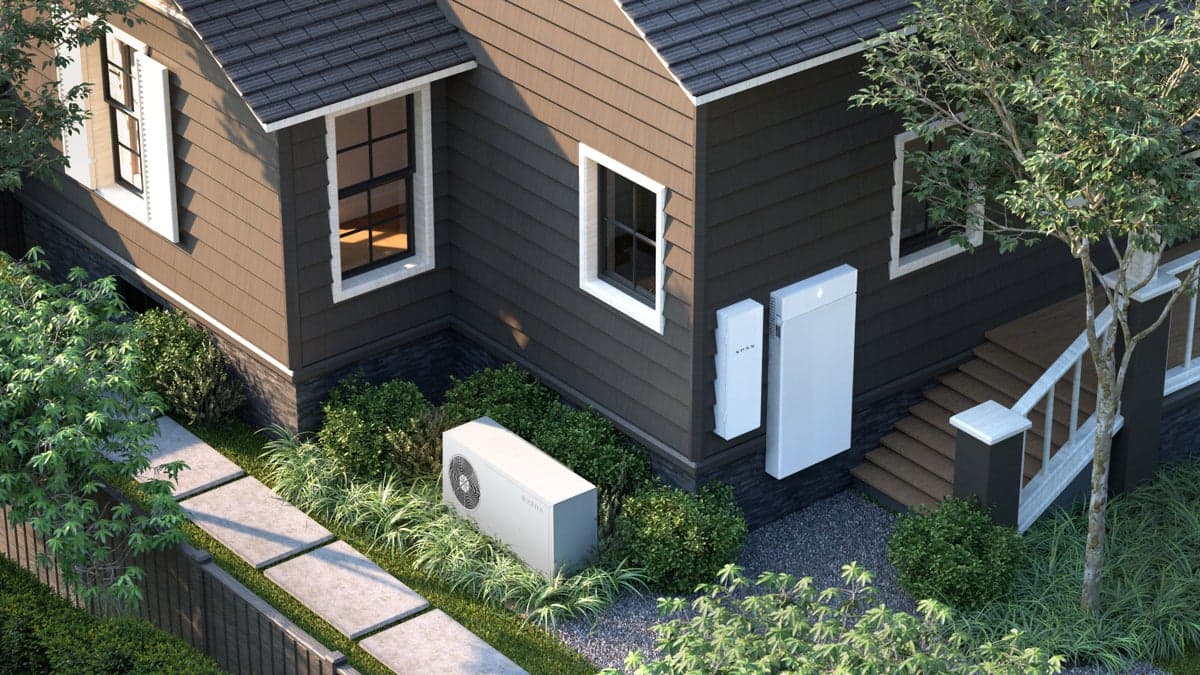
Span Wants to Turn Homes Into Mini Data Centers
Companies Mentioned
Why It Matters
By turning idle residential capacity into AI compute, Span could ease the chronic power shortage hampering AI model training and inference, while reshaping data‑center economics and grid load management.
Key Takeaways
- •XFRA node packs 16 Nvidia GPUs, draws 12.5 kW at full load.
- •8,000 nodes equal power of a 100‑MW traditional data center.
- •Pilot installs 100 homes, delivering ~1.2 MW compute capacity this fall.
- •Distributed compute may improve inference latency but challenges training workloads.
Pulse Analysis
The rapid expansion of generative AI has exposed a critical weakness in the United States’ power infrastructure: utilities cannot provision new megawatts quickly enough to feed ever‑larger data centers. Substation upgrades often take five to seven years, and gigawatts of generation sit idle in interconnection queues. Span’s XFRA system sidesteps this bottleneck by leveraging the surplus capacity built into modern single‑family homes. By embedding a liquid‑cooled, 16‑GPU module in a side‑yard cabinet, the company transforms unused amperage into a decentralized compute pool that can be tapped on demand, effectively turning neighborhoods into a collective super‑computer.
From a technical standpoint, XFRA nodes are engineered for inference workloads that tolerate modest inter‑node latency. The 12.5 kW power draw per unit translates to roughly three days of average household electricity use, yet the nodes sit on a dedicated backup battery and heat‑pump cooling system to protect both the home and the hardware. While training frontier models still demands the high‑bandwidth, low‑latency fabric of traditional hyperscale facilities, inference tasks—such as chat responses, code generation, or real‑time translation—can be dispatched to the nearest node, shaving milliseconds off response times and reducing backbone network congestion. This proximity advantage aligns with emerging edge‑AI strategies that prioritize user experience over raw throughput.
Business implications are equally compelling. Span’s pilot with PulteGroup will place 100 units in newly built homes, offering residents free hardware, a flat power‑and‑Wi‑Fi fee, and revenue sharing based on compute usage. If the model scales to the gigawatt level the company envisions, it could create a new revenue stream for utilities and homeowners while diluting the economies of scale that favor massive, centralized data centers. However, challenges remain: utilities must manage the added load variability, and the logistics of workload orchestration across thousands of dispersed nodes could raise operational costs. Success will hinge on balancing grid stability, cost efficiency, and the technical limits of distributed AI inference.
Span wants to turn homes into mini data centers
Comments
Want to join the conversation?
Loading comments...