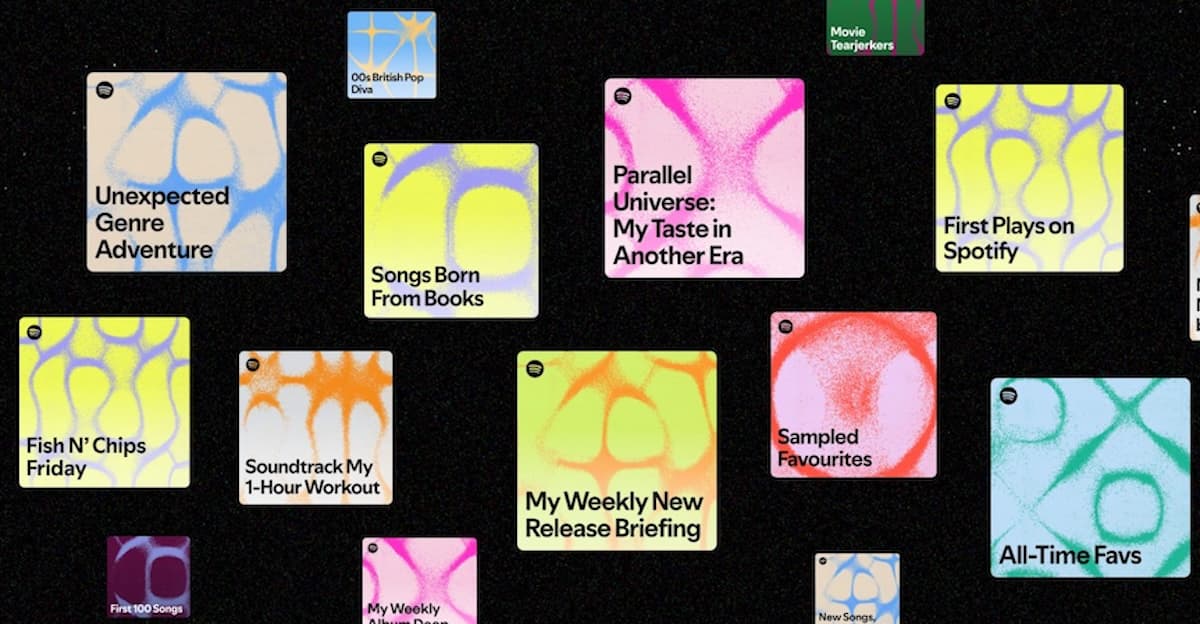
Spotify Rolls Out AI-Powered Prompted Playlists to the UK and Other Markets
•February 23, 2026
0
Why It Matters
Prompted Playlists deepen personalization, likely boosting premium engagement and differentiating Spotify in a crowded streaming market.
Key Takeaways
- •Prompted Playlists launch in UK, Ireland, Australia, Sweden
- •Feature creates playlists from natural language prompts
- •AI tailors selections using listening history and current trends
- •Users can schedule daily or weekly playlist refreshes
- •Beta limits restrict prompts to ~20‑30 per session
Pulse Analysis
Spotify’s rollout of Prompted Playlists in the United Kingdom, Ireland, Australia and Sweden marks the next step in the streaming giant’s AI‑first strategy. By allowing premium users to describe a mood, activity or cultural reference in plain English, the service translates natural language into a curated tracklist, leveraging the company’s recommendation engine and real‑time trend data. This capability builds on earlier experiments in New Zealand, the United States and Canada, and positions Spotify ahead of rivals that still rely on keyword‑based searches or static radio stations. The move underscores how generative AI is reshaping music discovery.
The user‑focused design of Prompted Playlists emphasizes flexibility: listeners can request new‑music‑heavy mixes, pull from their personal library, or set the playlist to refresh automatically each day or week. Each track is accompanied by a brief rationale, adding transparency to the algorithmic choice. While the feature remains in beta, Spotify has imposed a soft limit of roughly 20‑30 prompts per session to manage computational load and gather feedback. Early reports suggest the limit may encourage more thoughtful prompting, potentially increasing engagement metrics such as session length and repeat usage.
Beyond the consumer experience, Prompted Playlists signal Spotify’s broader commitment to AI‑driven product development. Co‑CEO Gustav Söderström recently claimed that many engineers have not written a line of code since December, reflecting a shift toward AI‑assisted tooling across the organization. Coupled with recent AI features like Page Match, About the Song, and the SeatGeek concert‑ticket integration, the new playlists reinforce a differentiated ecosystem that can attract higher‑value premium subscribers. As the company expands its audiobook and physical‑book offerings, the AI layer may become a unifying thread that drives cross‑category growth and strengthens its competitive moat.
Spotify rolls out AI-powered Prompted Playlists to the UK and other markets
0
Comments
Want to join the conversation?
Loading comments...