Why It Matters
AI agents are now performing real engineering work, reshaping hardware investments and content creation across the tech ecosystem. This accelerates productivity while raising security and authenticity concerns.
Key Takeaways
- •AI agents built 8‑node NVIDIA GB10 cluster autonomously
- •OpenClaw agents automate multi‑step code implementation tasks
- •Homelab focus shifts from storage to AI‑ready GPU servers
- •AI‑generated content becoming mainstream in tech publishing
- •STH expands analytics via Axautik Group Substack audience
Pulse Analysis
The emergence of agentic AI this quarter marks a turning point for the homelab community. By allowing autonomous software agents to configure networking, mount storage, and launch vLLM across an eight‑node NVIDIA GB10 cluster, STH showcases a level of self‑service previously reserved for large data centers. This capability reduces manual overhead, shortens deployment cycles, and demonstrates that AI can manage complex, multi‑node environments despite vendor limits that officially cap support at four nodes. The practical success of OpenClaw—an AI that reads academic papers, writes code, and validates performance—underscores a broader shift toward AI‑driven development pipelines.
Hardware priorities are evolving as AI workloads dominate. Enthusiasts are favoring compact GPU servers such as the Minisforum MS‑02 Ultra and MS‑S1 Max, which can host embedding models and Whisper AI, over traditional storage‑heavy builds. This reallocation of resources reflects a higher marginal utility for compute‑intensive tasks, while also raising security considerations; agents that can execute arbitrary code introduce new attack surfaces. Nonetheless, the ability to issue a simple voice command and receive a fully operational AI service is redefining the value proposition of personal data centers.
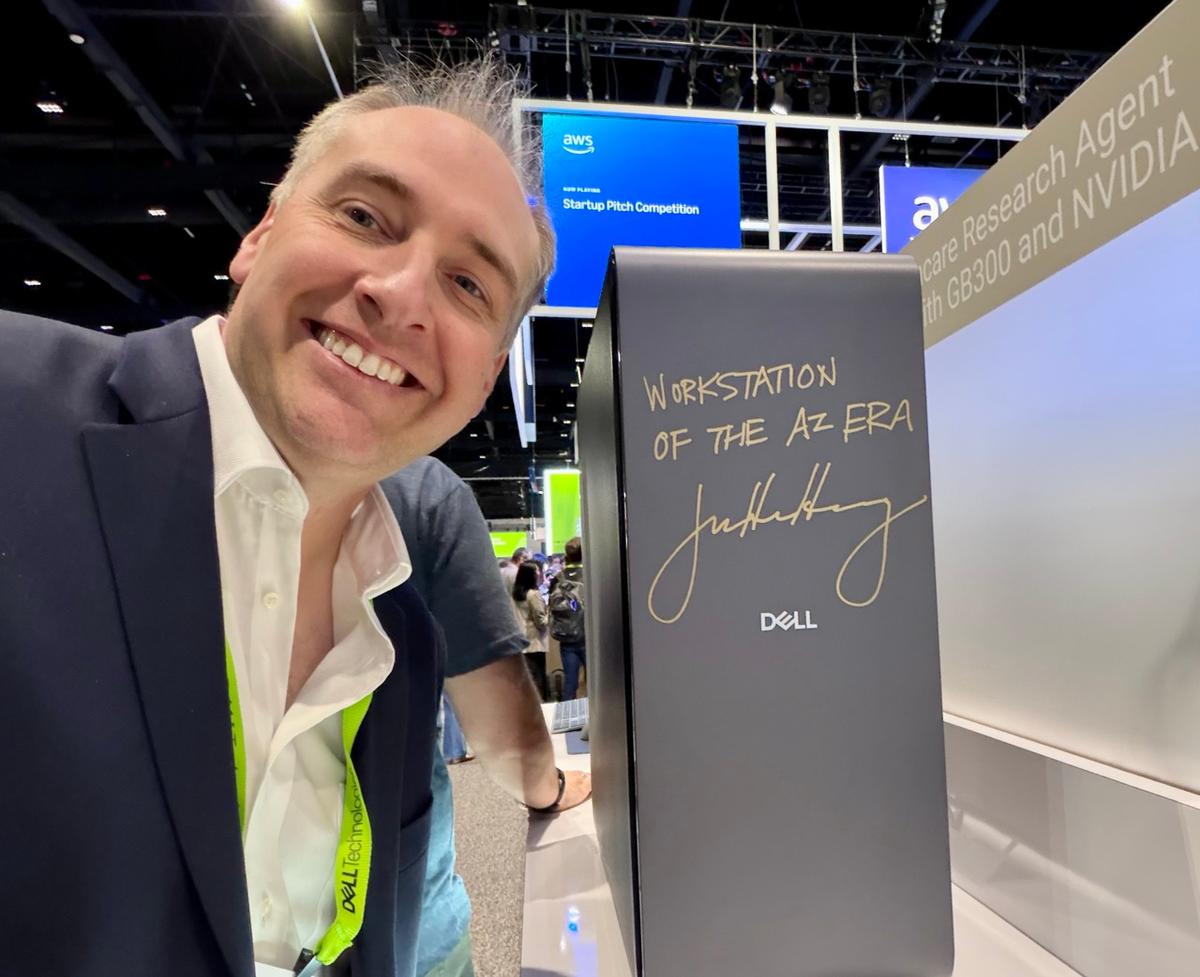
Beyond the lab, AI’s influence is reshaping content production. At NVIDIA’s GTC, analysts admitted to using AI for drafting articles, a practice that is rapidly spreading across tech media. While AI‑generated pieces boost efficiency, they also blur the line between human insight and algorithmic output, prompting publishers like STH to double‑down on human‑written editorial standards. To capitalize on these trends, STH is expanding its analytical arm, the Axautik Group, via a high‑traffic Substack, and experimenting with short‑form video content through its Labs Shorts channel. These moves position the brand to monetize AI‑enhanced services while maintaining credibility in a market increasingly saturated with machine‑crafted narratives.
STH Q1 2026 Letter from the Editor AI Got Scary Good
Comments
Want to join the conversation?
Loading comments...