Stop Wasting GPU Budget: Autoscaling AI Inference on Kubernetes with KEDA
Companies Mentioned
Why It Matters
Event‑driven GPU autoscaling lets enterprises run inference workloads cost‑effectively, turning expensive idle silicon into a controllable expense and ensuring responsive AI services during peak demand.
Key Takeaways
- •Standard HPA ignores GPU utilization, causing latency under AI load
- •KEDA scales pods based on real‑time GPU SM and VRAM metrics
- •Custom keda‑gpu‑scaler translates NVIDIA DCGM data for KEDA
- •Scaling to zero eliminates idle GPU costs during off‑peak hours
Pulse Analysis
Enterprises deploying generative AI face a unique scaling dilemma: GPUs, unlike CPUs, are the primary bottleneck for inference latency, yet Kubernetes’ native autoscaling tools were designed around CPU and memory signals. When an LLM endpoint receives a sudden surge, CPU metrics may appear idle while the GPU queue backs up, leading to dropped requests and poor user experience. Recognizing this mismatch, platform engineers are turning to event‑driven solutions that monitor hardware telemetry directly, ensuring that scaling decisions reflect the true state of the compute substrate.
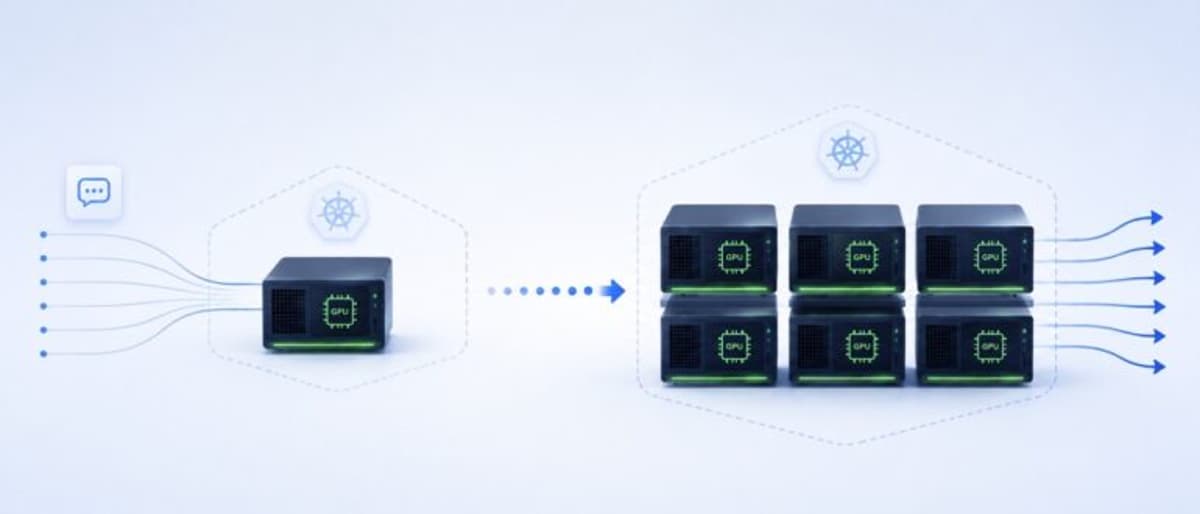
KEDA, a CNCF‑graduated project, extends Kubernetes’ autoscaling capabilities by allowing external metrics to drive replica counts. By deploying the open‑source keda‑gpu‑scaler, clusters expose NVIDIA DCGM‑derived metrics—such as SM utilization and VRAM allocation—to KEDA’s metrics server. The scaler translates these hardware signals into a standard external trigger, which a KEDA ScaledObject can consume. This architecture decouples metric collection from pod scheduling, enabling precise scaling thresholds (e.g., 80% GPU utilization) and supporting a minReplicaCount of zero, something traditional HPA cannot achieve.
The business implications are significant. Scaling to zero eliminates the continuous cost of idle GPU nodes, which can run into thousands of dollars per month for enterprise‑grade hardware. Event‑driven scaling also improves SLA compliance by provisioning additional GPUs only when needed, reducing latency spikes during traffic bursts. As AI moves from experimental labs to production workloads, adopting GPU‑aware autoscaling with KEDA positions organizations to optimize spend, maintain high availability, and stay competitive in a rapidly evolving market.
Stop Wasting GPU Budget: Autoscaling AI Inference on Kubernetes with KEDA
Comments
Want to join the conversation?
Loading comments...