Students Receive $10,000 Prizes From OpenAI for Innovative Use of Artificial Intelligence

Companies Mentioned

Why It Matters
The grant validates AI’s role in accelerating accessible technology and signals corporate support for student‑led, socially beneficial innovation, potentially reshaping markets and policy around inclusive AI applications.
Key Takeaways
- •Yang’s Audemy created 50+ audio games for blind players
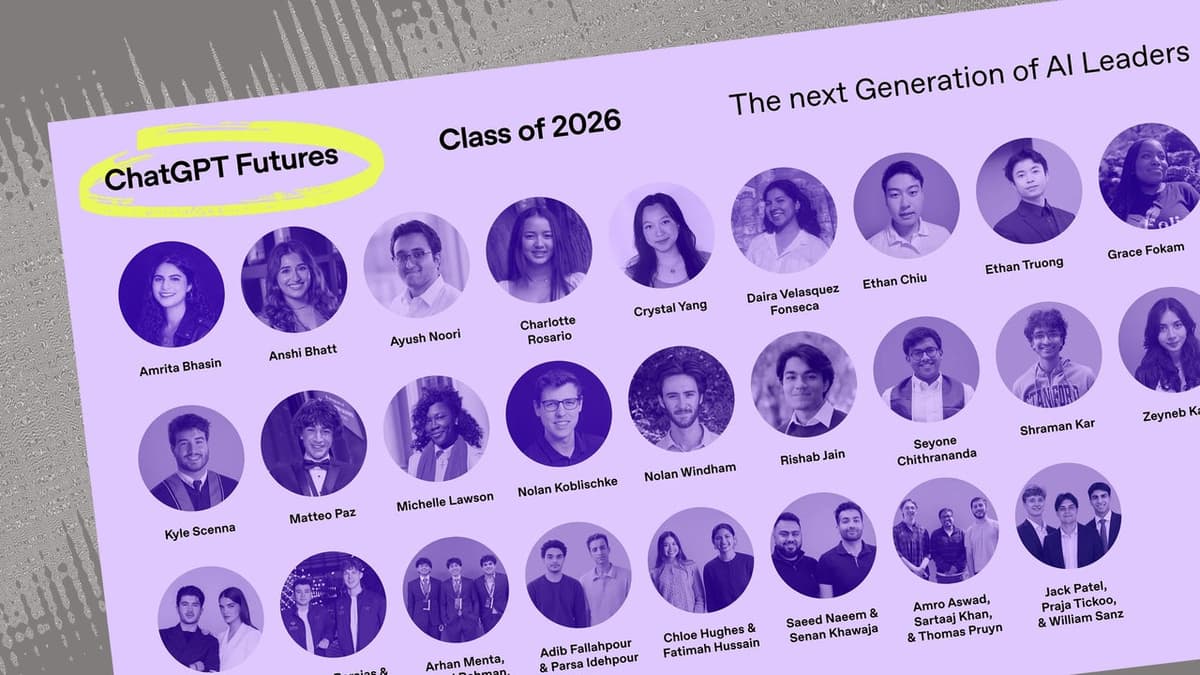
- •OpenAI granted $10,000 to 26 students via ChatGPT Futures
- •AI accelerates prototyping of accessible gaming consoles without Wi‑Fi
- •Other fellows apply AI to space robotics and disaster detection
- •Program showcases AI’s role in social good and inclusive tech
Pulse Analysis
Artificial intelligence is reshaping how developers address accessibility challenges, and Crystal Yang’s work exemplifies that shift. By leveraging large‑language models and generative design tools, she expanded Audemy’s portfolio to more than fifty audio‑driven games that let blind and visually impaired users enjoy the same puzzle experiences as sighted players. The AI‑assisted workflow shortened research cycles, generated code snippets, and even guided component selection for a forthcoming tactile gaming console that operates offline. This blend of conversational AI and human‑centered design demonstrates a scalable path for inclusive entertainment.
OpenAI’s ChatGPT Futures initiative amplifies that momentum by earmarking $10,000 grants for 26 emerging innovators. The program, launched to surface real‑world applications of ChatGPT since its 2022 public debut, creates a pipeline that connects university talent with enterprise‑grade AI resources. Recipients span fields from space robotics to disaster‑zone sensing, illustrating the technology’s versatility beyond chat interfaces. By publicizing these projects, OpenAI not only builds brand credibility but also cultivates a community that can accelerate adoption of responsible AI in sectors traditionally slow to digitize.
The convergence of student‑driven AI projects and corporate grant programs signals a broader shift toward socially responsible technology. Investors are increasingly looking for ventures that combine profit potential with measurable impact, and accessible gaming or AI‑enhanced disaster response fit that narrative. Policymakers, too, are watching how generative models can be harnessed for public good, prompting discussions on funding, ethics, and standards. As more institutions replicate OpenAI’s model, the ecosystem is likely to produce a steady stream of inclusive innovations that reshape markets while addressing underserved communities.
Students receive $10,000 prizes from OpenAI for innovative use of artificial intelligence
Comments
Want to join the conversation?
Loading comments...