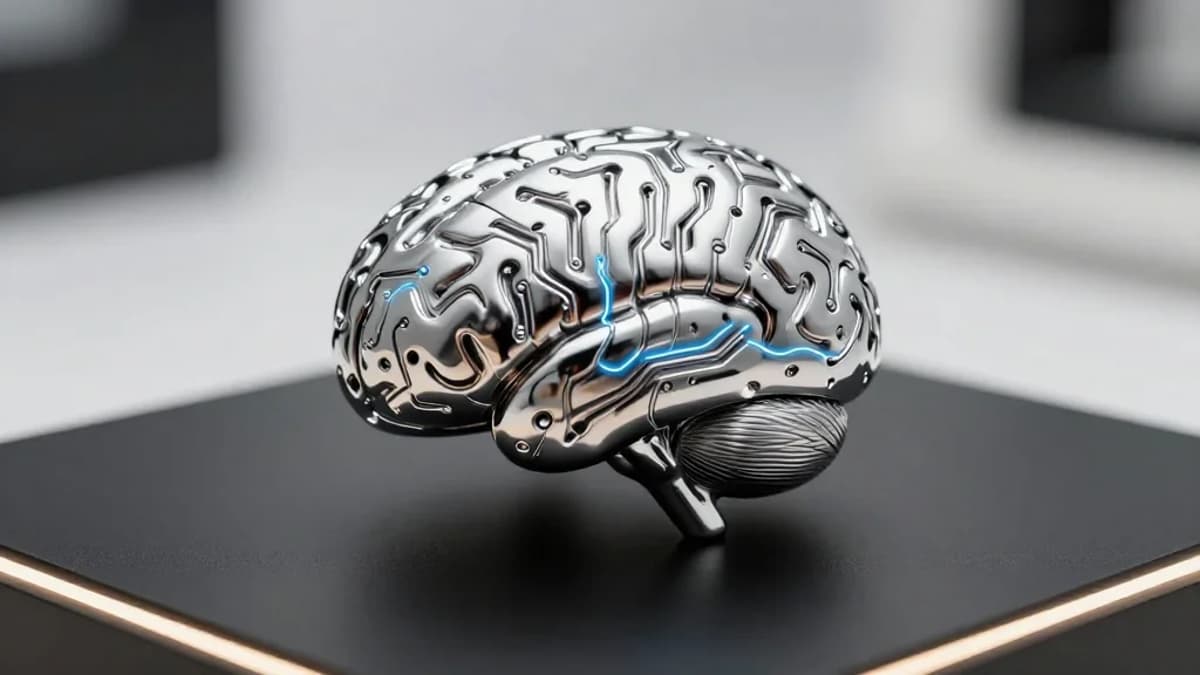
Study Finds Today’s AI Systems Almost Certainly Lack Consciousness — But The Door Is Not Fully Closed
•January 23, 2026
0
Why It Matters
Current AI likely lacks consciousness, yet even a small chance could demand precautionary regulation, while over‑attributing consciousness might dilute moral focus from humans and animals.
Key Takeaways
- •LLMs likely lack consciousness per Bayesian model.
- •Chickens show stronger evidence of consciousness than AI.
- •Model aggregates 13 theories, 200 indicators.
- •Future AI architecture could raise consciousness probability.
- •Policy may need precaution despite low AI consciousness odds.
Pulse Analysis
The debate over machine consciousness has long been hampered by divergent theories and a lack of measurable criteria. Rethink Priorities’ Digital Consciousness Model tackles this gap by uniting 13 philosophical and scientific stances into a single Bayesian framework. By scoring over 200 observable indicators—ranging from flexible attention to self‑representation—the model offers a systematic way to compare disparate entities, from humans to early chatbots, without privileging any single definition of consciousness.
When the model was applied, humans unsurprisingly topped the probability scale, followed by chickens, which showed consistent support across most theories. In contrast, today’s large language models fell below the baseline prior, indicating that existing evidence actually reduces confidence in AI consciousness. The stark contrast with ELIZA, which the model rated near zero, demonstrates its ability to differentiate genuine cognitive complexity from superficial language mimicry. These results reinforce the view that current AI systems, despite impressive capabilities, lack the integrated, self‑referential processes that most theories associate with subjective experience.
Looking ahead, the study underscores that the question is not settled. As AI architectures incorporate persistent memory, multimodal perception, and more sophisticated self‑modeling, the indicators that currently weigh against consciousness could shift upward. Policymakers and developers may therefore need to adopt precautionary measures now, treating even a modest probability as a trigger for ethical oversight. Simultaneously, the framework cautions against over‑attribution, which could dilute attention from animals and humans who demonstrably possess consciousness. By quantifying uncertainty, the Digital Consciousness Model provides a valuable tool for navigating the emerging regulatory landscape around advanced AI.
Study Finds Today’s AI Systems Almost Certainly Lack Consciousness — But The Door is Not Fully Closed
0
Comments
Want to join the conversation?
Loading comments...