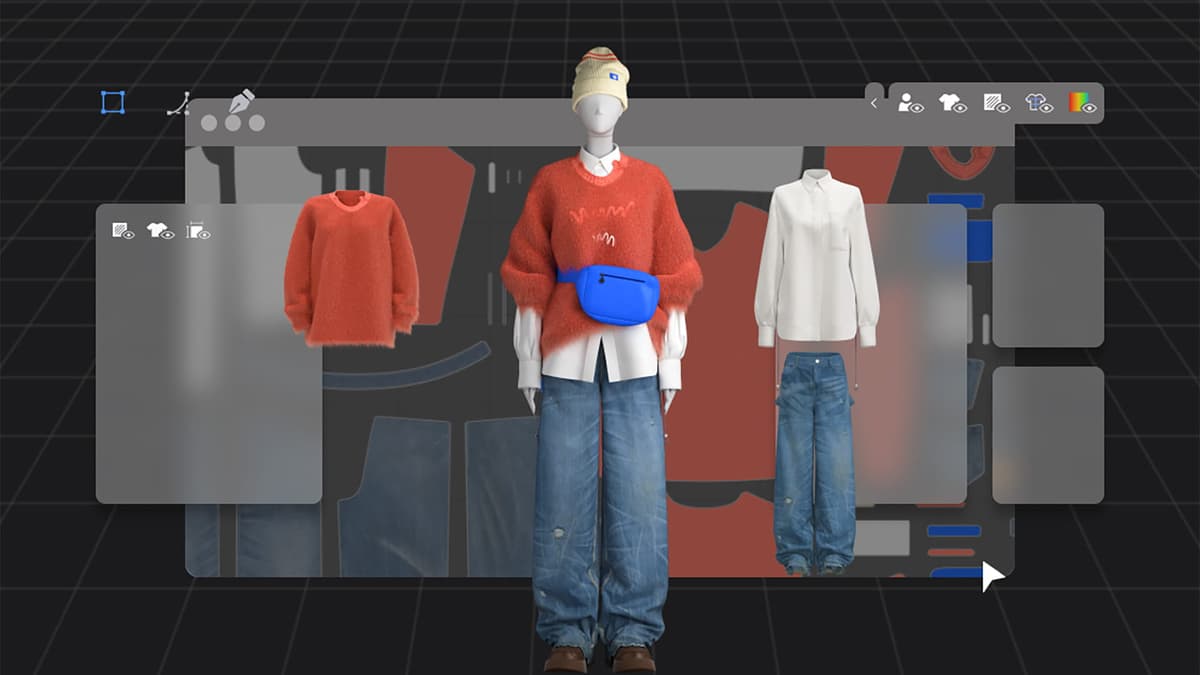
Style3D’s Fashion Tech Offers Unexpected Answer to a Tough Robotics Problem
Why It Matters
Accurate, scalable simulation of soft materials removes a critical bottleneck for embodied AI, enabling robots to learn complex tasks faster and at far lower cost. This positions Style3D as a cross‑industry catalyst, bridging fashion‑tech expertise with robotics and AI development.
Key Takeaways
- •Style3D’s SynReal simulates fabric with 5‑10× speed boost over Isaac Sim.
- •Accuracy claims reduce physics errors by ~20% versus industry benchmark.
- •GPU‑parallel architecture enables millions of training runs per hour.
- •Synthetic data cuts robot training cost from six‑figure RMB to lower.
- •Deformable‑object simulation becomes a bottleneck for embodied AI.
Pulse Analysis
Robotic manipulation of soft, deformable objects—clothes, bags, even human tissue—has long stymied engineers because traditional rigid‑body simulators cannot capture the complex physics of fabric draping, wrinkling, and self‑contact. Existing approaches rely on hard‑coded motion scripts or labor‑intensive human‑demonstration data, often requiring six‑ to seven‑figure RMB investments (roughly $14,000‑$1.4 million) and months of collection. The scarcity of high‑quality, varied datasets hampers the training of embodied‑intelligence systems, limiting their real‑world reliability.
Style3D leverages a decade of 3D garment modeling to power SynReal, a three‑part platform comprising SynReal Sim, SynReal Arena, and SynReal Core. By rebuilding the simulation pipeline on GPU‑parallel computing, the company reports a five‑ to ten‑fold speed advantage over Nvidia’s Isaac Sim while shaving about 20% off physics error margins. Its use of incremental potential contact (IPC) methods ensures stable handling of multi‑point and self‑contact scenarios, a notorious source of clipping in graphics engines. The result is a synthetic data engine capable of generating millions of varied interaction trajectories in hours, dramatically accelerating robot learning cycles.
The broader impact extends beyond laundry‑folding demos. As labor costs rise and demand for versatile service robots grows—spanning domestic assistance, food preparation, and eldercare—the ability to cheaply produce high‑fidelity training data becomes a strategic differentiator. Style3D’s crossover from fashion‑tech to robotics exemplifies how deep domain expertise can solve entrenched AI challenges, potentially reshaping the competitive landscape for physical AI platforms. Companies that adopt such synthetic‑data pipelines may achieve faster time‑to‑market and lower entry barriers, accelerating the commercialization of truly adaptable robots.
Style3D’s fashion tech offers unexpected answer to a tough robotics problem
Comments
Want to join the conversation?
Loading comments...