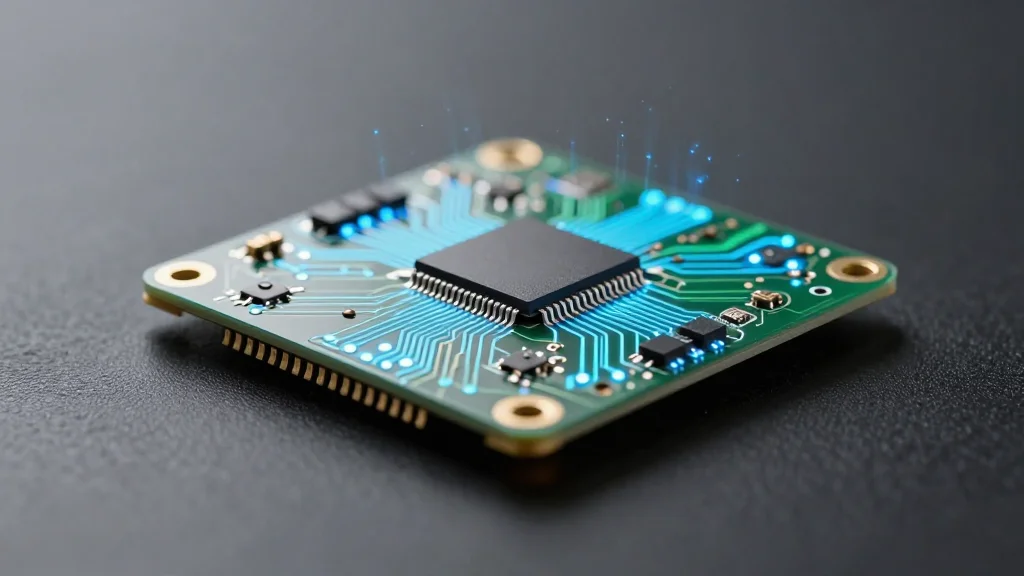
Success Stories: AI and Hardware Innovation
Why It Matters
Adaptable hardware removes a critical bottleneck, allowing AI to scale beyond data‑center confines while cutting power consumption. This shift could accelerate AI adoption across industries such as healthcare, manufacturing, and autonomous systems.
Key Takeaways
- •Reconfigurable FPGAs cut AI latency by tailoring hardware to tasks.
- •Adaptive chips boost energy efficiency, reducing data movement overhead.
- •Edge AI becomes viable as hardware moves beyond data‑center GPUs.
- •Co‑design of software and hardware promises scalable, sustainable AI deployments.
Pulse Analysis
The AI boom has outpaced the evolution of conventional silicon, leaving GPUs and CPUs strained by ever‑larger models and real‑time demands. As Moore’s Law slows, the industry is turning to hardware that can evolve alongside software, a concept known as co‑design. By decoupling performance from fixed architectures, developers can sidestep the costly, time‑intensive cycle of fabricating new chips for each generational leap, preserving both capital and time-to‑market.
At Arizona State University, Aman Arora’s team is leveraging field‑programmable gate arrays, or FPGAs, to demonstrate this flexibility. Unlike static GPUs, FPGAs can be reprogrammed after manufacturing, allowing engineers to fine‑tune data paths, memory hierarchies, and compute units for particular AI workloads. Early prototypes have shown measurable reductions in latency and power draw, translating to longer device lifespans and lower operational costs—key metrics for enterprises evaluating AI at scale.
The broader impact reaches far beyond the lab. Edge deployments—ranging from medical imaging sensors to autonomous drones—require low‑latency, energy‑constrained processing that traditional data‑center hardware cannot provide. Adaptable chips bridge that gap, enabling AI inference directly where data is generated. As more firms adopt this hardware‑software synergy, we can expect a surge in sustainable AI solutions, faster innovation cycles, and a democratization of advanced analytics across sectors that previously lacked the infrastructure to support them.
Success Stories: AI and Hardware Innovation
Comments
Want to join the conversation?
Loading comments...